Laminate vs LVT Flooring
Laminate flooring is cheaper and more realistic-looking but vulnerable to moisture. LVT (luxury vinyl tile) costs more but is fully waterproof and softer underfoot. For kitchens and bathrooms, LVT wins. For living rooms and bedrooms on a budget, laminate is the better choice.

What Is Laminate Flooring?
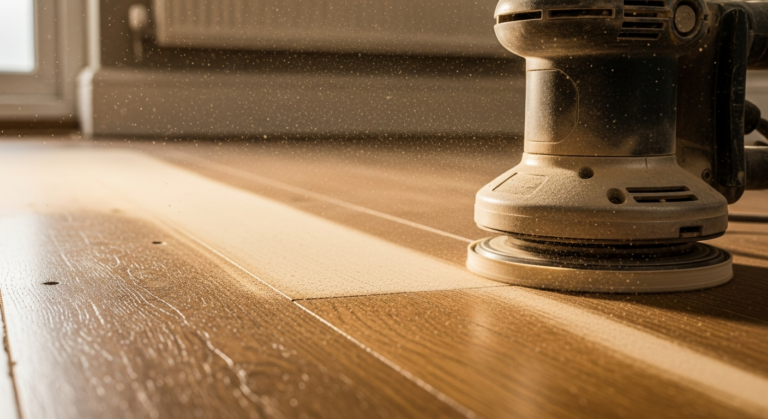
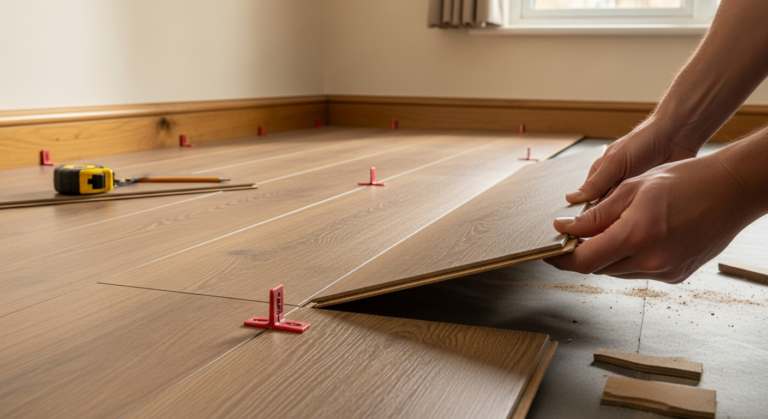
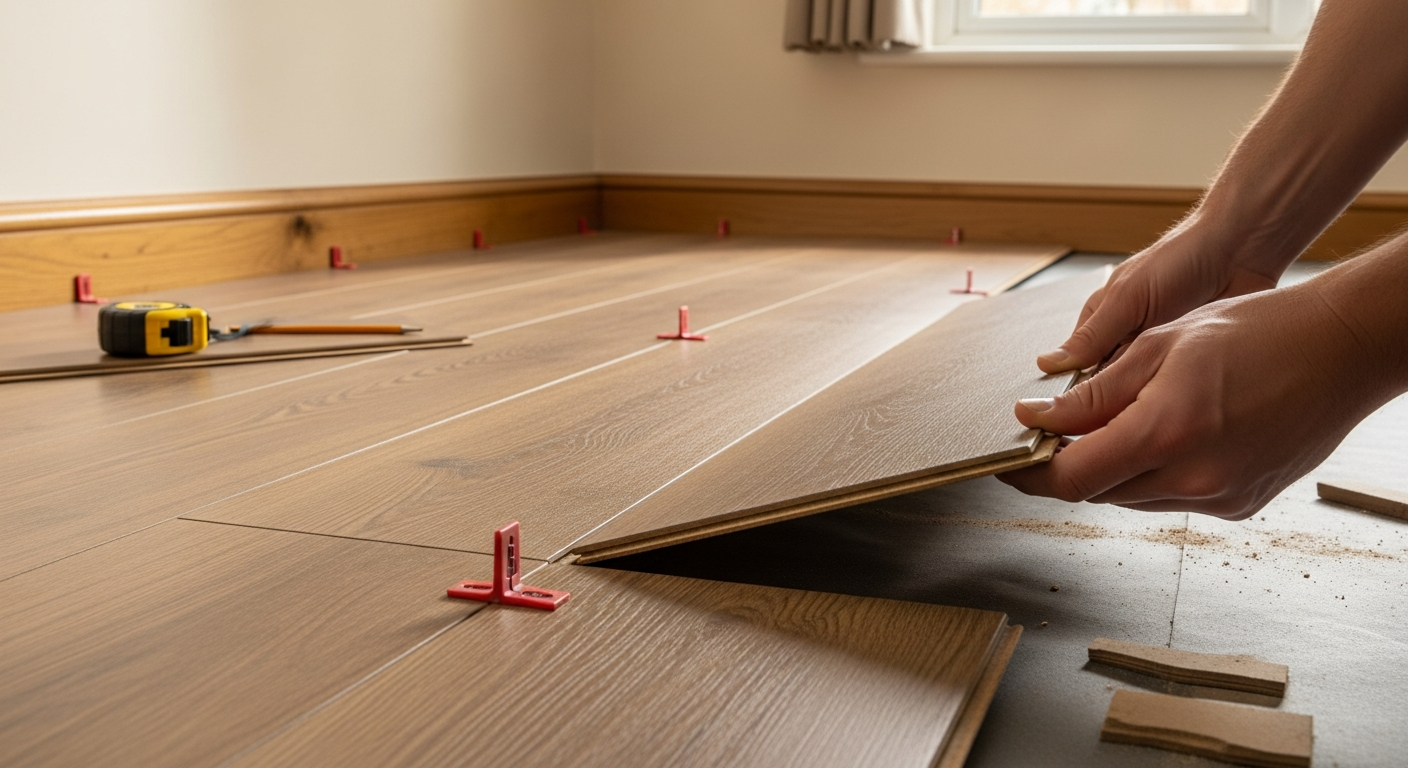
Laminate flooring is a multi-layer synthetic product with a high-density fibreboard (HDF) core, a photographic décor layer that mimics wood or stone, and a hard melamine wear layer on top. Planks click together over a foam or combination underlay without any adhesive, making it one of the most accessible DIY floors to lay. It cannot be sanded or refinished — once the wear layer is through, the board must be replaced. See our guide on how to lay laminate flooring for a full step-by-step walkthrough.
What Is LVT Flooring?
LVT (luxury vinyl tile or plank) is a fully synthetic floor built from multiple layers of PVC, including a rigid or flexible core, a printed décor film, and a clear polyurethane wear layer. It is 100% waterproof throughout its depth, making it suitable for bathrooms, kitchens, and utility rooms where laminate would fail. LVT is warmer and quieter underfoot than laminate and is compatible with most underfloor heating systems. For installation instructions, visit our guide on how to lay vinyl plank flooring.
Side-by-Side Comparison
| Feature | Laminate | LVT |
|---|---|---|
| Cost per m² | £8–£25 | £15–£45 |
| Durability | Good — scratch-resistant surface but HDF core swells with moisture | Very good — waterproof throughout, dent-resistant |
| Appearance | Highly realistic wood effect; embossed texture common at mid-range | Good wood and stone effects; thinner décor layer can look slightly less convincing at budget end |
| Install Difficulty | Easy — click-lock floating floor, DIY-friendly | Easy to moderate — click-lock or glue-down; rigid core LVT is very DIY-friendly |
| Maintenance | Sweep and damp-mop only; avoid excess water | Sweep and mop freely; no moisture restrictions |
| Lifespan | 10–25 years (dry rooms) | 15–30 years |
Laminate — Pros and Cons
- Lower cost per m² — the most affordable hard-floor option for large areas
- Highly realistic wood grain appearance, especially at mid-range prices
- Simple click-lock installation suitable for confident DIYers
- Wide range of thicknesses, finishes, and plank widths available
- Harder surface resists surface scratches from furniture and foot traffic
- Cannot be used in bathrooms, wet rooms, or areas prone to flooding — HDF swells and delaminates when wet
- Cannot be sanded or refinished — damaged boards must be replaced
- Can sound hollow or noisy underfoot without good quality underlay (see our best underlay for laminate guide)
- Expansion gaps required around all perimeter edges — skirting boards must be removed or beading fitted
- Not always compatible with underfloor heating; check manufacturer spec carefully
LVT — Pros and Cons
- 100% waterproof — safe to use in kitchens, bathrooms, utility rooms, and hallways
- Warmer and quieter underfoot than laminate, often requiring no separate underlay
- Compatible with underfloor heating systems (check maximum temperature limits)
- Flexible and rigid core options available — rigid core suits uneven subfloors better
- Longer expected lifespan in high-traffic areas
- Higher cost per m² than equivalent laminate, particularly for rigid core products
- Budget LVT can look less convincing than mid-range laminate for wood effects
- Some thinner flexible LVT requires a very flat, smooth subfloor — imperfections telegraph through
- Glue-down LVT is difficult to remove without damaging the subfloor
- Not biodegradable — PVC product with environmental disposal considerations
Which Is Better For…?
- Kitchens and utility rooms: LVT — its full waterproofing protects against spills, leaks, and steam that would ruin laminate.
- Living rooms and bedrooms on a budget: Laminate — drier conditions mean moisture risk is low, and laminate’s realistic wood effect and lower cost make it the sensible choice.
- Homes with dogs or young children: LVT — it handles muddy paws and spills without warping, and its softer surface is more forgiving underfoot. See our best flooring for dogs guide for more detail.
- Hallways and stairs: LVT for hallways due to moisture from outdoor footwear; laminate can work on dry landings. Note that most LVT is not suitable for staircases — specialist stair nosings are required.
- Rental properties: LVT — its durability, waterproofing, and ease of cleaning reduce replacement frequency and maintenance callouts between tenancies.
UK Cost Comparison
Laminate flooring in the UK typically costs between £8 and £25 per m² for the boards alone, with budget click-lock options starting around £8–£12 per m² and mid-range embossed products sitting at £15–£25 per m². Underlay adds roughly £2–£6 per m² on top. LVT ranges from approximately £15 to £45 per m² depending on wear layer thickness and whether the product has a rigid or flexible core — rigid core LVT with a 0.5 mm or thicker wear layer generally sits at £25–£45 per m². Professional fitting adds £10–£20 per m² for either product. When budgeting, always add 10% extra material to account for cuts and waste. If you are also replacing skirting boards as part of the project, factor in the cost of fitting new skirting boards or removing existing skirting boards without damage before laying either floor type.
Frequently Asked Questions
Can LVT flooring be used in a bathroom?
Yes. LVT is 100% waterproof throughout its depth and is one of the best hard-floor choices for bathrooms, wet rooms, and shower areas. Laminate must never be used in these spaces.
Is laminate or LVT easier to lay yourself?
Both use similar click-lock systems and are considered DIY-friendly. Rigid core LVT is marginally more forgiving over slightly uneven subfloors, whereas laminate requires a very flat surface and precise expansion gaps around all edges.
Which flooring is better for underfloor heating — laminate or LVT?
LVT is generally more compatible with underfloor heating. Many laminate products allow underfloor heating up to around 27°C surface temperature, but you must confirm with the manufacturer’s specification before installing either product over a heated system.
How long does LVT flooring last compared to laminate?
LVT typically lasts 15–30 years depending on wear layer thickness and usage. Laminate lasts 10–25 years in dry rooms. Both lifespans assume correct installation and routine maintenance.
Can you repair laminate or LVT if a plank gets damaged?
Individual planks can be replaced in both click-lock laminate and click-lock LVT floors, provided you have matching spare boards — always keep off-cuts when first laying. Glue-down LVT is significantly harder to repair without damaging surrounding tiles.
When buying LVT, check the wear layer thickness rather than the total board thickness — a 6 mm board with a 0.3 mm wear layer will not last as long as a 5 mm board with a 0.55 mm wear layer in a busy hallway. For any room with regular foot traffic, opt for at least a 0.5 mm wear layer.
Sources
- Which? — Laminate flooring buying guide — which.co.uk
- Flooring Industry Training Association (FITA) — Fitting guidance and subfloor requirements — fita.co.uk
- Checkatrade — Cost of fitting laminate and vinyl flooring in the UK — checkatrade.com
This guide is for general information only. Always work safely and follow manufacturer instructions. DIYnut accepts no liability for injury or damage arising from DIY work.