How to Paint a Ceiling – 2026 Guide
DIY Guides › Painting & Decorating
How to Paint a Ceiling
Get a smooth, streak-free ceiling with the right prep, paint, and technique.
To paint a ceiling, clear and protect the room, fill any cracks, and apply a mist coat if the surface is new plaster. Use a roller with an extension pole and work in sections from the far corner towards the door, cutting in with a brush at the edges first.

- Paint roller with extension pole
- Angled cutting-in brush
- Roller tray
- Stepladder
- Filling knife
- Sanding block
- Ceiling paint (matt emulsion)
- Fine surface filler
- Dust sheets
- Masking tape
- Fine-grit sandpaper
- Sugar soap solution
- Roller sleeves (medium pile)
Step-by-Step Guide
Prepare the room
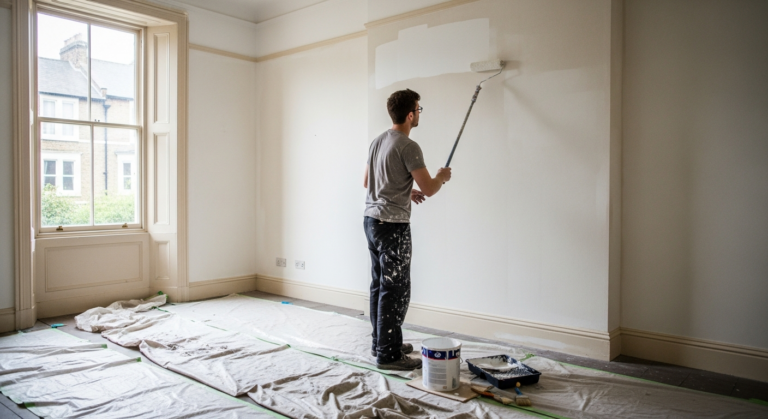
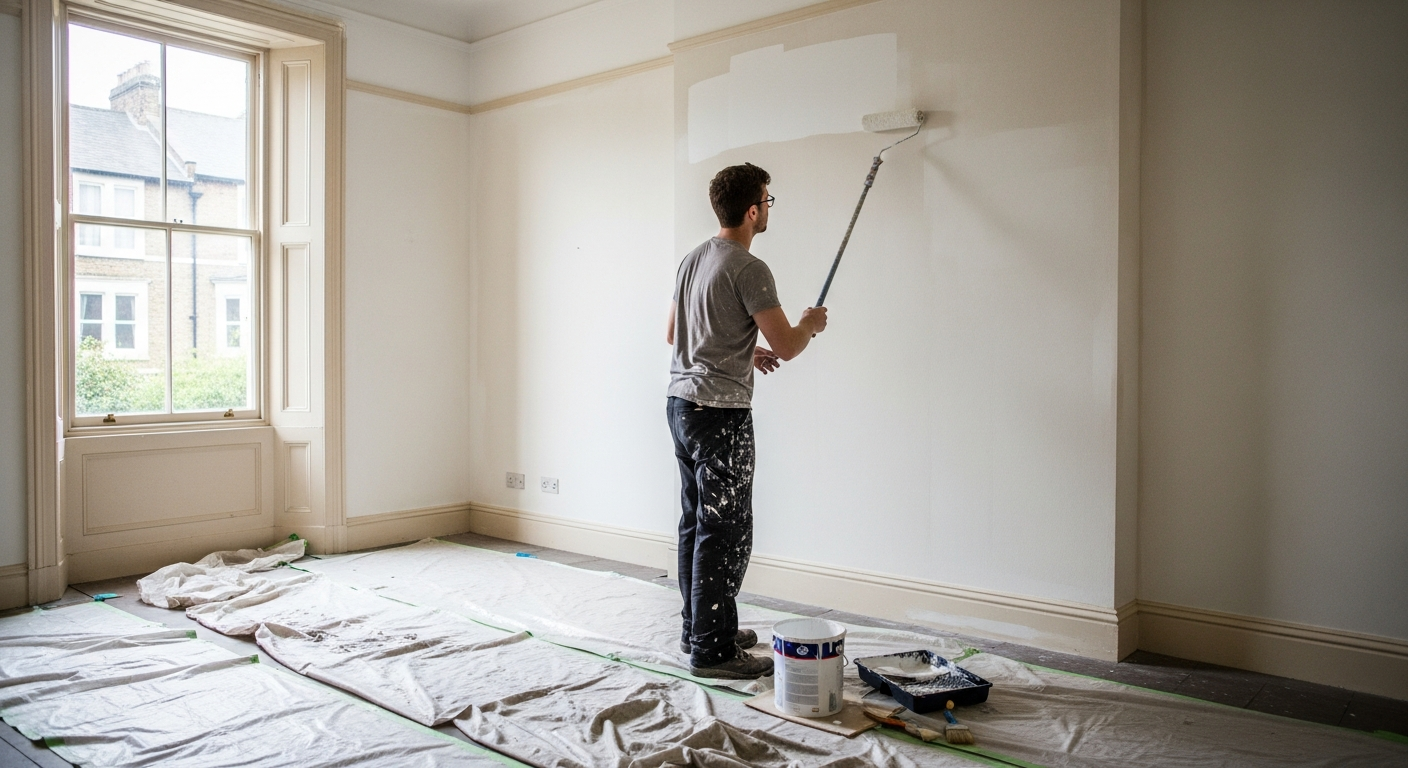
Remove or cover all furniture with dust sheets, and lay additional dust sheets across the entire floor — paint drips are inevitable and impossible to clean from carpet once dry. Mask off the top of walls, coving, and any light fittings with masking tape, and switch off the circuit at the consumer unit before removing light fittings if you plan to paint behind the rose.
Clean and fill the surface
Wash the ceiling with a sugar soap solution on a sponge mop to remove grease, nicotine, and dust — a dirty ceiling causes poor adhesion and uneven finish. Once dry, press fine surface filler into any cracks or holes with a filling knife, allow it to cure fully, then sand flush with a fine-grit sanding block.
Apply a mist coat if needed
If you are painting new or bare plaster, apply a mist coat — ceiling paint diluted roughly 10% with water — before your full coat; bare plaster is highly absorbent and will suck moisture from undiluted paint so fast that it dries patchy and cannot be rolled out. Allow the mist coat to dry completely, which typically takes two to four hours, before proceeding.
Cut in around the edges
Load an angled cutting-in brush and paint a 50–75 mm band around the entire perimeter of the ceiling where the roller cannot reach without touching the walls — work carefully and keep a steady hand, as this line defines the finished result. Cut in one full section at a time so the edge remains wet when you roll into it, preventing visible join lines.
Roll the ceiling in sections
Pour paint into a roller tray, load a medium-pile roller sleeve evenly, and begin rolling from the far corner of the room, working in 600–900 mm square sections towards the door so you are always rolling back into wet paint. Apply paint in a zigzag or W-pattern, then lay off with light parallel strokes to even the finish — keep a consistent, moderate pressure and avoid over-rolling sections that have started to dry.
Apply a second coat once dry
Allow the first coat to dry fully — at least two hours in normal conditions — before assessing coverage; most ceilings require two coats for a uniform, opaque result. Apply the second coat in the same sequence as the first, and once complete, carefully remove masking tape at a 45-degree angle while the paint is still slightly tacky to avoid tearing the edge.
Frequently Asked Questions
How many coats of paint does a ceiling need?
Most ceilings need two coats of matt emulsion for full, even coverage. If you are painting over a dark colour or bare plaster, a mist coat plus two full coats may be necessary.
What is the best type of paint for a ceiling?
A flat or matt emulsion specifically formulated for ceilings is the standard choice — it dries quickly, hides roller marks, and does not reflect light in a way that shows imperfections. Avoid standard wall emulsion, which can look uneven on horizontal surfaces.
Do I need to sand a ceiling before painting?
You only need to sand if there are filled areas, flaking paint, or a previously painted surface with obvious brush or roller marks. A light sand with fine-grit paper followed by a wipe-down is sufficient — full sanding of an intact ceiling is unnecessary.
How do I avoid roller marks on a ceiling?
Work in consistent sections, always rolling back into wet paint, and use a light lay-off stroke at the end of each section. Using a quality medium-pile roller sleeve and avoiding over-loading the roller with paint eliminates most visible marks.
Is it safe to paint a ceiling on a stepladder?
A stepladder is suitable for cutting in at the edges, but an extension pole fitted to your roller means you can paint the main field of the ceiling from floor level, which is safer and far less tiring. The HSE advises always maintaining three points of contact when on a ladder.
Fit a bin-bag over your roller tray between coats rather than washing it out — the tray stays workable for hours and you save significant time on a two-coat job. On a large ceiling, add 5–10% water to your second coat too; it extends the open time slightly and helps the roller tip out without leaving drag marks.
Sources
- HSE — Working at Height: Ladders and Stepladders — hse.gov.uk
- Which? — How to paint a room — which.co.uk
- GOV.UK — Health and Safety at Work: Working at Height Regulations 2005 — legislation.gov.uk
This guide is for general information only. Always work safely and follow manufacturer instructions. DIYnut accepts no liability for injury or damage arising from DIY work.