How to Grout Tiles – 2026 Guide
How to Grout Tiles
Get clean, professional grout lines that last — no experience needed.
To grout tiles, mix grout to a smooth paste, press it firmly into the joints with a grout float, remove excess with a damp sponge, and buff off the haze once set. Allow 24 hours before exposing joints to water.

- Grout float
- Bucket
- Sponge
- Grout spreader
- Pointing trowel
- Grout rake
- Spirit level
- Dry cloth or lint-free rag
- Unsanded or sanded wall grout
- Grout colourant (optional)
- Waterproof grout (for wet areas)
- Silicone sealant (for corners and edges)
- Clean water
- Tile spacers (if re-grouting)
Step-by-Step Guide
Prepare the Surface
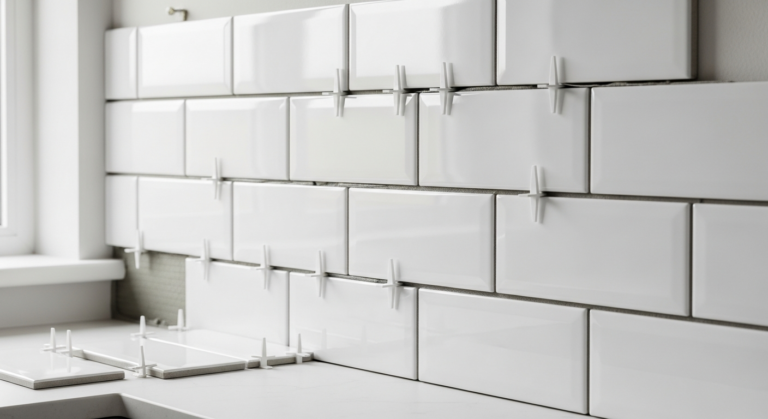
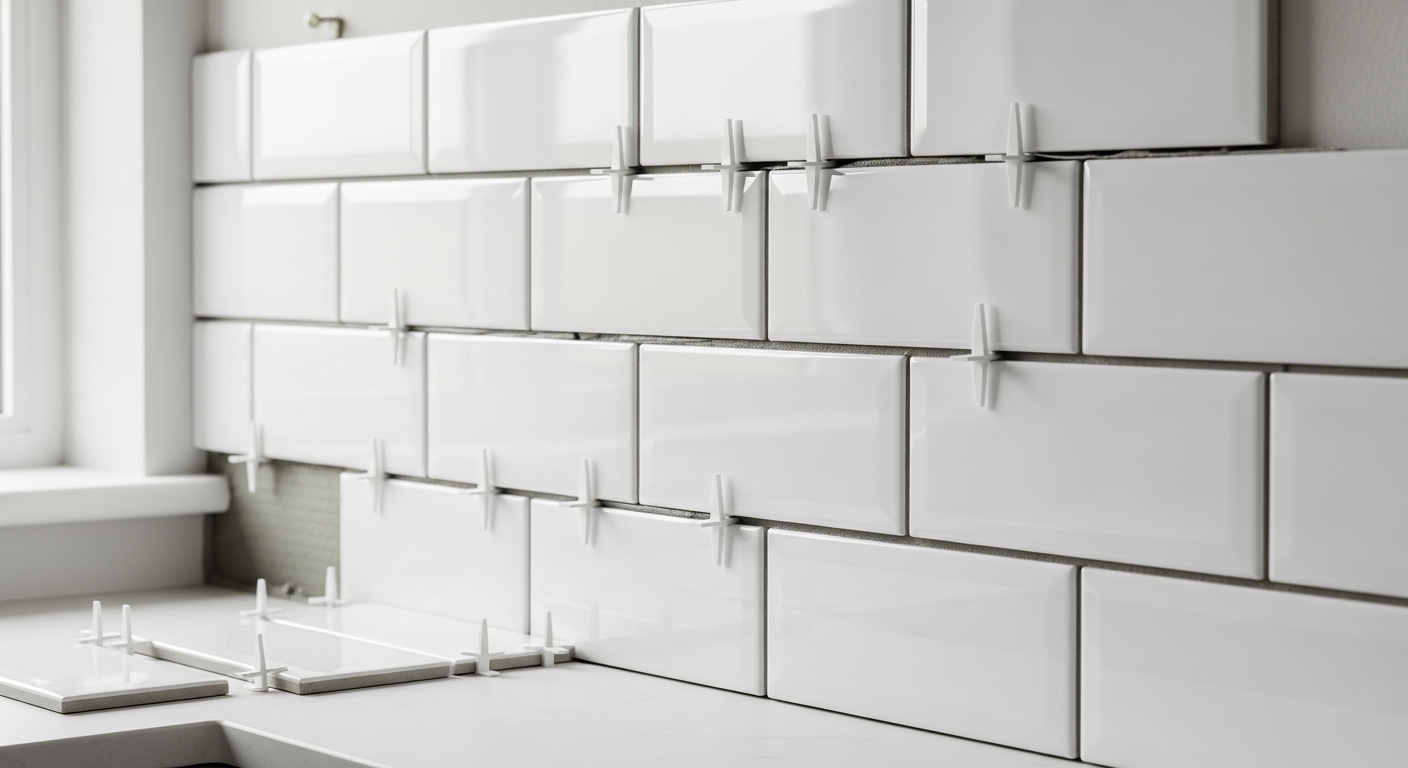
Before you mix a thing, make sure the tile adhesive is fully cured — typically 24 hours after tiling. Remove all tile spacers, scrape out any adhesive that has squeezed into the joints using a grout rake or pointed trowel, and vacuum away any dust. Damp or contaminated joints will stop grout bonding properly, so this step determines everything that follows.
Mix the Grout
Tip the grout powder into a clean bucket and add clean water gradually, mixing as you go. Aim for a thick, smooth paste — similar to peanut butter — with no lumps or dry pockets. Mix only as much as you can apply in 20–30 minutes; grout begins to harden in the bucket quickly. For wall tiles in kitchens and bathrooms, use a waterproof or wall-rated grout. If you’re tiling a splashback, see our guide to how to tile a kitchen splashback for full preparation advice.
Apply the Grout
Load the grout float with a generous amount of mixed grout and work it across the tile surface at a 45-degree angle, pressing firmly into the joints. Work in small sections — roughly one square metre at a time — pushing the grout deep into each joint with diagonal sweeping strokes. Do not apply grout into movement joints at corners, changes of plane, or around fixtures; these must be filled with silicone sealant instead.
Remove Excess Grout
Once the joints in a section are full, use the edge of the grout float held at a steep angle to scrape off the bulk of the excess grout from the tile faces. Then wring out a clean sponge until it is damp — not wet — and wipe diagonally across the tiles in smooth strokes, rinsing frequently. Avoid wiping directly along the joints or you will drag grout out. Change the bucket water regularly to avoid smearing grout film back onto the tiles.
Finish the Surface and Seal
After 20–30 minutes, a light haze will form on the tile surface. Buff this off with a dry lint-free cloth using circular motions. Once the grout has fully cured — typically 24 hours for wall grout, longer in cold conditions — apply silicone sealant to all internal corners, changes of plane, and any edge where tiles meet a bath, shower tray, or worktop. For full guidance on bathroom tiling, including sealing wet areas correctly, see our how to tile a bathroom wall guide.
Cure and Inspect
Leave the grout to cure undisturbed for at least 24 hours before exposing it to splashing water, and 72 hours before full wet use such as a shower. Once cured, run your finger along each joint and look for any pinholes, cracks, or voids. These are common in deep joints or where grout was applied too dry. Rake out any defective sections with a grout rake and re-grout those joints before they are exposed to moisture.
Frequently Asked Questions
How long should I leave grout before wiping?
Wait until the grout has started to firm up in the joints — usually 15 to 30 minutes after application, depending on temperature and humidity. Wipe too early and you drag grout out of the joints; leave it too long and the surface haze becomes very difficult to remove.
What is the difference between sanded and unsanded grout?
Unsanded grout is used for joints up to 3mm wide and is the standard choice for most wall tiles. Sanded grout contains fine aggregate to prevent shrinkage and is used for wider joints, typically 3mm and above, and for floor tiles.
Can I grout over old grout?
How do I stop grout going mouldy in a bathroom?
Use a waterproof grout in wet areas and apply a grout sealer once it has fully cured. Good ventilation is equally important — extract fans should run during and for at least 15 minutes after showering to reduce the moisture that feeds mould growth.
Why has my grout cracked after drying?
Cracking is usually caused by one of three things: too much water added to the mix, applying grout in very cold conditions that slows curing unevenly, or grouting movement joints that should have been filled with flexible silicone sealant. Rake out cracked sections and re-grout using the correct product for that joint type.
Dampen the tile joints very lightly with a misted spray of clean water before applying grout — this slows the suction from porous tiles and backing materials, giving you a longer working time and a denser finished joint. Do not soak them; a light mist is enough.
Sources
- HSE — Health and Safety in Construction: Tiling — hse.gov.uk
- Which? — How to grout tiles — which.co.uk
- RIBA — Good Practice Guide: Tile Installation — tileassociation.co.uk
This guide is for general information only. Always work safely and follow manufacturer instructions. DIYnut accepts no liability for injury or damage arising from DIY work.