How to Bleed a Radiator – 2026 Guide
How to Bleed a Radiator
Restore full heat to a cold radiator in under 30 minutes with basic tools.
To bleed a radiator, turn off your heating and let it cool, then insert a radiator bleed key into the bleed valve and turn it anticlockwise until air hisses out. Close the valve once water appears, then check the boiler pressure and repressurise if needed.

Identify Which Radiators Need Bleeding
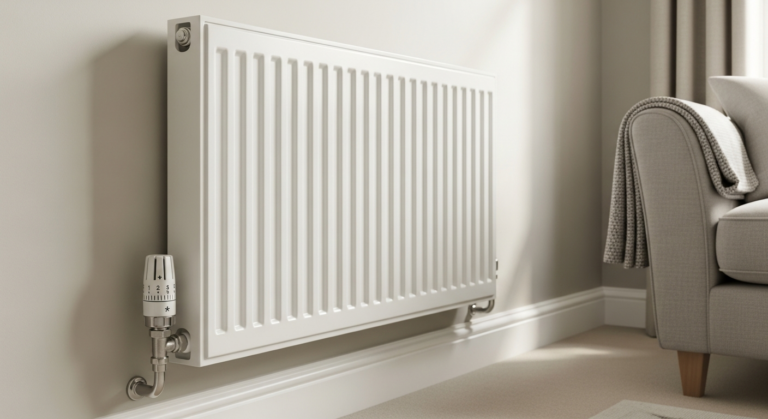
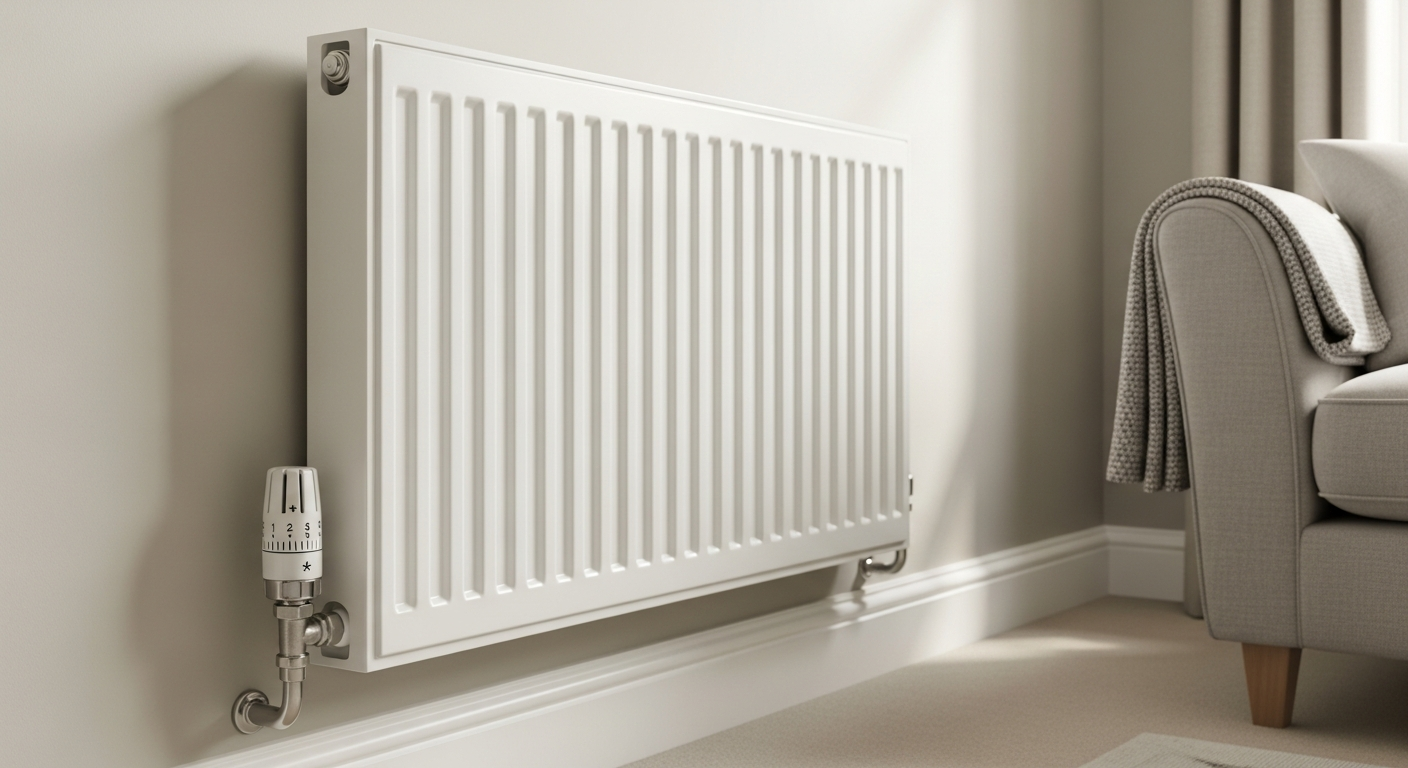
Before the system cools, feel each radiator — a radiator that is hot at the bottom but cold or lukewarm at the top is the classic sign of trapped air. Work from the radiator furthest from the boiler and highest in the property first, as airlocks tend to migrate there. Note which radiators need attention so you have a clear order to work through.
Position a Cloth and Bowl Under the Bleed Valve
The bleed valve is typically a small square brass fitting at the top corner of the radiator — it will have either a square key slot or a flat-head screw slot. Place a cloth or old towel directly beneath the valve and position a bowl or tray on the floor underneath, as a small amount of water will escape once the air has cleared. Protect your flooring, particularly if you have wooden boards or carpet.
Open the Bleed Valve and Release the Air
Insert the radiator bleed key into the valve and turn it slowly anticlockwise by a quarter to half a turn — no more. You should hear a hissing sound as trapped air escapes. Hold the cloth around the valve to catch any drips. Do not fully unscrew the valve; a small turn is all that is needed. Once the hissing stops and a steady trickle of water flows out, the air is fully purged.
Close the Valve and Check All Radiators
As soon as water appears without spitting, turn the bleed key clockwise to close the valve firmly — do not overtighten, as the valve seat is brass and can be damaged. Wipe up any water immediately. Repeat the process on every radiator that requires bleeding, working through your list in order. For guidance on other common plumbing maintenance tasks around the home , our unblocking guide covers the basics.
Repressurise the Boiler and Test the System
Bleeding radiators releases water along with air, which drops the system pressure. Check the pressure gauge on your boiler — most systems should read between 1 and 1.5 bar when cold. If the pressure has dropped below 1 bar, locate the filling loop (usually a braided hose beneath the boiler) and open the valves slowly until the gauge reads the correct level, then close them. Turn the heating back on and check all bled radiators are heating evenly from top to bottom. If a radiator still does not heat correctly, consider adding a central heating inhibitor to the system to prevent internal corrosion causing recurring airlocks.
Frequently Asked Questions
How often should I bleed my radiators?
Bleed radiators once a year as a routine maintenance task, ideally at the start of autumn before you rely on the heating. If a radiator becomes cold at the top outside this schedule, bleed it on demand — waiting until the annual check risks an inefficient system and higher energy bills.
Why does air get into radiators in the first place?
Small amounts of air enter sealed central heating systems through several routes: micro-leaks in pipe joints, corrosion inside the system producing hydrogen gas, or air introduced during maintenance work. Systems without a magnetic system filter tend to accumulate air more quickly over time.
What if no air or water comes out when I open the bleed valve?
If nothing escapes when you open the valve, the valve itself may be blocked with corrosion or limescale, or the system pressure may be too low to push water to that point. Check the boiler pressure first. If the valve appears blocked, do not force it — contact a Gas Safe registered engineer or consult a plumbing professional to assess the system.
Can bleeding a radiator cause a leak?
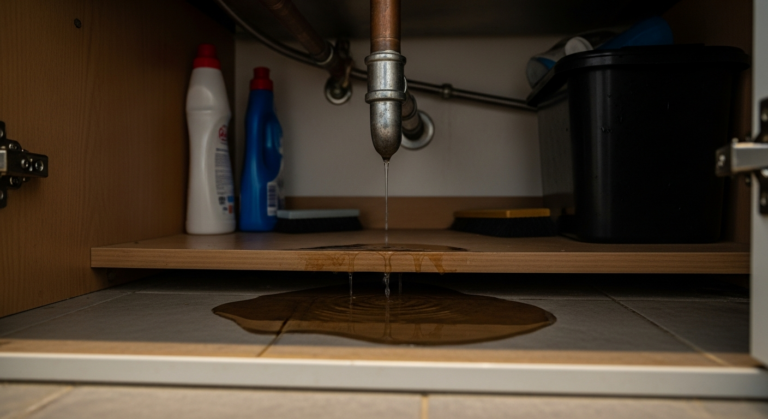
In a well-maintained system with undamaged valve components, bleeding carries minimal risk. However, if the valve seat is corroded or the bleed valve packing has deteriorated, opening the valve can disturb deposits that were acting as a seal, resulting in a slow drip. If water continues to seep after you have closed the valve, wrap PTFE tape around the valve thread or replace the bleed valve entirely.
Do I need to call a plumber to bleed a radiator?
No — bleeding a radiator is a standard DIY task that requires no specialist qualifications and no notifiable work under building regulations. However, if your radiators repeatedly need bleeding within weeks, the system may have a larger issue such as a failing auto air vent or internal corrosion, and a WaterSafe-registered plumber should inspect it. See the full DIYnut plumbing guide for more on when to call a professional.
After bleeding, add a dose of central heating inhibitor fluid through the feed-and-expansion tank or via a purpose-made dosing point — this slows the internal corrosion that produces hydrogen gas, the most common cause of recurring airlocks. Fit a magnetic system filter at the same time and you significantly reduce the frequency of future bleeds.
Sources
- Which? — How to bleed a radiator — which.co.uk
- HSE — Safety in central heating systems — hse.gov.uk
- WaterSafe — Find an approved plumber — watersafe.org.uk
Safety Notice: Electrical and plumbing work can be dangerous if done incorrectly. In the UK, certain electrical work must comply with Part P of the Building Regulations and certain plumbing work with Part G. If in doubt, consult a qualified electrician (NICEIC/NAPIT registered) or plumber (CIPHE/WaterSafe registered). This guide is for general information only — it is not a substitute for professional advice.