How to Fix Condensation Damp – DIY Guide
How to Fix Condensation Damp
Stop mould, damp patches, and streaming windows with these targeted fixes.
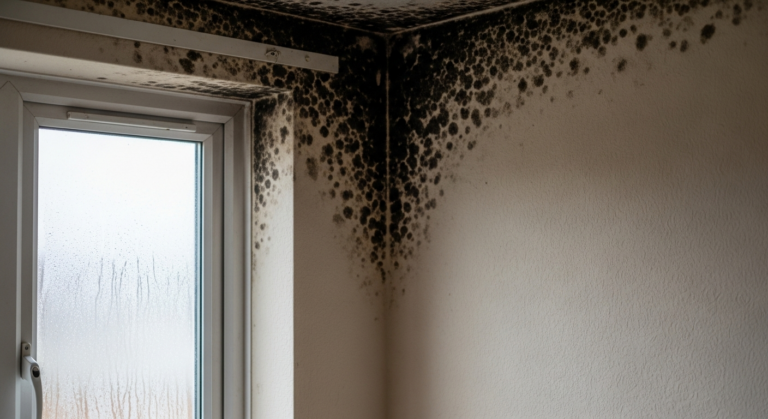
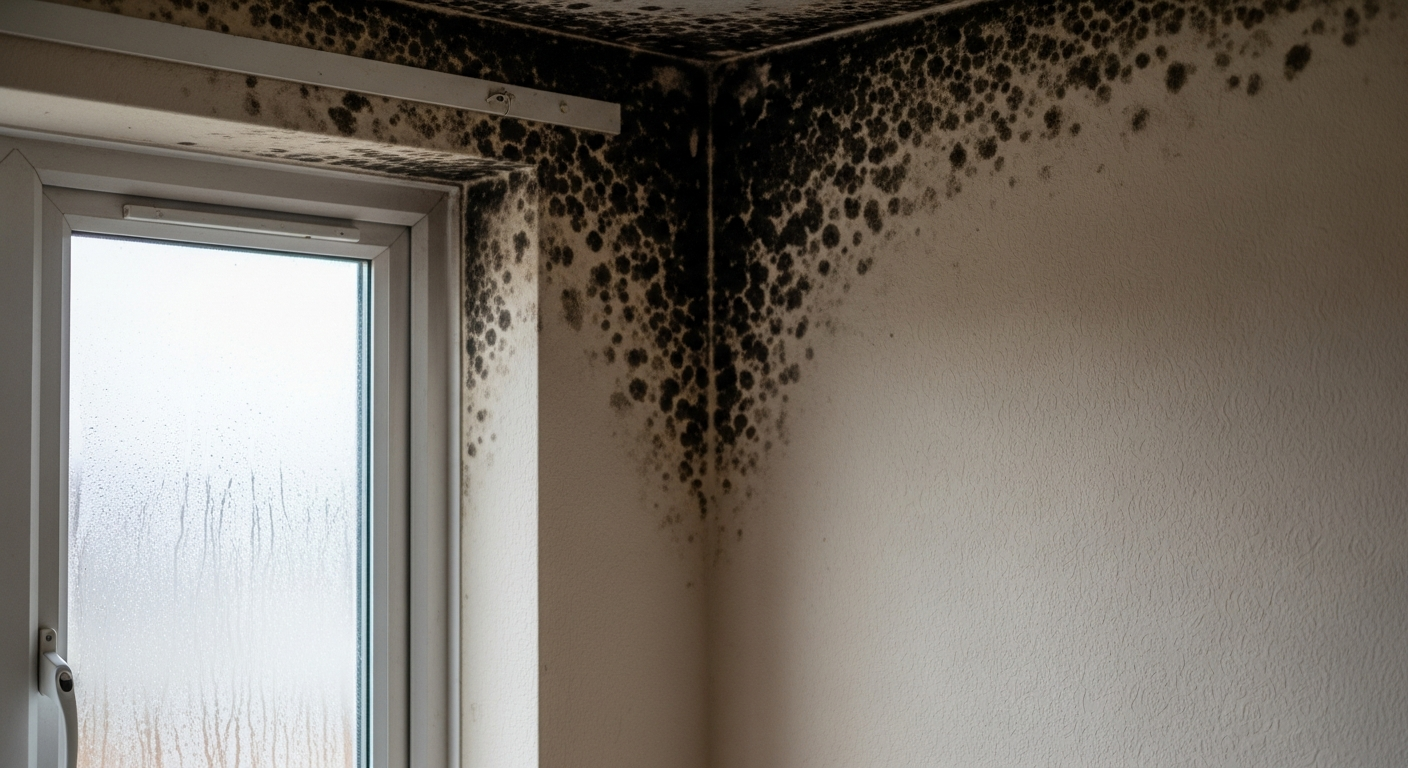
Fix condensation damp by improving ventilation, adding insulation to cold surfaces, and treating any mould with a fungicidal wash. Address the source of moisture first — cooking, bathing, and breathing all produce humid air that condenses on cold walls and windows.

Kill Existing Mould Safely
Put on goggles, gloves, and a dust mask before touching mould — disturbing spores without protection is a health risk. Dilute a fungicidal wash solution according to the manufacturer’s instructions, apply it to the affected area with a sponge, and leave it for the recommended dwell time. Wipe away dead mould with disposable cloths and bag them immediately. Never dry-brush mould — this spreads spores into the air.
Improve Ventilation at the Source
Condensation is caused by humid air hitting cold surfaces, so cutting moisture production is the most effective long-term fix. Fit trickle vents to windows in kitchens and bathrooms, or upgrade to a humidistat-controlled extractor fan that runs automatically when humidity spikes. Always vent tumble dryers externally, keep lids on pans when cooking, and crack a window when showering. Sealing leaking windows first ensures your ventilation improvements actually control airflow rather than leaking randomly.
Insulate Cold Surfaces
Condensation forms where surface temperature drops below the dew point, so raising the surface temperature eliminates the problem at source. Fix insulated dry-lining board to persistently damp external walls using moisture-resistant adhesive — even a 25 mm board makes a significant difference to surface temperature. Pay particular attention to external corners and reveals, which are coldest because they have two exposed faces. For a broader approach to wall insulation, see our cavity wall insulation guide .
Seal Cold Bridges Around Windows and Doors
Window and door frames are common cold bridges where condensation collects and mould establishes. Run a bead of silicone sealant along any gap between the frame and surrounding plaster, and ensure window reveals are insulated or painted with anti-condensation paint. Check that any existing sealant is intact — cracked or shrinking sealant allows warm moist air to reach cold masonry behind the reveal. Draught-proofing doors at the same time prevents uncontrolled moisture movement through gaps.
Apply Anti-Condensation Paint and Monitor Results
Once walls are dry and mould-free, apply two coats of anti-condensation paint to affected areas — it contains a micro-porous structure that absorbs surface moisture and raises the wall’s effective surface temperature slightly. Leave 24 hours between coats. Place a humidity meter in the worst-affected room: indoor relative humidity should sit between 40–60%. If it consistently reads above 65%, your ventilation changes have not gone far enough and a dehumidifier running for several weeks can help reset the baseline while permanent fixes take effect. Also check your loft insulation — heat lost through the ceiling cools top-floor walls and accelerates condensation.
Frequently Asked Questions
What is the difference between condensation damp and rising damp?
Condensation damp appears on cold surfaces and is caused by humid indoor air — it has no tide mark and is worse in winter. Rising damp travels up from the ground and leaves a clear tide mark, typically no higher than 1 m, with salts crystallising on the plaster surface.
Is condensation damp dangerous to health?
Yes — the black mould (Aspergillus niger and Cladosporium species) that grows in persistently damp conditions can cause or worsen respiratory conditions, particularly in children, the elderly, and people with asthma. The UK Health Security Agency recommends treating mould promptly and addressing the underlying moisture source.
Can a dehumidifier permanently fix condensation damp?
No. A dehumidifier reduces indoor humidity and provides immediate relief, but it is not a permanent fix — it consumes electricity continuously and does nothing to address cold surfaces or inadequate ventilation. Use it to help dry out a property while permanent measures such as extractor fans and insulation are installed.
Why do I get condensation on my walls even with the heating on?
Heating the air raises its capacity to hold moisture, but if external walls are poorly insulated their surface temperature stays low enough for that moist air to condense when it makes contact. Insulating the wall internally raises the surface temperature so condensation cannot form even when the room is warm.
Do I need a professional to fix condensation damp?
Most condensation damp is entirely DIY-fixable through improved ventilation, insulation, and surface treatment. If mould covers more than 1 m² or you cannot identify the moisture source, HSE guidance recommends getting professional advice — persistent damp in that quantity may indicate a structural issue beyond condensation.
Fit a humidistat-controlled extractor fan rather than a manual one — manual fans are switched off the moment someone leaves the room, before the steam has cleared. A humidistat fan runs until relative humidity actually drops below the set threshold, typically around 60%, which is the point where condensation risk falls away.
Sources
- NHS — Damp and mould in the home: health effects — nhs.uk
- HSE — Dampness and mould growth in buildings — hse.gov.uk
- Energy Saving Trust — Condensation and damp — energysavingtrust.org.uk
This guide is for general information only. Always work safely and follow manufacturer instructions. DIYnut accepts no liability for injury or damage arising from DIY work.