Rising Damp vs Condensation – DIY Guide
Rising Damp vs Condensation
Identify the correct damp type and fix it properly — first time.
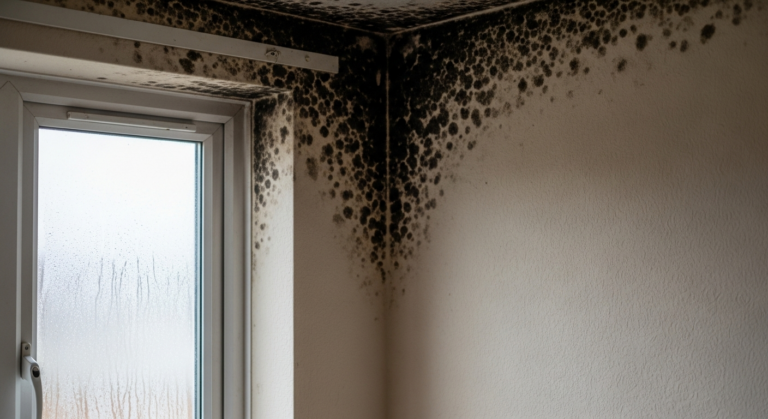
Rising damp vs condensation: rising damp climbs a wall from the ground, leaving a tide mark up to one metre high. Condensation forms on cold surfaces where moist air cools, causing black mould. Each has a different cause and a different fix — misdiagnose one for the other and the problem will return.

- Torch
- Damp meter or moisture meter
- Flat-head screwdriver
- Tape measure
- Notepad and pen
- Ladder
- Hygrometer (optional, to measure humidity)
- Masking tape
- Polythene sheet
- Waterproof tape
- Notepad for observations
Step-by-Step Guide
Locate the damp patch and record its position
Before diagnosing anything, mark the extent of the damp patch with masking tape and measure how high it reaches from the floor. Rising damp rarely climbs above one metre; if the staining starts at skirting-board level and spreads upward in a roughly even band, that pattern points toward rising damp. If the damp is higher up — on a ceiling, in corners, or spreading across a large area — condensation or a roof or plumbing leak is more likely. Take a photograph and note which wall is affected: an external wall with no cavity is a common site for rising damp in older properties.
Check for a tide mark and salt deposits
Run your fingers along the bottom of the damp area and look for a distinct horizontal tide mark — a yellowish or brown stain with a relatively clean upper edge. Rising damp draws soluble salts (nitrates and chlorides) up through the masonry; as the water evaporates, these salts are deposited on or just behind the plaster surface, creating a gritty, crystalline layer called efflorescence. Scratch the plaster lightly with a flat-head screwdriver: if it crumbles and feels damp well into the depth of the wall, and white crystals are present, rising damp is strongly indicated. Condensation does not produce tide marks or salt deposits.
Test the surface with the polythene sheet method
Cut a 300 mm square of polythene sheeting, tape all four edges firmly to the damp wall using waterproof tape, and leave it in place for 24–48 hours. When you remove it, check both the wall surface and the underside of the sheet. If the wall surface beneath the sheet is wet but the inner face of the polythene is dry, moisture is coming through the wall from outside or from the ground — consistent with rising or penetrating damp. If the inner face of the polythene is wet (condensation has formed on it) but the wall behind is relatively dry, the moisture source is the room air. This simple test is recognised by surveyors as a reliable first-line check. For a more precise reading, use a damp meter to confirm rising damp before spending on remedial work.
Assess ventilation and humidity levels
Condensation is a ventilation problem as much as a moisture problem. Check every room for working trickle vents on windows, functional extractor fans in the kitchen and bathroom, and any obvious signs of poor air circulation — furniture pushed hard against external walls, no gap between the back of wardrobes and the wall, windows that are never opened. A hygrometer is inexpensive and will confirm whether indoor relative humidity is consistently above 60%, which is the threshold at which condensation becomes likely on cold surfaces. Rising damp is entirely independent of indoor humidity: the moisture comes from the ground, not the air. If you are battling condensation damp in the home , improving ventilation is the primary fix.
Inspect the damp-proof course and external ground level
Go outside and look at the base of the wall. Most properties built after 1875 have a damp-proof course (DPC) — a continuous horizontal layer of impermeable material built into the mortar course, usually visible as a slightly different colour or texture at roughly 150 mm above ground level. Check that soil, render, paving, or a raised flower bed has not been built up above the DPC level: this bridges the DPC and allows moisture to bypass it entirely. Also look for cracked, eroded, or absent pointing in the lower courses of brickwork. A failed or bridged DPC is the most common cause of genuine rising damp. If you suspect the DPC has failed, read our guide to how to fix rising damp for the full remedial process.
Reach a diagnosis and plan the correct fix
Combine all your observations: height and shape of the staining, presence or absence of salt deposits and tide marks, the polythene test result, humidity readings, and the DPC inspection. If the evidence points to condensation, tackle it with improved ventilation, draught-proof windows and doors, and by insulating cold surfaces to raise their temperature — read our guide to fixing damp on interior walls for the next steps. If the evidence points to rising damp — tide mark, salts, positive damp-meter reading through the wall depth, DPC issue — the wall will need a chemical DPC injection or a new physical DPC, and the contaminated plaster must be stripped back and replaced with renovation plaster. Do not simply paint over either type of damp: both will return. Where diagnosis is genuinely unclear after following these steps, commission an independent RICS-qualified surveyor rather than accepting a free survey from a specialist contractor who has an interest in the diagnosis.
Frequently Asked Questions
What does rising damp look like compared to condensation?
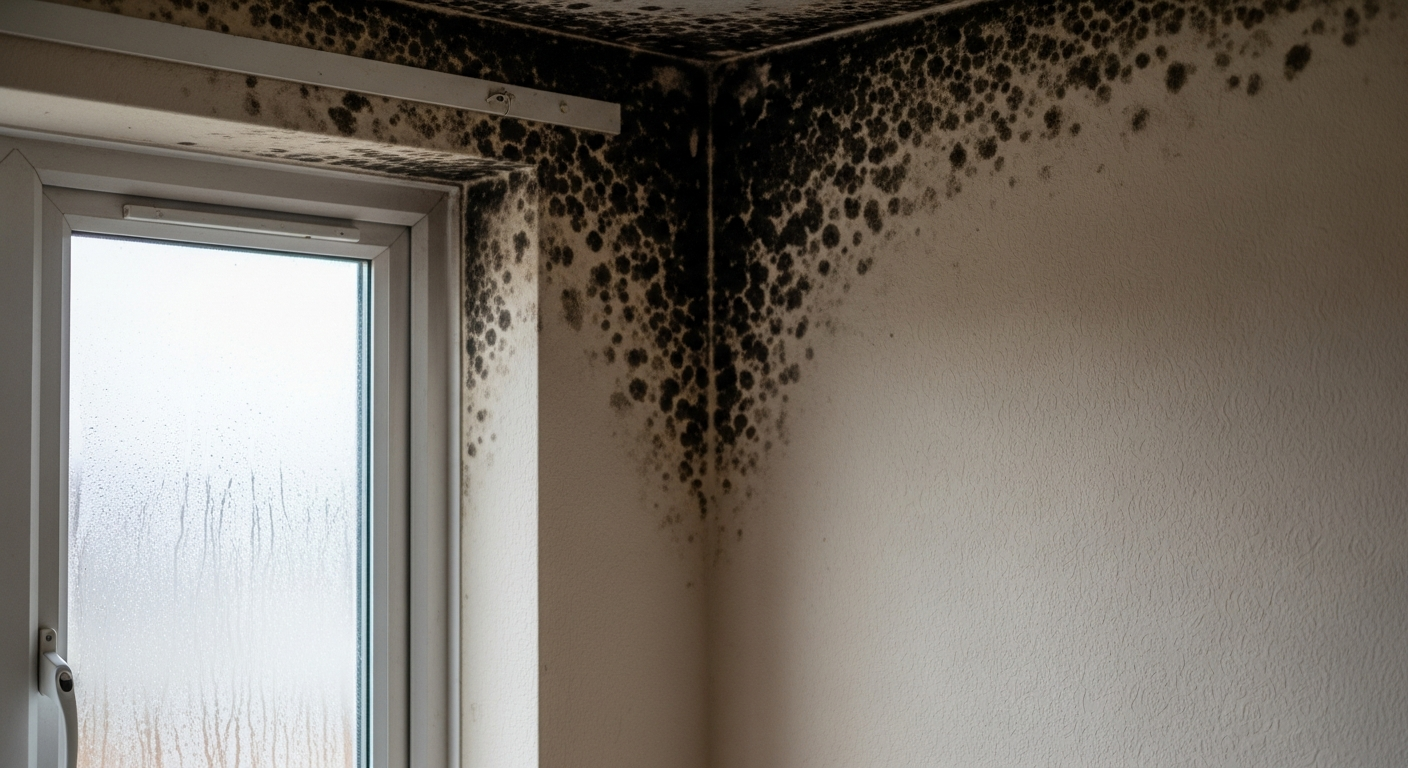
Rising damp produces a horizontal tide mark up to about one metre from the floor, often with white salt crystals and crumbling plaster at the base of the wall. Condensation appears as black mould or patchy wet spots on cold surfaces — particularly in corners, on north-facing walls, and around windows — with no tide mark and no salt deposits.
Can a property have both rising damp and condensation at the same time?
Yes, and this is one reason diagnosis is tricky. An older property with a failed DPC can have genuine rising damp at the base of an external wall while also having condensation higher up on the same or adjacent walls, especially in poorly ventilated rooms. Treat each problem separately with its own correct fix.
Is rising damp actually rare?
Genuine rising damp — where a failed or absent DPC allows ground moisture to wick up through masonry — does occur, but independent surveyors and Which? investigations have found it is far less common than specialist contractors suggest. The majority of damp complaints in UK homes are caused by condensation or by penetrating damp from a specific defect such as a leaking gutter or cracked render.
How do I stop condensation without spending a lot of money?
The most cost-effective steps are opening trickle vents on windows, running bathroom and kitchen extractor fans consistently, avoiding drying laundry indoors where possible, and pulling furniture 50 mm away from external walls to allow air circulation. These measures alone reduce indoor relative humidity significantly. Fixing condensation damp in detail covers all the practical steps.
Do I need a surveyor to diagnose damp?
For straightforward cases, the checks in this guide — tide marks, salt deposits, the polythene sheet test, a damp meter, and a DPC inspection — will give you a reliable working diagnosis. If the damp is severe, widespread, or you are buying or selling a property, commission an independent RICS-qualified building surveyor rather than a contractor whose income depends on finding remedial work to do.
A carbide damp meter (the type that measures actual moisture content of a sample taken from within the plaster) gives a far more reliable reading than a surface conductance meter, which can give false high readings on walls that simply contain hygroscopic salts left over from a damp problem that has already been fixed. If you hire a damp meter, ask specifically for a carbide type before paying for any remedial work.
Sources
- Which? — Damp problems: rising damp vs condensation — which.co.uk
- HSE — Dampness, condensation and mould in the home — hse.gov.uk
- Historic England — Damp in old buildings: causes and solutions — historicengland.org.uk
This guide is for general information only. Always work safely and follow manufacturer instructions. DIYnut accepts no liability for injury or damage arising from DIY work.