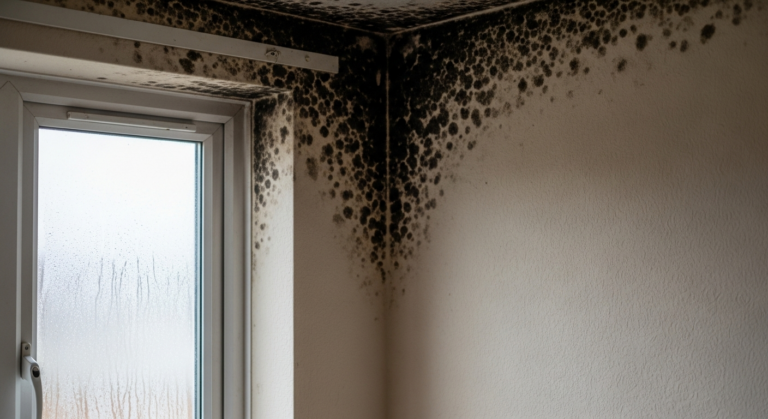
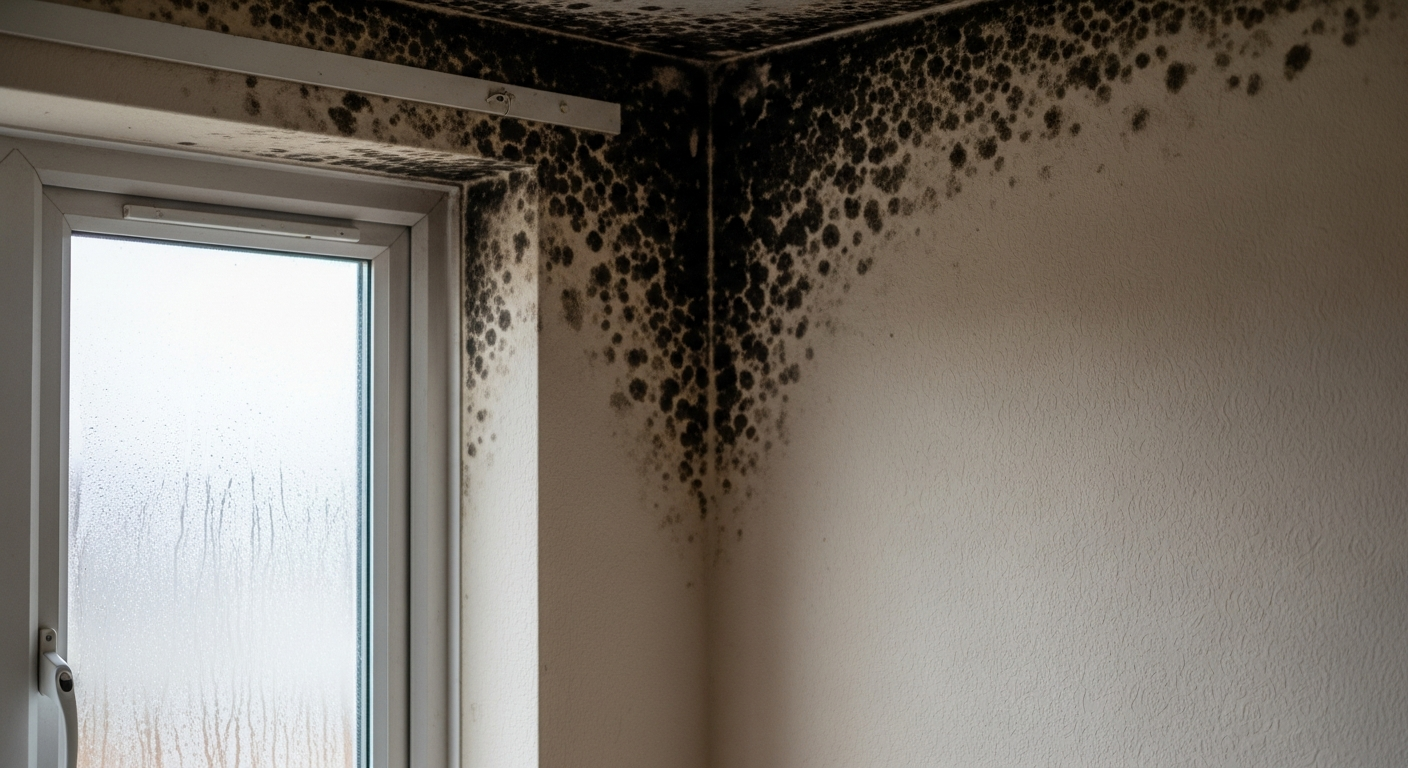
How to Fix Black Mould on Walls – DIY Guide
How to Fix Black Mould on Walls
Remove black mould safely, treat the cause, and stop it coming back for good.
Fix black mould on walls by killing the spores with a mould-specific solution, scrubbing the surface clean, allowing it to dry fully, then applying mould-resistant paint or primer. Always address the underlying cause — poor ventilation or condensation — or the mould will return within weeks.
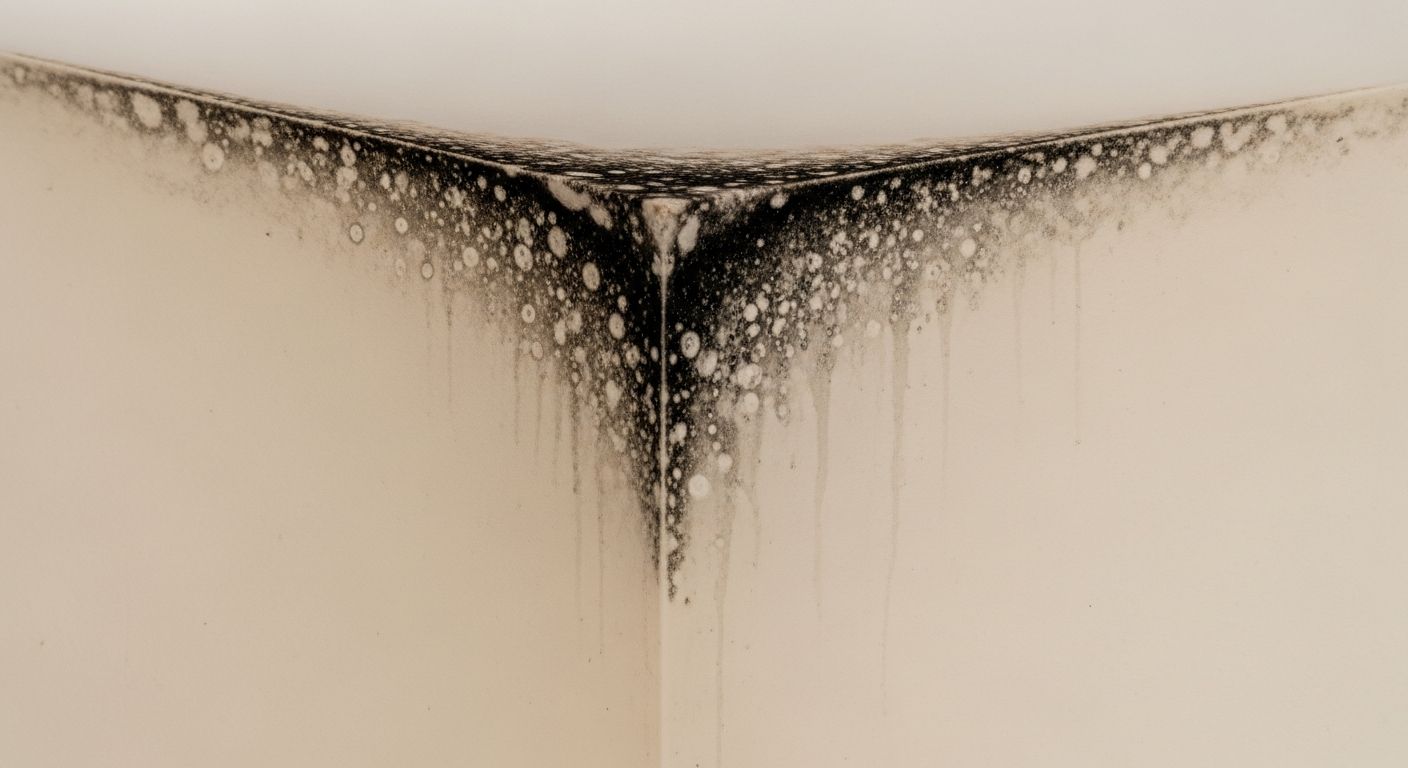
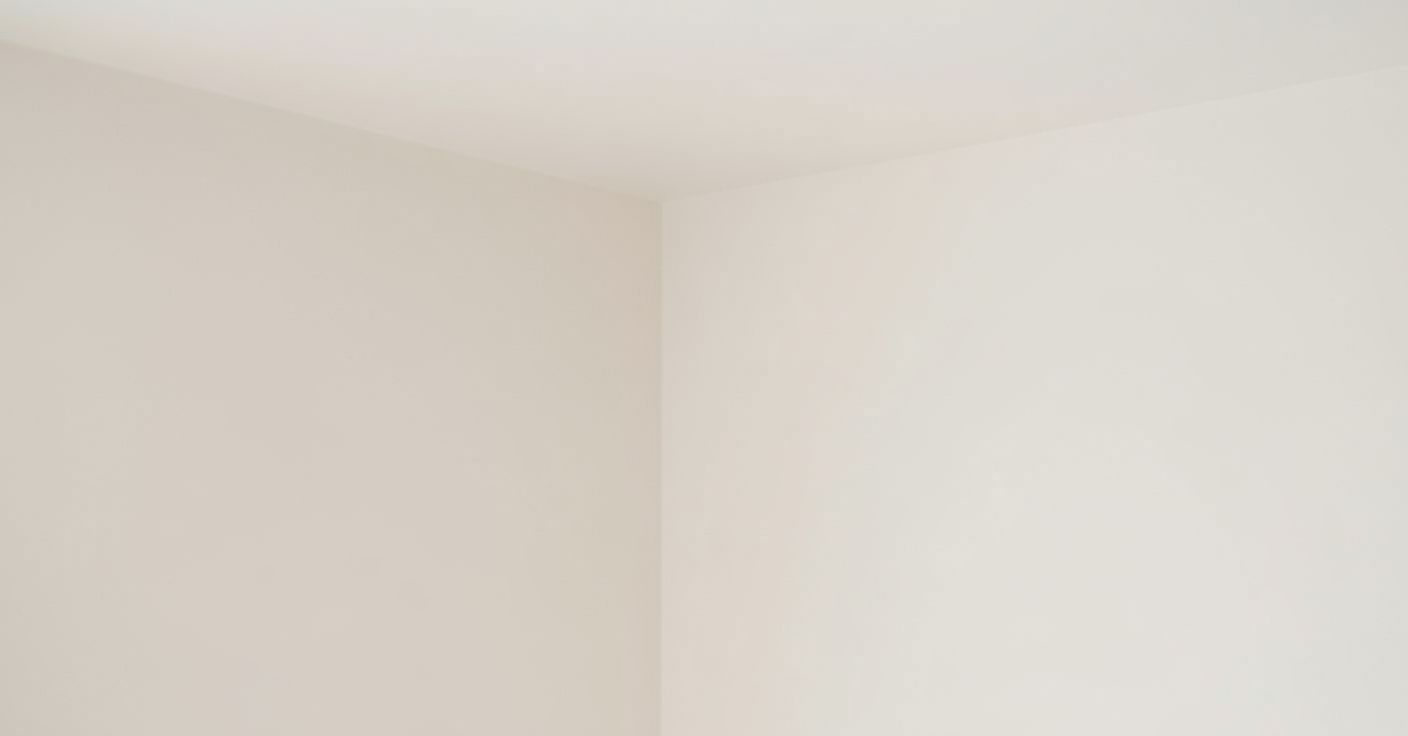
- Stiff-bristled scrubbing brush
- Spray bottle
- Bucket
- Sponge
- Safety goggles
- Disposable gloves
- Dust mask (FFP2 rated)
- Paint roller and tray
- Mould and mildew remover solution
- Diluted bleach solution (1 part bleach to 4 parts water)
- Warm water
- Mould-resistant primer
- Mould-resistant emulsion paint
- Disposable cloths or rags
- Plastic sheeting (to protect flooring)
- Antifungal wash or fungicidal solution
Step-by-Step Guide
Protect yourself and the room
Put on FFP2 dust mask, safety goggles, and disposable gloves before you touch anything — black mould (Cladosporium, Aspergillus, or Stachybotrys species) releases spores when disturbed that can irritate lungs and airways. Lay plastic sheeting on the floor beneath the affected wall, open windows to ventilate the room, and close internal doors to stop spores spreading to other areas. If the affected patch is larger than one square metre, the HSE recommends professional remediation — do not attempt it yourself.
Identify the cause of the mould
Before you scrub anything, work out why the mould is there. Black mould on walls is almost always caused by condensation (warm moist air hitting a cold surface) or, less commonly, a structural damp issue. Check for cold bridging around window reveals and external wall junctions, blocked or absent ventilation, and signs of rising damp such as tide marks low on the wall. Treating mould without fixing its cause is pointless — it will be back within weeks.
Apply mould remover solution
Spray a proprietary mould and mildew remover directly onto the affected area, following the manufacturer’s dwell time (typically 5–10 minutes). For a cost-effective alternative, use a diluted bleach solution — 1 part bleach to 4 parts water — applied by spray bottle or sponge. Do not mix bleach with any other cleaning product. Ensure the solution saturates the mould patch fully, including a 100 mm border of apparently clean wall around it, as surface mould is always larger than it looks. Understanding whether you are dealing with rising damp or condensation will help you choose the right long-term fix.
Scrub the wall and remove all residue
Using a stiff-bristled scrubbing brush, work the solution into the wall surface in circular motions to break up the mould colony. Wipe away the loosened mould with disposable cloths — never reusable cloths, as these spread spores. Rinse the wall with clean warm water and a fresh sponge, then wipe dry. Bag all used cloths, gloves, and disposable materials immediately and place them in a sealed bin bag before removing from the room. If the mould has stained deeply into plaster, a second application of antifungal wash may be needed before decorating.
Apply antifungal primer and mould-resistant paint
Once the wall is completely dry — allow 24–48 hours minimum — apply one coat of antifungal or fungicidal primer to the treated area and the surrounding 150 mm border. This kills any remaining spores and seals the surface. Follow with two coats of mould-resistant emulsion paint, allowing each coat to dry fully before applying the next. Standard emulsion will not prevent regrowth — only use paint specifically formulated with mould inhibitors, particularly in bathrooms and kitchens. For walls that had more severe mould, consider consulting our guide on how to fix condensation damp before redecorating.
Fix ventilation to prevent recurrence
Mould will return unless you address moisture at source. Improve ventilation by fitting or upgrading extractor fans in bathrooms and kitchens, using a trickle vent on window frames, and opening windows daily where possible. In rooms with persistent condensation, a wall-mounted positive input ventilation unit or a dehumidifier running during winter months will make a measurable difference. Cold external walls can also be improved with internal wall insulation — see our cavity wall insulation guide for options suited to your wall type.
Frequently Asked Questions
Is black mould dangerous to health?
Black mould can cause respiratory irritation, allergic reactions, and worsen conditions such as asthma — particularly in children, the elderly, and people with compromised immune systems. The NHS advises addressing mould promptly and improving ventilation as a priority health measure.
Can I use bleach to kill black mould on walls?
Yes — a solution of one part bleach to four parts water is effective at killing surface mould on non-porous painted walls. Never mix bleach with other cleaning products, always wear gloves and a mask, and ventilate the room fully while you work.
Why does black mould keep coming back after I clean it?
Mould regrows because the underlying cause — typically condensation from poor ventilation or a cold wall surface — has not been fixed. Cleaning removes the visible colony but does nothing about the moisture conditions that allow spores to settle and grow again. Our guide to fixing condensation damp covers the root causes in full.
Do I need to replaster a wall that had black mould on it?
Not always. If the mould has only affected the painted surface and the plaster beneath is sound and dry, thorough cleaning and antifungal treatment is usually sufficient. If the plaster is soft, crumbling, or the mould has penetrated deep into the substrate, replastering may be necessary — see our advice on how to repair blown plaster for guidance.
What is the difference between black mould and damp?
Black mould is a biological growth (fungus) that appears as dark spots or patches on surfaces. Damp is the moisture condition that enables mould to grow — it can be caused by condensation, rising damp, or penetrating damp. Mould is a symptom; damp is the cause.
After treating mould on a cold external wall, check the inside surface temperature with an infrared thermometer — if it reads more than 4°C below room air temperature during winter, you have a cold bridging problem that no amount of cleaning or paint will fix long-term. The real solution is increasing the thermal resistance of that wall, not just treating the surface.
Sources
- NHS — Damp and mould in the home — nhs.uk
- HSE — Biological agents: managing the risks in the workplace (mould and fungi) — hse.gov.uk
- GOV.UK — Housing health and safety rating system: damp and mould growth — gov.uk
This guide is for general information only. Always work safely and follow manufacturer instructions. DIYnut accepts no liability for injury or damage arising from DIY work.