How to Fix Mould on Bathroom Ceiling – DIY Guide
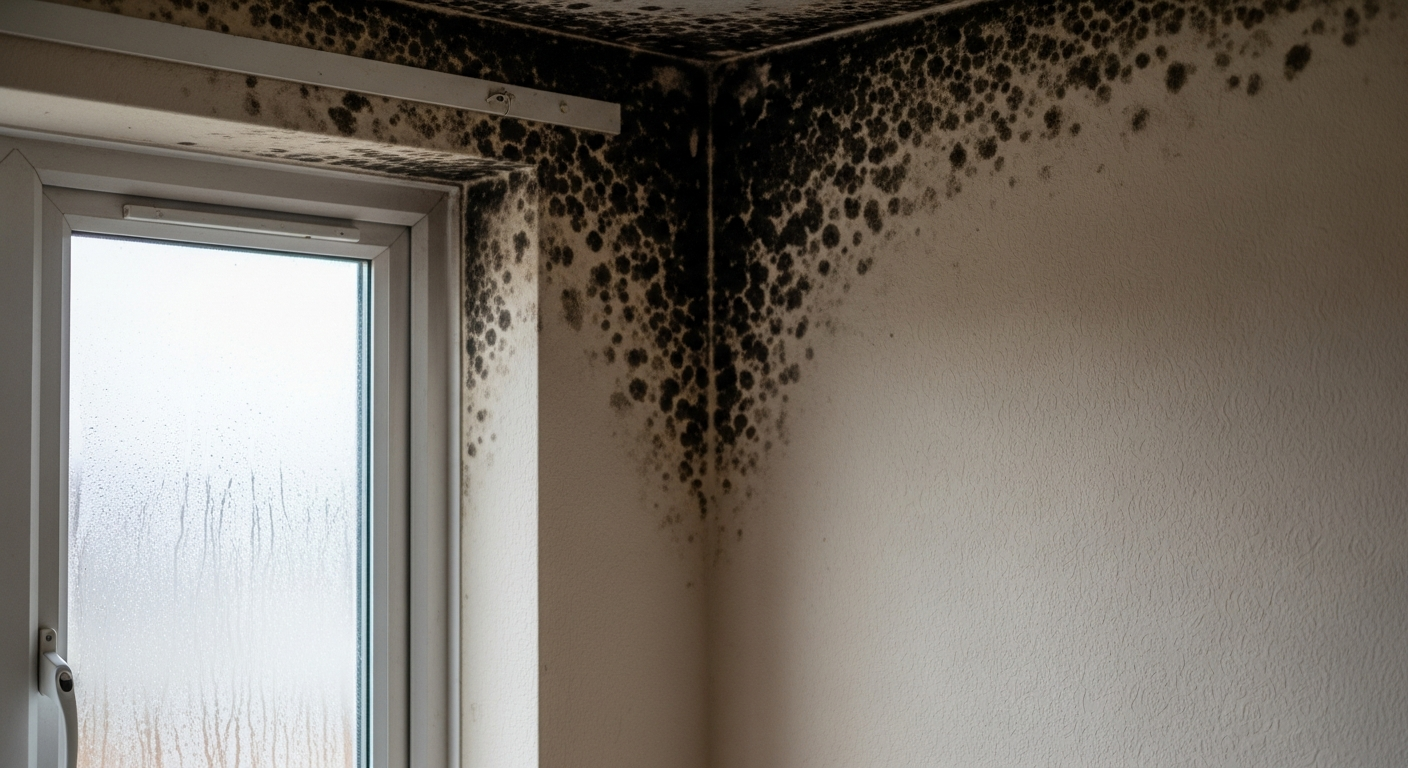
Fix mould on a bathroom ceiling by scrubbing with a mould-killing solution, allowing it to dry fully, sealing with a stain-blocking primer, and repainting with moisture-resistant paint. Address the root cause — poor ventilation or a leak — or the mould will return within weeks.

- Stiff-bristled scrubbing brush
- Sponge
- Bucket
- Roller and tray
- Paintbrush (25 mm)
- Safety goggles
- Rubber gloves
- Dust mask (FFP2 rated)
- Mould-killing spray or diluted bleach solution
- Sugar soap
- Stain-blocking primer (moisture-resistant)
- Bathroom-grade moisture-resistant paint
- Fine-grit sandpaper (120 grit)
- Masking tape
- Decorator’s dust sheet
- Ceiling filler (for any damaged areas)
Step-by-Step Guide
Protect the room and yourself
Put on rubber gloves, safety goggles, and an FFP2 dust mask before you start — mould spores become airborne when disturbed and must not be inhaled. Lay a dust sheet over the bath, basin, and floor directly below the affected area, and apply masking tape to any walls meeting the ceiling to keep paint lines clean. Open a window to ventilate the space throughout the job; if your extractor fan is working, switch it on now.
Apply mould-killing solution and scrub
Spray a purpose-made mould-killing solution directly onto the affected ceiling area and leave it to dwell for the time stated on the label — typically 5 to 10 minutes. If you are using a diluted bleach solution, mix one part bleach to four parts water in a bucket. Scrub the mould firmly with a stiff-bristled brush or sponge, working from the outer edges inward to avoid spreading spores. Rinse the area with clean water and repeat if any staining remains. Dispose of the sponge or brush after use — do not reuse it elsewhere in the home. If your bathroom guide suggests persistent damp from a leak above, resolve the source before proceeding.
Clean with sugar soap and allow to dry
Once the mould has been killed and rinsed away, wash the entire ceiling surface with a sugar soap solution to remove grease, soap residue, and any remaining bleach. Rinse with clean water and leave the ceiling to dry completely — this typically takes a minimum of 24 hours in a well-ventilated bathroom. Do not rush this step; painting over a damp surface traps moisture and the mould will return. If the surface is pitted or damaged where the mould was active, lightly sand and fill any depressions with ceiling filler, then sand flush once cured. Fix damp on interior walls first if you suspect moisture is penetrating from outside.
Apply a stain-blocking primer
Roll a coat of moisture-resistant stain-blocking primer over the entire cleaned and dry ceiling — not just the affected patch. A spot-only prime coat will leave a visible outline once topcoated. Work in even overlapping passes and cut in at the edges with a paintbrush. Allow the primer to dry fully according to the manufacturer’s drying time before moving on. This coat seals any residual staining and forms a barrier that prevents mould from feeding on the paint film above.
Repaint with moisture-resistant bathroom paint
Apply two coats of bathroom-grade moisture-resistant ceiling paint, allowing each coat to dry fully between applications. Use a roller for the main field and a 25 mm brush to cut in at the edges. Two thin coats give better, more durable coverage than one thick coat. Once dry, remove the masking tape carefully by pulling it back at 45 degrees to avoid tearing the fresh paint.
Address the ventilation to prevent recurrence
Mould returns because of condensation — warm, moist air hitting a cold ceiling surface. Check that your extractor fan is extracting effectively: hold a piece of tissue to the grille with the fan running; it should be held firmly in place. If airflow is weak or the fan is absent, improving ventilation is essential to a permanent fix . You can also reduce condensation by keeping the bathroom door closed when showering and opening a window afterwards. If you have a persistent leak from a room above, trace and repair it — a leaking shower tray directly above is a common culprit.
Frequently Asked Questions
Is bathroom ceiling mould dangerous to health?
Black mould (Stachybotrys chartarum) and other mould species produce spores that can irritate the respiratory system, trigger allergies, and worsen asthma — particularly in children, the elderly, and those with existing conditions. The HSE advises prompt remediation and good ventilation to reduce exposure. Always wear an FFP2 mask and goggles when scrubbing mould.
What causes mould on a bathroom ceiling specifically?
Can I use bleach to kill bathroom mould?
Diluted household bleach (one part bleach to four parts water) kills surface mould effectively and is suitable for non-porous ceiling surfaces. It does not penetrate porous materials well, so a purpose-made mould-killing spray is more effective on textured or porous ceilings. Always ventilate the room fully and wear gloves and eye protection.
How do I stop bathroom mould from coming back?
The key is controlling humidity — run an extractor fan during and for at least 15 minutes after every shower or bath, open windows where possible, and keep surfaces as dry as you can. If your extractor fan is ineffective or absent, improving your bathroom ventilation is the single most impactful long-term fix.
Do I need to replaster the ceiling if mould has damaged it?
Only if the plaster is visibly blown, soft, or crumbling when pressed. Minor pitting and staining after mould removal can be filled with ceiling filler and sanded flush. Heavily damaged areas may need the plaster cut back and re-skimmed — our guide to skim coating a wall covers the technique.
Before priming, wipe the cleaned ceiling with a cloth dampened with white vinegar and leave it to dry — vinegar creates an inhospitable surface pH for mould spores that may have penetrated the plaster slightly beyond what the bleach reached. Follow immediately with your stain-blocking primer; do not skip the primer in favour of vinegar alone.
Sources
- HSE — Dampness and mould growth in domestic properties — hse.gov.uk
- NHS — Mould and damp: effects on health — nhs.uk
- Which? — How to get rid of mould — which.co.uk
Safety Notice: Electrical and plumbing work can be dangerous if done incorrectly. In the UK, certain electrical work must comply with Part P of the Building Regulations and certain plumbing work with Part G. If in doubt, consult a qualified electrician (NICEIC/NAPIT registered) or plumber (CIPHE/WaterSafe registered). This guide is for general information only — it is not a substitute for professional advice.