How to Scarify and Aerate a Lawn – DIY Guide
Scarify and aerate your lawn in early autumn or spring when grass is actively growing. Remove thatch with a scarifier, then spike the surface with a hollow-tine aerator to relieve compaction. Follow up with top dressing and overseeding for the best results.


- Lawn scarifier or spring-tine rake
- Hollow-tine aerator or garden fork
- Lawn mower
- Stiff brush or besom broom
- Wheelbarrow
- Garden rake
- Lawn top dressing (sharp sand and loam mix)
- Grass seed (suitable for existing lawn type)
- Lawn fertiliser
- Garden compost
- Soil improver
- Water
Step-by-Step Guide
Mow the Lawn Short Before Starting
Cut your lawn to around 25 mm — roughly half its normal height — a day or two before scarifying. A shorter sward lets the scarifier blades reach the thatch layer without clogging, and makes it far easier to collect the debris afterwards. Do not mow if the ground is waterlogged.
Scarify to Remove Thatch and Moss
Work the scarifier across the lawn in parallel passes, then repeat at 90 degrees for thorough coverage. The blades cut through the layer of dead grass, moss, and organic debris — called thatch — that blocks water, air, and nutrients from reaching the roots. If your lawn is in poor condition, this stage can look brutal, but the grass will recover quickly. If you want to understand the full picture of how to fix a patchy lawn, read that guide alongside this one.
Rake Up and Remove All Debris
Collect every bit of loosened thatch, moss, and dead material with a garden rake and load it into a wheelbarrow. Leaving debris on the surface defeats the purpose — it will just reintegrate into the thatch layer. Compost weed-free material; bag and dispose of anything containing persistent moss or weed seed.
Aerate to Relieve Soil Compaction
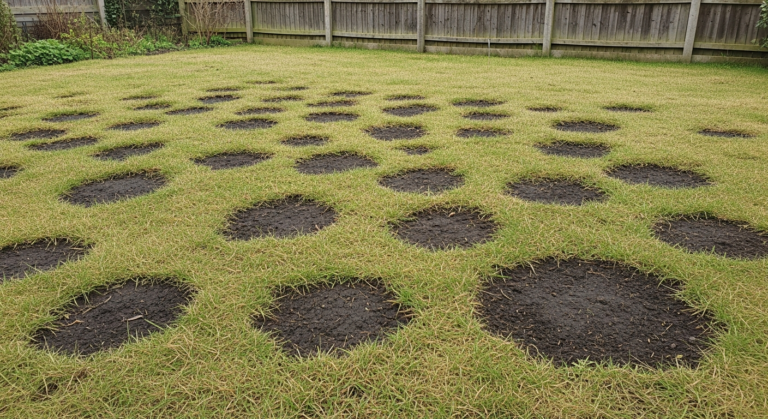
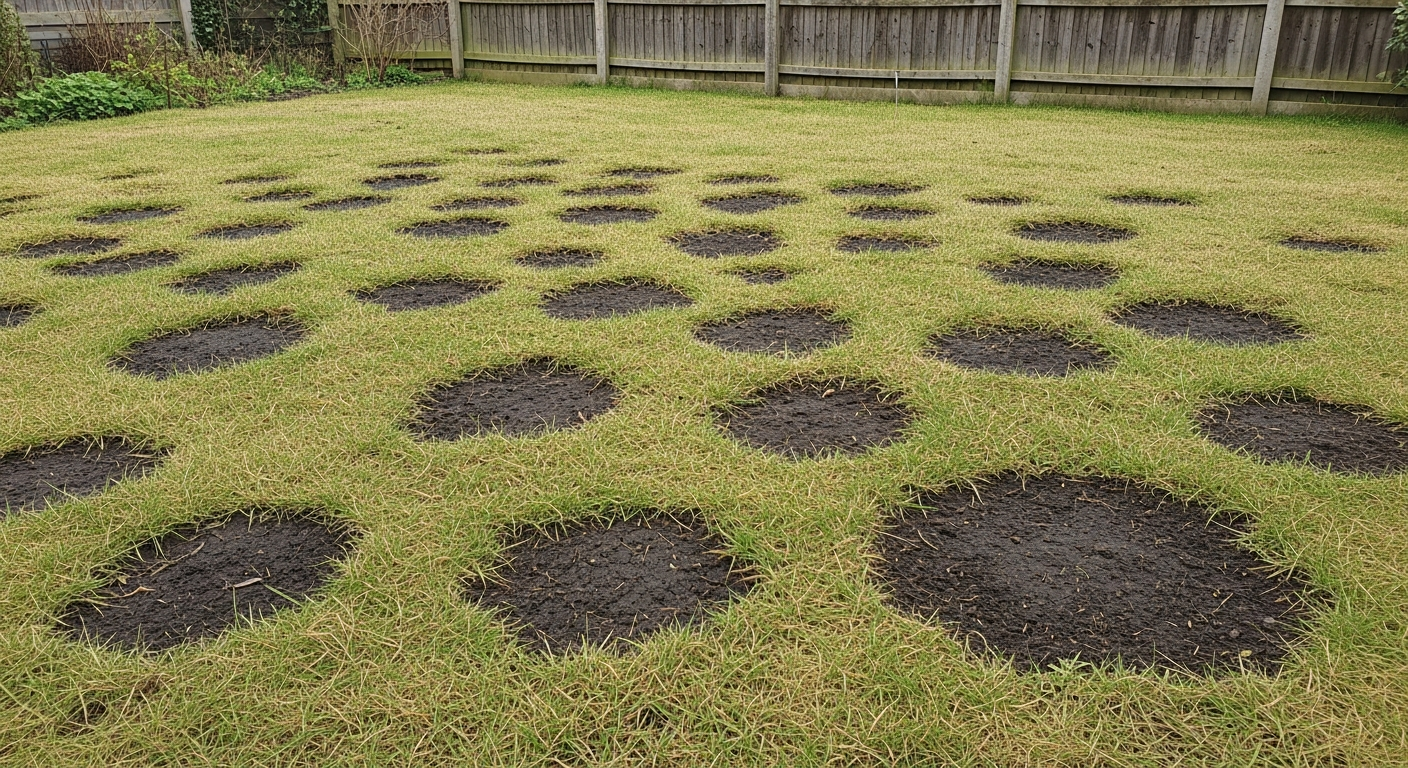
Drive hollow-tine aerator cores into the lawn at 100–150 mm intervals across the entire surface. Hollow tines physically remove plugs of soil, creating channels for air, water, and nutrients to penetrate deep into the root zone. A garden fork works for small areas — push it in 100 mm deep and rock it gently. Solid spiking is better than nothing, but hollow-tining gives measurably better results on compacted ground. For lawns that hold standing water, pairing this step with the advice in our guide to fixing a patchy lawn will help you address the underlying cause.
Apply Top Dressing to Fill the Holes
Brush a 2–3 mm layer of top dressing — typically a 70:30 mix of sharp sand and loam — across the aerated surface using a stiff brush or besom broom, working it down into the core holes. Sand improves drainage in clay soils; adding a proportion of garden compost suits lighter, free-draining soils. If you plan to overseed at the same time, broadcast grass seed before the top dressing so it makes good soil contact. Our guide on how to lay turf covers soil preparation principles that apply here too.
Water In and Allow the Lawn to Recover
Give the lawn a thorough watering immediately after top dressing to settle the material into the aeration channels. Apply a suitable autumn or spring lawn fertiliser according to the manufacturer’s rate — do not over-apply. Keep off the lawn for at least one week and water regularly during dry spells. Most lawns show visible improvement within three to four weeks. If you plan to explore more garden projects this season, our Garden Guide is the best place to plan your next steps.
Frequently Asked Questions
When is the best time to scarify and aerate a lawn in the UK?
Early autumn — typically September — is the optimum time in the UK. The soil is still warm, moisture is returning, and the grass has weeks of growing season left to recover before winter. Mid-spring (April) is the second-best window if you missed autumn.
How often should I scarify my lawn?
Once a year is sufficient for most UK lawns — autumn is ideal. Heavily thatched or mossy lawns may benefit from a light scarify in spring and a deeper one in autumn, but over-scarifying weakens the turf unnecessarily.
Do I need to overseed after scarifying and aerating?
Not always, but it is strongly recommended if scarifying has left thin or bare patches. Broadcast grass seed suited to your lawn type immediately after top dressing while the soil surface is disturbed and receptive — germination rates are significantly better at this point. See our guide on how to fix a patchy lawn for full overseeding detail.
What is the difference between scarifying and raking?
A spring-tine rake scratches the surface and removes loose moss and debris — useful for light maintenance. Scarifying uses bladed or wire tines driven into the turf to cut out deeply embedded thatch, which a rake cannot reach. For lawns with a thatch layer thicker than 10 mm, a dedicated scarifier is essential.
Can I hire a scarifier and aerator rather than buy them?
Yes — both tools are widely available from tool hire depots, which makes far more sense for a once-a-year job. A petrol-driven scarifier covers ground quickly and is worth the hire cost for any lawn over about 50 square metres. Book ahead in September as demand peaks.
After hollow-tine aeration, leave the soil cores on the surface and break them up with a garden rake rather than removing them — they contain beneficial microorganisms and organic matter that work back into the lawn as free top dressing. Only remove cores if your soil is heavily clay-based and you are replacing them with a sand-rich top dressing mix.
Sources
- RHS — Lawn aeration and scarification — rhs.org.uk
- Which? — How to scarify a lawn — which.co.uk
- GOV.UK — Safe use of pesticides in amenity areas (fertiliser and weed guidance) — gov.uk
This guide is for general information only. Always work safely and follow manufacturer instructions. DIYnut accepts no liability for injury or damage arising from DIY work.