How to Fix a Slow Draining Sink – DIY Guide
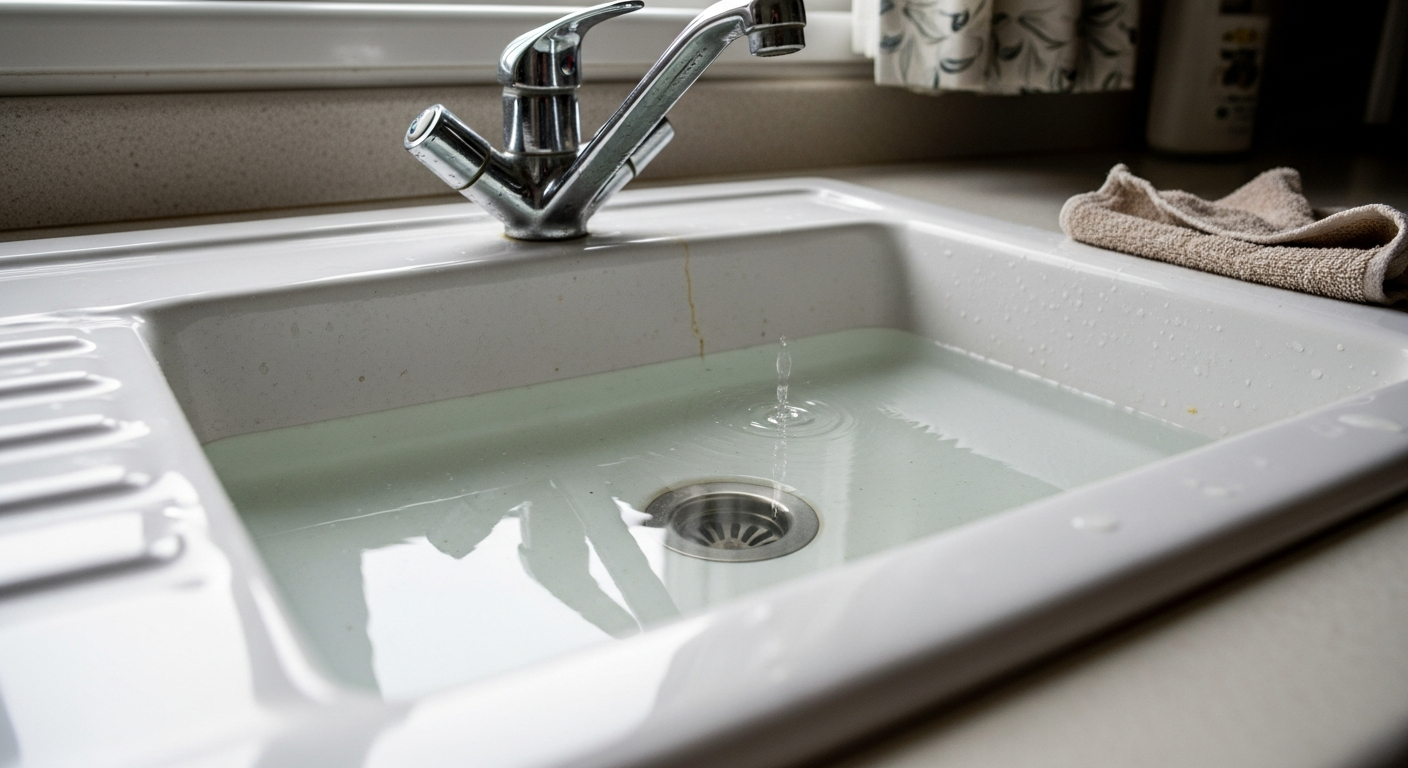
Fix a slow draining sink by removing and cleaning the trap, clearing debris from the drain opening, and flushing with boiling water. Most slow drains are caused by a build-up of hair, grease, and soap residue in the trap or upper waste pipe.


- Adjustable spanner
- Bucket
- Old toothbrush
- Drain plunger
- Bottle brush
- Torch
- Rubber gloves
- Washing-up liquid
- White vinegar
- Bicarbonate of soda
- PTFE tape
- Drain cleaning tool (flexible hook)
- Replacement trap washers
Step-by-Step Guide
Clear the drain opening
Put on rubber gloves and remove the drain cover or plug if fitted — most unscrew or lift straight out. Pull out any visible hair, soap scum, or debris using a flexible drain hook or your fingers. This layer of blockage at the surface is often enough to restore decent flow on its own. For bathroom sinks, hair is almost always the primary culprit here. If you also have a slow bath drain, the same method applies — see our guide on how to unblock a bath drain.
Use a plunger to shift the blockage
Place the cup of the plunger squarely over the drain opening to form a seal. Fill the sink with enough water to cover the rubber cup, then pump firmly up and down ten to fifteen times without breaking the seal. On the final stroke, pull the plunger up sharply. This pressure change can dislodge a partial blockage sitting further down the waste pipe. Run the hot tap immediately after to see whether flow has improved.
Flush with bicarbonate of soda and vinegar
Pour 100g of bicarbonate of soda directly into the drain, followed immediately by 150ml of white vinegar. The fizzing reaction helps break down grease and soap deposits clinging to the inside of the waste pipe. Leave it to work for fifteen minutes, then flush through with a full kettle of boiling water. Avoid this method on older lead waste pipes or if your pipework uses plastic push-fit fittings that could be degraded by repeated heat — in those cases use very hot tap water instead.
Remove and clean the trap
Place a bucket directly under the trap — the curved section of pipework beneath the sink. Unscrew the trap by hand or with an adjustable spanner, supporting it as it comes free to catch the standing water inside. Tip the contents into the bucket and inspect the trap for compacted grease, hair, and soap residue. Scrub the inside of the trap thoroughly with an old toothbrush and washing-up liquid, then rinse clean. Check the rubber washers at each end while the trap is off — replace any that are flattened or cracked. If you suspect the issue is further into the pipe rather than the trap itself, our guide on how to unblock a sink drain covers probing deeper into the waste run.
Refit the trap and test
Wrap fresh PTFE tape around the threaded sections of the trap if the existing tape looks worn or compressed. Hand-tighten the trap connections firmly, then give each a quarter-turn with the spanner — do not overtighten plastic fittings as the threads will strip. Run the hot tap at full flow for thirty seconds and check underneath for any drips at the joints. A correctly fitted trap should drain immediately with no pooling. If the sink is still draining slowly after cleaning the trap, the partial blockage may lie further along the waste run toward the soil stack and will need rodding or a plumber’s drain auger to clear.
Prevent future build-up
Fit a hair-catcher or drain strainer over the plug hole — these cost under £5 and remove the most common cause of slow drains at source. Once a month, pour a kettleful of boiling water down the sink to melt grease before it has a chance to accumulate. Avoid pouring cooking fat, coffee grounds, or food waste down any sink, as these are the main contributors to grease-based blockages. For kitchen sinks specifically, also check our guide on unblocking a kitchen sink, which covers grease-heavy blockages in more detail.
Frequently Asked Questions
Why does my sink drain slowly but not block completely?
Partial slow drainage is almost always caused by a gradual build-up of hair, soap scum, or grease that restricts but does not fully block flow. Cleaning the trap and drain opening usually resolves it without any specialist tools.
Can I fix a slow draining sink without removing the trap?
Yes — start with the plunger and the bicarbonate of soda and vinegar flush. These methods clear surface blockages and light grease build-up without touching the trap. If the drain is still slow after both attempts, removing the trap is the next logical step.
Is a slow draining sink a sign of a bigger plumbing problem?
Usually not — it is almost always a localised build-up in the trap or upper waste pipe. However, if multiple sinks, baths, or toilets are draining slowly at the same time, the blockage may be in the main soil stack or drain run, which requires a drainage specialist. You can read more in our complete plumbing guide.
How often should I clean my sink trap?
In a busy household, cleaning the trap every three to six months prevents slow drainage from developing. Fitting a drain strainer reduces debris in the trap significantly and extends the time between cleans.
My kitchen sink drains slowly even after clearing the trap — what next?
Kitchen sink blockages often sit further along the waste pipe where grease has solidified against the pipe walls. Try flushing with very hot water and a squirt of washing-up liquid, then check where the waste pipe connects to the main drain for a secondary build-up. If the smell is also an issue, our guide on how to fix a smelly drain covers the next steps.
Before refitting the trap, hold it up to the light and look straight through the barrel — if you can see daylight clearly, it is clean enough. If the inside walls still look coated, a second scrub with a bottle brush and degreasing washing-up liquid will make a noticeable difference to how long the drain stays clear.
Sources
- WaterSafe — Finding a WaterSafe approved plumber — watersafe.org.uk
- Which? — How to unblock a sink — which.co.uk
- HSE — Safe use of chemical drain cleaners — hse.gov.uk
Safety Notice: Electrical and plumbing work can be dangerous if done incorrectly. In the UK, certain electrical work must comply with Part P of the Building Regulations and certain plumbing work with Part G. If in doubt, consult a qualified electrician (NICEIC/NAPIT registered) or plumber (CIPHE/WaterSafe registered). This guide is for general information only — it is not a substitute for professional advice.