Laminate Flooring Buying Guide
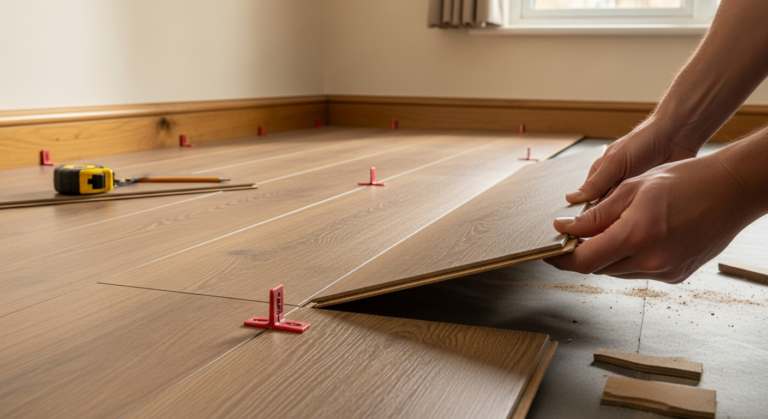
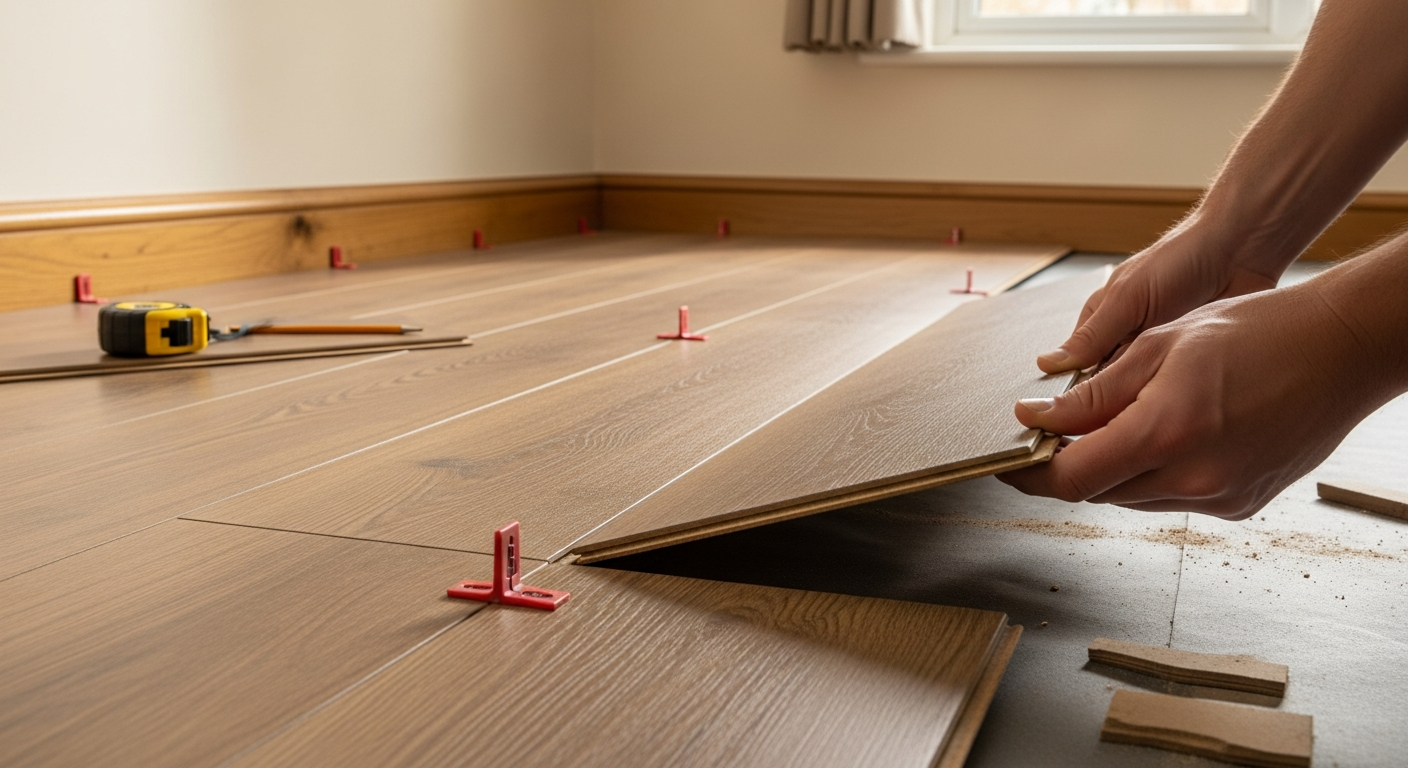
A laminate flooring buying guide helps you choose the right board by AC rating, thickness, and wear layer for your room type. Match the AC rating to foot traffic, choose 8–12mm thickness for most domestic rooms, and always check the warranty before buying.


- Tape measure
- Calculator
- Pencil
- Graph paper or squared notepad
- Moisture meter
- Laminate flooring boards
- Foam or combination underlay
- Vapour barrier sheet
- Expansion gap spacers
- Threshold strip
- Flexible silicone sealant (for wet areas)
Step-by-Step Guide
Measure your room accurately
Measure the length and width of the room in metres, multiply to get the floor area in m², then add 10% to account for offcuts and waste. For rooms with alcoves or bay windows, break the floor plan into rectangles, calculate each separately, and add them together. Accurate measurement prevents costly shortfalls.
Match the AC rating to your room’s foot traffic
The Abrasion Class (AC) rating tells you how much wear a laminate can handle. AC3 suits moderate domestic use such as bedrooms and living rooms; AC4 is suitable for heavy domestic use including hallways and kitchens; AC5 is commercial grade. Choosing too low an AC rating for a busy room means the surface wears through within a few years. For most UK homes, AC4 is the safest all-round choice. You can read more about flooring options and ratings in our Flooring Guide.
Choose the right board thickness
Laminate is sold in thicknesses from 6mm to 12mm. Thinner boards (6–7mm) are budget options that transmit more sound and feel hollow underfoot. An 8mm board is the minimum worth fitting in most domestic rooms. Aim for 10–12mm where comfort underfoot matters, or where the subfloor is slightly uneven, as thicker boards bridge minor imperfections better. Thicker boards also tend to carry longer warranties.
Check the wear layer, surface finish, and warranty
The wear layer is the transparent protective film over the decorative print. A thicker, harder-wearing layer means the floor resists scratches and scuffs for longer — check the manufacturer’s abrasion value alongside the AC rating. Surface finish also matters: embossed or textured finishes hide minor scratches better than high-gloss boards. Always read the warranty terms; a 15–25 year domestic warranty indicates a quality product, but check what it covers and whether a specific underlay type is required to keep it valid.
Assess your subfloor and select the correct underlay
Laminate must be laid on a flat, dry, structurally sound subfloor. Use a spirit level or straightedge to check that the subfloor is within 3mm over 1.8 metres — humps and dips beyond that cause boards to flex, creak, and fail at the joints. On solid concrete, you need a separate vapour barrier or a combination underlay that includes one built in. On suspended timber floors, a standard foam underlay is sufficient. If your subfloor has flex or bounce, fix that before you lay anything. Our guide to the best underlay for laminate covers the different types in detail.
Decide on format, colour, and plank direction
Wide planks (200mm+) look more contemporary and make small rooms feel larger; narrower planks suit period properties. Longer boards reduce the number of end joints and give a cleaner visual result. Lighter colours make rooms feel airier; darker tones show dust and pet hair more readily. Run planks parallel to the longest wall or towards the main light source for the most natural look. Once you have chosen your floor, allow packs to acclimatise in the room for 48 hours before laying, and plan your installation — our how to lay laminate flooring guide walks you through every step.

Similar Posts
How to Lay Laminate Around Doors – DIY Guide
Lay laminate around doors cleanly every time. Undercut frames, scribe boards, and fit threshold strips for a professional finish.
How to Fix Lifting Laminate Edges – DIY Guide
Fix lifting laminate edges for good — causes, step-by-step repair, and how to stop them lifting again. Under 2 hours, under £25.
How to Lay Laminate Flooring – 2026 Guide
How to lay laminate flooring step by step — prep, underlay, fitting and finishing for a professional result in a day.
How to Repair Chipped Laminate Floor – DIY Guide
Repair chipped laminate floor in under an hour with a wax filler kit. Match the colour, fill in layers, and blend for an invisible finish.