How to Fix a Door That Slams – DIY Guide
How to Fix a Door That Slams
Stop a slamming door for good with simple adjustments any homeowner can make.
Fix a door that slams by fitting a door closer, adding self-adhesive foam draught excluder to the door stop, or adjusting the hinges. Most slamming doors need one of these three fixes and the job takes under an hour.

- Screwdriver (flathead and crosshead)
- Cordless drill
- Tape measure
- Pencil
- Chisel
- Hammer
- Spirit level
- Self-adhesive foam draught excluder strip
- Door closer (surface-mounted)
- Replacement hinge screws (longer gauge)
- Hinge bolts or hinge shims
- Wood filler
- Adhesive-backed felt pads
- Timber offcut (for shim if needed)
Step-by-Step Guide
Identify the Cause of the Slam
Open and close the door slowly and watch what happens — a door slams either because it swings too freely with no resistance, because a draught is catching it, or because the latch is misaligned and the door bounces off the frame. Knowing the cause tells you which fix to apply and avoids wasting time on the wrong remedy. Check whether the door slams consistently or only in certain weather, as wind-driven slams need a different solution to a door that simply swings shut too fast.
Fit Self-Adhesive Foam Strip to the Door Stop
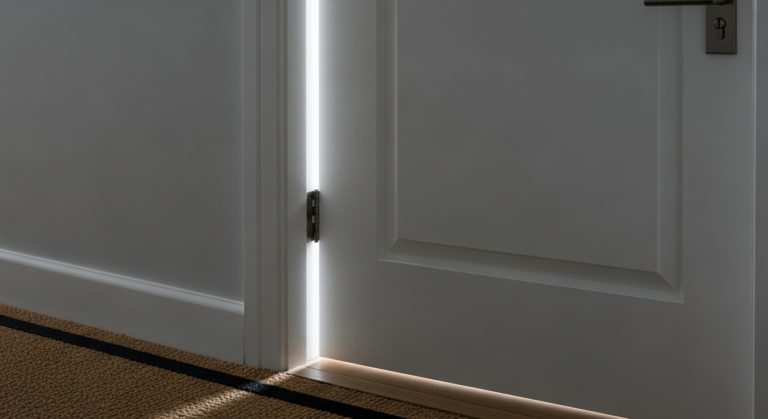
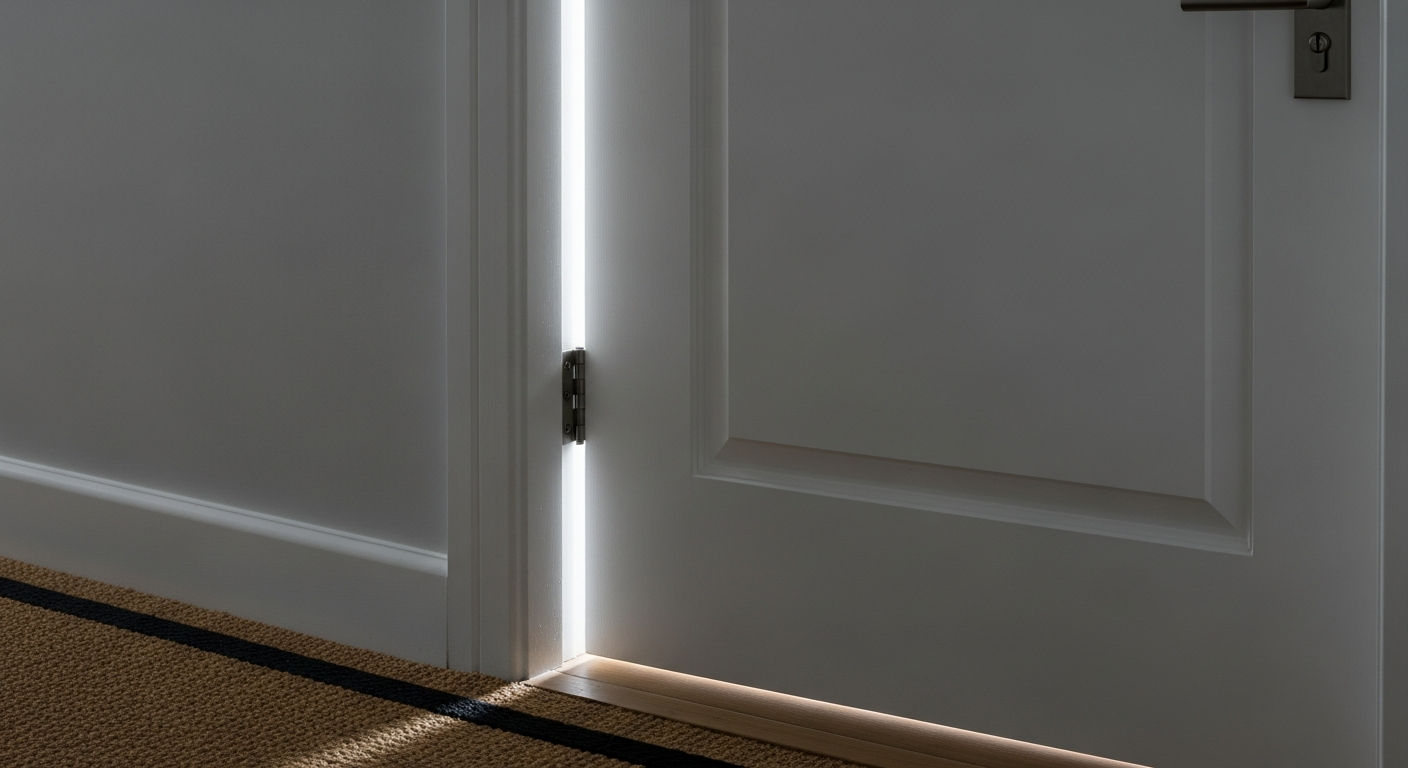
The quickest fix for a door that bangs shut is to stick a length of self-adhesive foam draught excluder strip along the door stop — the thin timber strip on the frame that the door closes against. Clean the surface with a dry cloth, cut the foam strip to length with scissors, peel the backing, and press it firmly into place. The foam cushions the impact and reduces the slam to a soft close. This also improves draught-proofing as a bonus. For internal doors where aesthetics matter, choose a flat foam profile rather than a bulky P-section. Our Timber & Joinery Guide covers door frame repairs in more detail if the stop itself is damaged.
Adjust or Tighten the Hinges
Loose hinges let the door drop and swing freely, making it harder to control and increasing the force with which it closes. Open the door fully and check each hinge for play — if a hinge moves when you grip the door and push upward, the screws are loose or the holes are stripped. For stripped screw holes, remove the screw, pack the hole with a matchstick or a small timber offcut coated in wood glue, let it cure fully, then refit with the original screw. If the door still has excess swing, fit longer gauge screws through the hinge into the stud or solid timber behind the frame to give a firmer anchor.
Fit a Surface-Mounted Door Closer
A door closer is the most reliable long-term solution for a door that slams repeatedly. Surface-mounted closers are straightforward to fit and need no specialist knowledge — they attach to the face of the door and frame with the screws and template provided. Hold the closer body against the door at the manufacturer’s specified distance from the hinge edge, mark the fixing holes with a pencil, drill pilot holes to avoid splitting the timber, and screw it in place. Attach the arm bracket to the frame, connect the arm, and then adjust the closing speed and latching speed using the small adjustment valves on the closer body with a flathead screwdriver until the door closes firmly but quietly. If the door also sticks or drags, plane it first before fitting the closer, as a closer cannot compensate for a binding door.
Add Felt Pads as a Secondary Buffer
If you want a belt-and-braces approach — particularly useful on kitchen or utility room doors — stick adhesive-backed felt pads to the door stop at the point where the door face makes contact. These work alongside foam strip or as a standalone fix on lighter internal doors. They are silent, long-lasting, and take about two minutes to fit. Peel and press three or four pads along the stop: one at latch height, one near the top, and one near the bottom. If the surrounding frame timber is soft or rotting, address that before applying any adhesive fix or it will not hold.
Test the Door and Fine-Tune
Open the door to 90 degrees and release it — it should swing closed smoothly and latch without bouncing or slamming. If a closer is fitted, open and release from 45 degrees as well; the latch speed valve controls the final snap of the latch and is separate from the main closing speed. Adjust until the door closes completely in all conditions without force. Check again in different weather if the door is near an exterior that creates a pressure differential — a door closer valve set too light will still allow a slam in strong draught.
Frequently Asked Questions
Why does my door slam shut on its own even when there is no draught?
The most common cause is an out-of-plumb door frame or uneven hinge positions that cause the door to swing closed under its own weight. Check the frame with a spirit level and adjust the hinges — packing one hinge leaf with a thin card shim changes the door’s hanging angle and can stop self-closing entirely.
Can I fix a slamming door without drilling any holes?
Yes — self-adhesive foam draught excluder strip and adhesive-backed felt pads require no drilling and no tools beyond scissors. They are the right starting point for a rented property or if you want a reversible fix.
What type of door closer is best for an internal door?
A surface-mounted overhead closer is the most practical choice for most internal doors — it is easy to fit, adjustable, and widely available. Concealed closers exist but require routing into the door edge and are better suited to new installations rather than retrofits. If you are also fitting new flooring around the door, coordinate the order of work so the closer arm clearance is not affected by a raised floor height.
Will a door closer work on a fire door?
Yes — in fact, fire doors are legally required to be fitted with a door closer under UK building regulations to ensure they self-close in the event of a fire. Use a closer that is certified to the relevant British Standard (BS EN 1154) and check it closes the door fully from any open position without manual assistance. The HSE and gov.uk guidance on fire doors confirms this requirement for all relevant premises.
My door slams in the wind — is that a different fix?
Wind-driven slamming is usually caused by a pressure differential between rooms — an open window in an adjacent room creates a cross-draught that pulls the door shut with force. A door closer set with a controlled closing speed is the most effective solution, as foam strip alone will not slow the door’s approach. If you are doing other joinery repairs at the same time, tackle draughts throughout the property for a comprehensive result.
When setting the latching speed on a door closer, do it with the door at room temperature and fully heated — closer hydraulics stiffen slightly in cold weather. Set the latch speed one notch faster than feels right in summer and it will perform correctly year-round without adjustment.
Sources
- HSE — Fire doors: what you need to know — hse.gov.uk
- gov.uk — Fire safety in the home — gov.uk
- Which? — How to draught-proof your home — which.co.uk
This guide is for general information only. Always work safely and follow manufacturer instructions. DIYnut accepts no liability for injury or damage arising from DIY work.