How to Fit a Soft Close Hinge – DIY Guide
To fit a soft close hinge, remove the old hinge, drill a 35 mm cup hole in the door, press in the new hinge cup, screw it in place, attach the mounting plate to the cabinet, clip the hinge on, and adjust the screws until the door closes flush and silently.

- Cordless drill
- 35 mm Forstner bit
- Cross-head screwdriver
- Tape measure
- Pencil
- Clamp
- Soft close concealed hinges (one pair per door)
- Hinge mounting plates
- Short wood screws (supplied or matching gauge)
- Masking tape (for marking drill depth)
Step-by-Step Guide
Remove the Old Hinge
Open the cabinet door fully and unscrew the existing hinges from both the door and the cabinet carcass. Support the door with one hand as you remove the final screw so it does not drop. If the old hinges are a standard 35 mm cup style, the existing holes may be reusable — check they are clean and undamaged before moving on. If you are replacing worn or broken hinges more broadly, see our guide on how to update kitchen cabinets without replacing them for a full cabinet refresh approach.
Mark and Drill the Hinge Cup Recess
Measure 22 mm from the edge of the door to the centre of the cup hole — this is the standard inset for a face-frame or frameless kitchen cabinet. Mark the centre point clearly with a pencil. Wrap a strip of masking tape around your 35 mm Forstner bit at a depth of 12–13 mm to act as a depth stop — drilling too deep will break through the door face. Clamp the door flat, then drill the recess at slow speed to keep the hole clean and splinter-free.
Fit the Hinge Cup into the Door
Press the hinge cup into the drilled recess — it should sit flush with the door surface with no rocking. Drive the two small screws into the pre-drilled pilot holes on either side of the cup. Do not overtighten; the cup needs to sit level, not canted. If the hole is slightly oversized, a small amount of wood filler around the cup edge will stabilise it before screwing.
Attach the Mounting Plate to the Cabinet
Position the mounting plate inside the cabinet carcass at the correct height to match your door layout. Standard positioning is 100 mm from the top and bottom of the door for a two-hinge setup. Use a pencil to mark the screw holes, drill pilot holes to prevent splitting, then screw the plate firmly into the carcass side. For a three-hinge door — typically anything over 1,500 mm tall — add a central plate at the midpoint.
Clip the Hinge onto the Mounting Plate
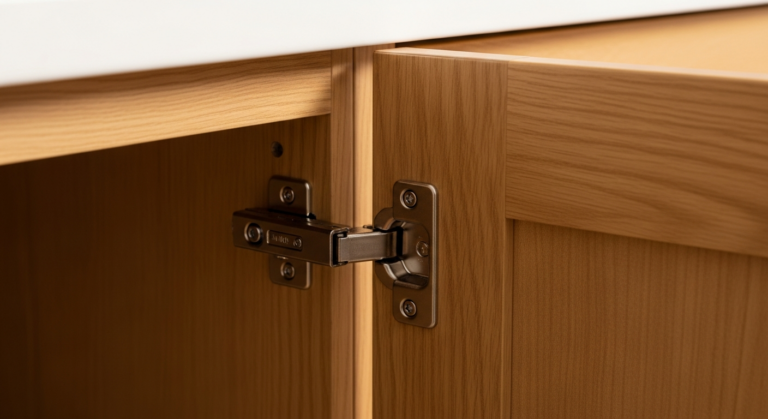
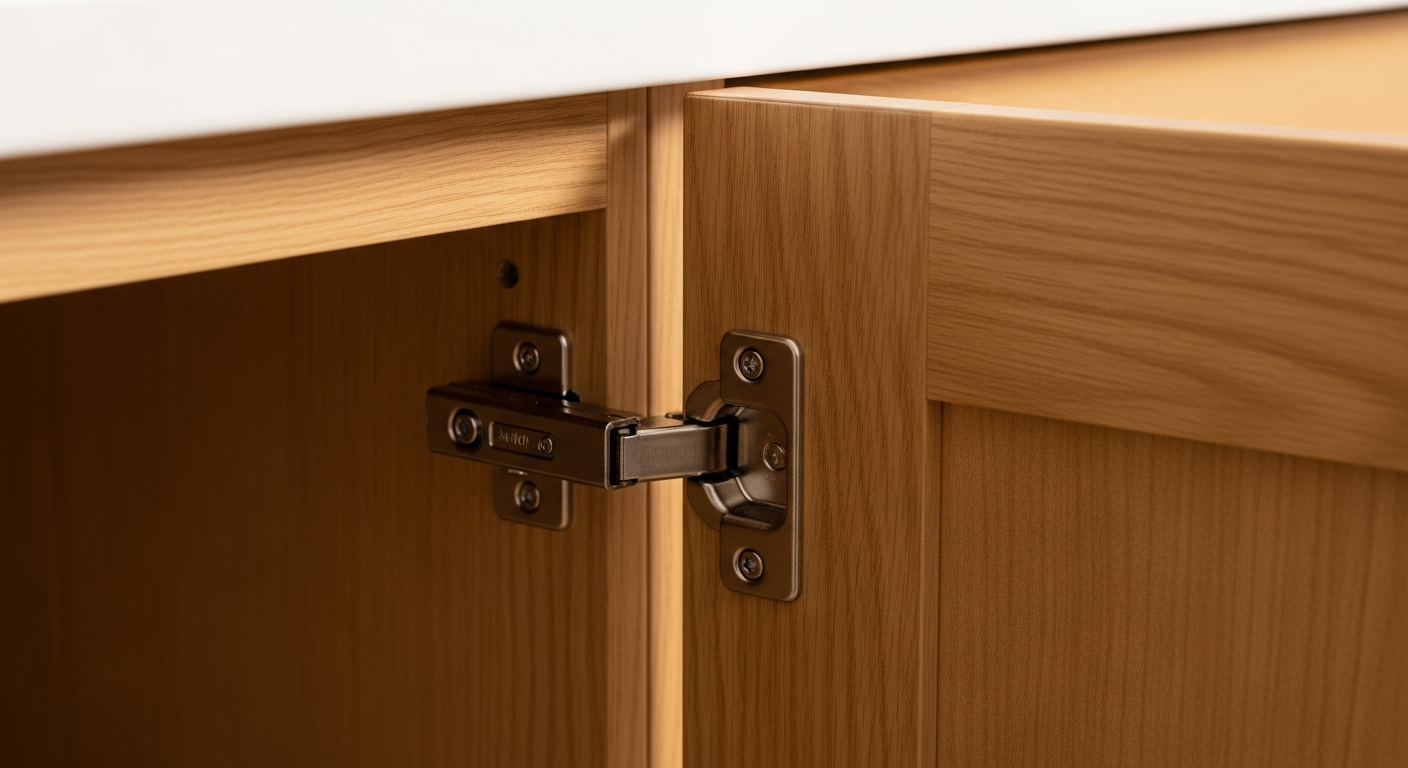
Hold the door in position and press the hinge arm down onto the mounting plate until you hear or feel it click into place. Most soft close hinges use a tool-free clip system — once clipped, give the door a gentle pull to confirm it is secure. If the hinge uses a screw-fix arm rather than a clip, drive the fixing screw snugly but leave it slightly loose until you have aligned the door in the next step.
Adjust the Door Until It Closes Flush
Soft close hinges have three adjustment screws: side-to-side (lateral), in-and-out (depth), and up-and-down (height). Turn each screw a half-turn at a time and test the door after each adjustment. The door should sit flush with neighbouring doors, with even gaps on all sides. Close the door slowly — the soft close mechanism should engage in the final 15–20 mm of travel, pulling the door gently and silently to the closed position. If the door bounces back, the closing speed is set too fast; check whether your hinge has a separate damper adjustment screw and slow it down slightly.
Frequently Asked Questions
Can I fit soft close hinges to any existing kitchen cabinet?
Yes, in most cases — provided your current hinges are the standard 35 mm cup style, you can swap them directly for soft close equivalents without drilling new holes. Check the overlay type (full, half, or inset) before buying to make sure the new hinges match your door and frame configuration.
How many hinges do I need per cabinet door?
Two hinges are sufficient for doors up to approximately 1,500 mm tall. Taller or heavier doors — such as larder unit doors — should use three hinges to prevent the door from warping or the hinges from pulling away from the carcass under load.
My new hinge clicks into place but the door still slams — what is wrong?
The soft close damper is a separate mechanism within the hinge body and can occasionally be faulty or disengaged. Remove the hinge, close it by hand slowly, and feel for resistance in the final travel — if there is none, the damper is defective and the hinge should be returned. Also check whether your hinge has a damper adjustment screw that may have been wound fully open. If you are having persistent issues with cabinet fittings, our guide on how to fix a sagging kitchen drawer covers related cabinet hardware problems.
What is the difference between a soft close hinge and a standard concealed hinge?
Both use the same 35 mm cup-and-arm design, but a soft close hinge contains a hydraulic or spring-loaded damper built into the arm that slows the door in the final phase of closing. A standard concealed hinge has no damper, so the door closes at whatever speed you push it. You can often retrofit a separate soft close clip-on damper to existing standard hinges as a cheaper alternative to full replacement.
Do I need to adjust all three screws on every hinge?
Not always — start with the lateral (side-to-side) screw to align the door with its neighbours, then check the gap at the top and bottom before touching the height screw. The depth screw only needs adjusting if the door sits proud of or recessed behind the cabinet face. Make small, methodical adjustments and always check the full door alignment after each change. For a broader cabinet update, our cabinet refresh guide covers door alignment as part of a full refurb.
Buy hinges with a built-in closing force adjustment as well as a damper speed control — cheaper hinges only let you slow the door, but the best ones also let you increase the pull-in force so lighter doors do not stall halfway and hang open. This matters most on tall larder doors and any door in a draught-prone kitchen.
Sources
- Which? — How to fit cabinet hinges — which.co.uk
- HSE — Safe use of hand-held tools — hse.gov.uk
- Gov.uk — Building regulations and home improvements — gov.uk
This guide is for general information only. Always work safely and follow manufacturer instructions. DIYnut accepts no liability for injury or damage arising from DIY work.