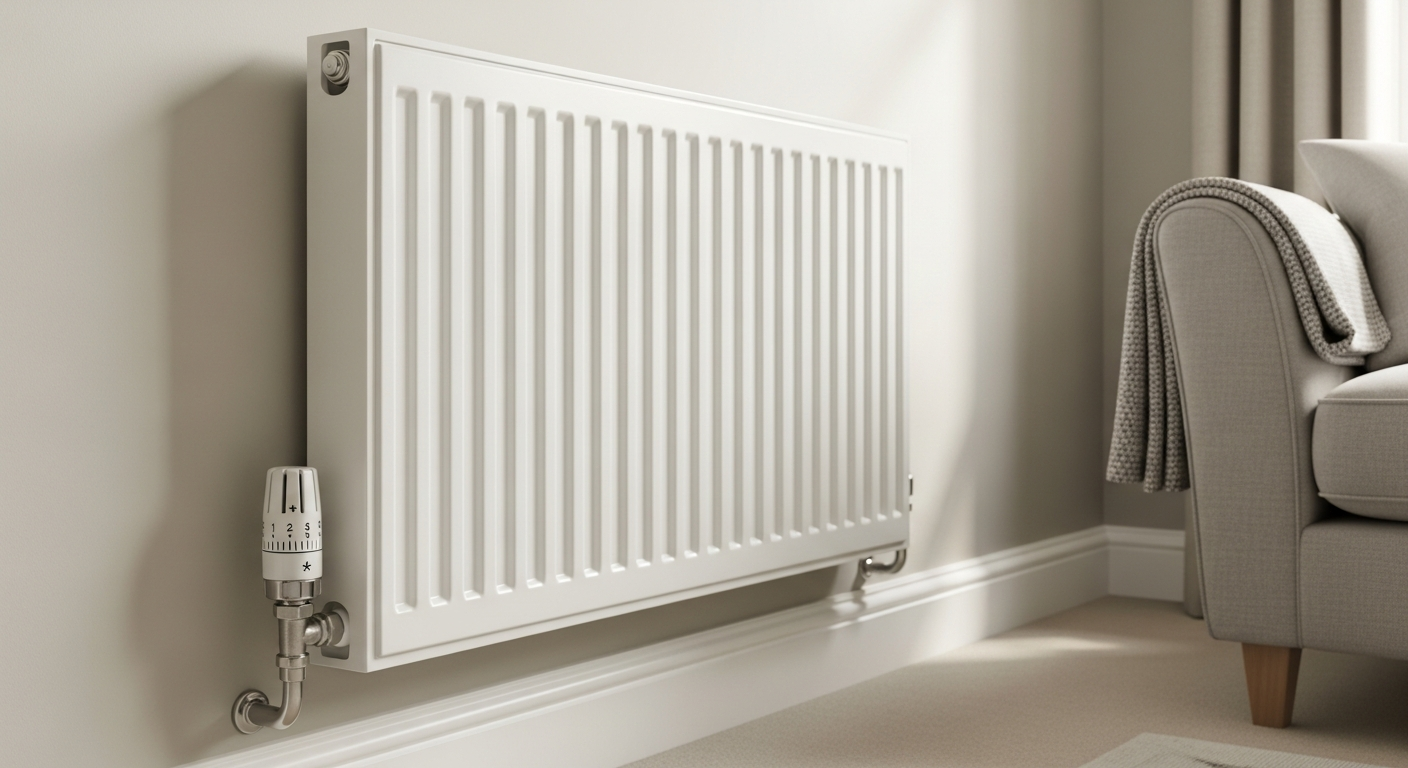
Radiator Cold at Bottom
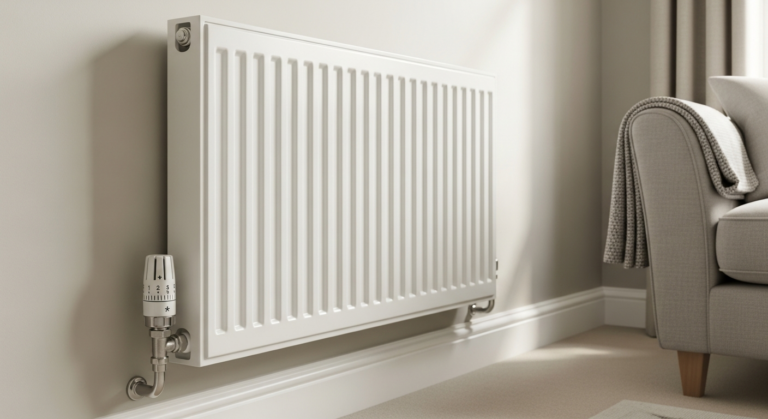
A radiator cold at the bottom is almost always caused by a build-up of sludge (magnetite) blocking the lower section. Bleeding won’t fix this — you need to flush or power-flush the radiator. Other causes include a partially closed valve or a failing pump.

What’s Causing This?
1. Sludge build-up (most common). Black iron oxide sludge (magnetite) accumulates at the bottom of the radiator over time, blocking hot water from circulating through the lower section. The top stays warm while the bottom remains cold. This is the cause in the vast majority of cases. See our guide to fix a cold radiator for full step-by-step instructions.
2. Partially closed or stuck lockshield valve. Each radiator has a lockshield valve (usually covered by a plastic cap) that balances flow across the system. If it has been knocked almost shut, water flow through that radiator is restricted, leaving the bottom cool. Read our guide on how to balance radiators to check and correct valve settings.
3. Incorrectly balanced system. If your heating system has never been balanced after a radiator was added or replaced, some radiators receive too little flow. The coldness typically affects the bottom first. Balancing the system yourself can resolve this without professional help.
4. Failing or weak circulation pump. A pump that is losing performance may not push water with enough force to clear sludge-prone areas. You may also notice other radiators heating unevenly. If you suspect this, check your boiler for unusual noises which can indicate pump issues.
5. Leaking or faulty radiator valve. A radiator valve that is not fully open or is internally corroded can restrict flow. A leaking or faulty radiator valve should be inspected and replaced if necessary.
How to Diagnose the Exact Cause
- Feel the radiator carefully. Run your hand from the top to the bottom. If the top is hot and the bottom is distinctly cold — especially across the full width — sludge is the near-certain cause. If the whole radiator is only lukewarm, the issue is more likely a valve or balancing problem.
- Check the valves. Locate the thermostatic radiator valve (TRV) on one side and the lockshield valve on the other. Make sure the TRV is set to a heat setting (not zero or off). Remove the lockshield cap and check the valve is not fully closed — it should be open at least a few turns.
- Bleed the radiator. Use a bleed key on the bleed valve at the top of the radiator. If air hisses out followed by water, air was partially contributing. See our full guide on how to bleed a radiator. Note: bleeding alone will not fix a sludge problem.
- Check the boiler pressure. After bleeding, check the boiler pressure gauge. If it has dropped below 1 bar, repressurise the system. Low pressure can affect circulation throughout. Our guide on how to repressurise a boiler walks you through this safely.
- Compare all radiators. Walk round every radiator in the house. If several have cold bottoms, you likely have system-wide sludge or a failing pump. If only one radiator is affected, the problem is localised to that radiator or its valves.
- Inspect the water colour. When bleeding, catch the water in a light-coloured cloth. Dark brown or black water confirms sludge is present in the system.
How to Fix It
Sludge build-up: The fix is to flush the radiator. You can do a basic single-radiator flush yourself by isolating and removing the radiator, taking it outside, and flushing it through with a hosepipe until the water runs clear. For a full guide, see how to remove a radiator safely. For whole-system sludge, a power flush by a heating engineer is the most effective solution. After flushing, add a central heating inhibitor to prevent recurrence.
Partially closed lockshield or TRV: Open the lockshield valve fully (anticlockwise), then close it by one to one-and-a-half turns as a starting point. Adjust the TRV to a higher setting and recheck. See our radiator balancing guide for precise instructions.
Incorrectly balanced system: Balance all radiators using the lockshield valves, working from the radiator nearest the boiler to the furthest. Our full guide to balancing radiators covers the correct method step by step.
Failing circulation pump: This requires a Gas Safe registered engineer or a qualified heating engineer to assess and replace the pump. Do not attempt to replace a pump yourself unless you have the relevant plumbing competence — it involves draining the system and working close to the boiler.
Faulty radiator valve: Isolate the radiator using both valves and replace the faulty valve. Full instructions are in our guide to fixing a leaking radiator valve.
When to Call a Tradesman
Call a qualified heating engineer if the cold bottom persists after you have flushed the radiator and checked the valves — this usually points to system-wide sludge requiring a power flush. A power flush uses specialist equipment and chemical cleaners under pressure; it is not a DIY task and attempting it without the right equipment can damage older pipework and radiators.
If you suspect the circulation pump is failing, have it assessed and replaced by a professional. Pump replacement involves draining the system and working in close proximity to the boiler and electrical components — it should not be attempted without the appropriate competence.
Any work directly on the boiler itself — including replacing the pump if it is integral to the boiler unit — must be carried out by a Gas Safe registered engineer. You can verify an engineer’s registration at the Gas Safe Register (gassaferegister.co.uk). Working on a gas boiler without Gas Safe registration is illegal under the Gas Safety (Installation and Use) Regulations 1998.
How to Prevent It Happening Again
- Add a central heating inhibitor. After flushing, introduce a corrosion inhibitor fluid into the system via the feed-and-expansion tank or filling loop. This significantly slows magnetite formation. Top it up whenever you drain the system or add water.
- Fit a magnetic system filter. A whole-system magnetic filter (fitted inline on the return pipe near the boiler) captures iron oxide particles before they settle in radiators. Empty and clean it annually.
- Have the system power-flushed every 5–10 years. Even with an inhibitor and filter, periodic professional flushing prevents gradual sludge accumulation — particularly important in older properties with steel radiators.
- Book an annual boiler and heating service. A yearly service checks inhibitor levels, inspects the filter, and identifies early signs of pump or valve problems before they cause cold radiators.
Frequently Asked Questions
Why is my radiator hot at the top but cold at the bottom?
This is the classic sign of sludge (magnetite) settled at the bottom of the radiator. The hot water circulates through the upper section but cannot penetrate the sludge-blocked lower area. Flushing the radiator is the fix — bleeding it will not help.
Will bleeding the radiator fix a cold bottom?
No. Bleeding removes trapped air, which causes a radiator to be cold at the top. A cold bottom is caused by sludge, not air. Bleeding may not produce any air at all in this situation, and the problem will remain unchanged.
Can I flush a radiator myself without calling a plumber?
Yes, for a single radiator. Isolate both valves, remove the radiator, take it outside, and flush it with a hosepipe until the water runs clear. It is messy but straightforward. Whole-system power flushing requires specialist equipment and should be done by a heating engineer.
How much does a power flush cost in the UK?
Power flush costs vary depending on the number of radiators and the property. Always get at least two quotes from qualified heating engineers and check reviews before booking.
How do I know if my whole system has sludge, not just one radiator?
If multiple radiators in the house have cold bottoms, or the water you bleed from several radiators is dark brown or black, the sludge is system-wide. A single affected radiator usually points to a localised problem with that radiator or its valves.
When you refit a flushed radiator, don’t just re-use the old valve tail inserts — the internal rubber seats often harden and leak once disturbed. Fit new valve tails and PTFE tape at the same time to avoid a callback leak. This is the most common mistake DIYers make when refitting a radiator after a flush.
Sources
- HSE — Gas Safety (Installation and Use) Regulations 1998 — hse.gov.uk
- Gas Safe Register — Find a registered engineer — gassaferegister.co.uk
- Which? — Central heating problems and how to fix them — which.co.uk
Safety Notice: Electrical and plumbing work can be dangerous if done incorrectly. In the UK, certain electrical work must comply with Part P of the Building Regulations and certain plumbing work with Part G. If in doubt, consult a qualified electrician (NICEIC/NAPIT registered) or plumber (CIPHE/WaterSafe registered). This guide is for general information only — it is not a substitute for professional advice.