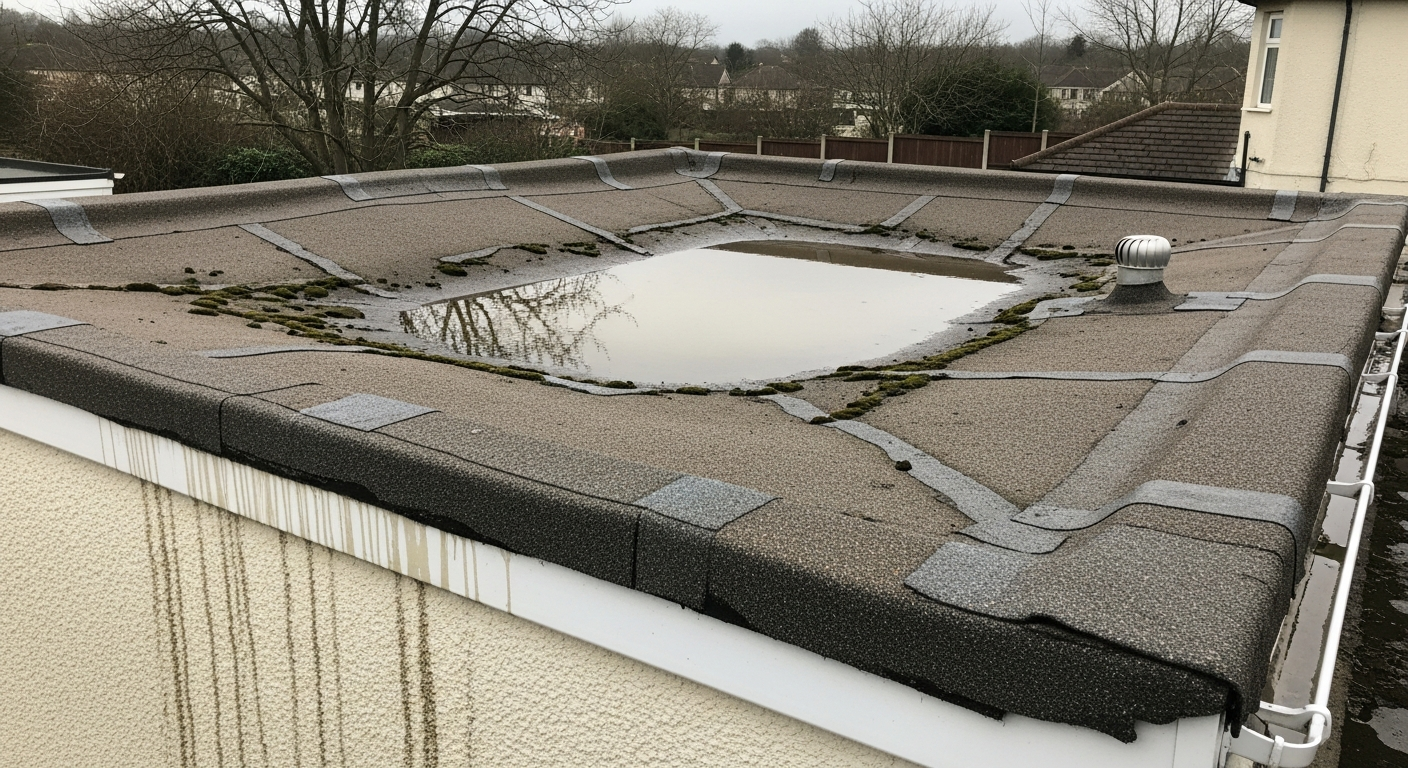
Flat Roof Ponding
Flat roof ponding is caused by inadequate drainage, a sagging roof deck, blocked outlets, or insufficient fall. Water sitting for more than 48 hours will degrade the membrane and cause leaks. Most causes can be diagnosed visually and many can be fixed by a competent DIYer.

What’s Causing This?
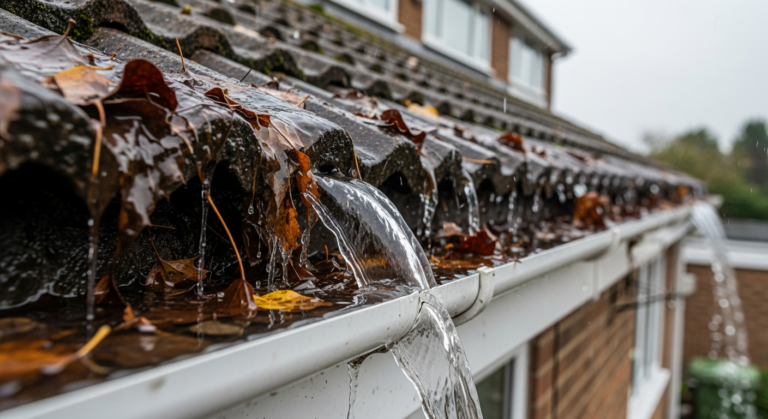
Blocked or undersized drainage outlets are the most frequent cause of ponding. Leaves, moss, and debris accumulate in roof outlets and scuppers, preventing water from escaping. Even partial blockages cause water to back up during heavy rain. See our guide to fixing a sagging gutter if the blockage has caused downstream problems too.
Insufficient roof fall is the second most common cause. UK building regulations require a minimum finished fall of 1:80 for most flat roof systems, but older roofs — particularly those laid before modern standards — are often nearly flat. Water has nowhere to drain and simply sits. This is a design issue and typically requires professional remediation or re-laying of the roof surface.
Structural deck deflection or sagging occurs when the timber joists or deck boards beneath the roof membrane flex under load or rot over time, creating low spots where water collects. If the ponding area is localised and roughly circular or oval, deflection is the likely culprit. This is a structural issue that may need a tradesman to assess. Consult our Flat Roof Materials Guide to understand how different deck types respond to loading.
Membrane shrinkage or deformation can pull the waterproofing layer away from outlets and upstands, effectively raising the surface level at drainage points and trapping water. Felt roofs are particularly prone to this as they age. If you can see the felt has pulled away from the edge or around a drain, see Repair Felt on a Flat Roof for detailed steps.
Failed or missing outlet collars and flashings around roof drains and internal gutters can cause the outlet to sit proud of the membrane surface, creating a lip that traps water. Poorly sealed flashings also allow water ingress at the pond edge. Check our guide to sealing roof flashing if you suspect the outlet collar is the issue.
How to Diagnose the Exact Cause
- Wait for dry weather and inspect from above. Using a ladder, access the roof safely — never walk on a wet or fragile surface. Look for the extent and location of any tide marks, algae, or surface staining left by standing water. Note whether the low spot is central, near an edge, or around a drain.
- Check all drainage outlets and scuppers. Clear any debris from the drain cover or scupper opening by hand. Pour a bucket of water onto the pond area and time how long it takes to drain. If it drains within a few minutes once the outlet is cleared, blocked drainage is your problem. If it remains pooled, the issue is fall or deflection.
- Check the roof fall. Use a long spirit level (at least 1.2 m) or a string line and measure the drop across the roof. A 1:80 fall over a 4 m span equals 50 mm of drop. If the surface is level or reverse-falls toward the building, the fall is insufficient.
- Press gently on the membrane around the pond area. If the deck feels soft, springy, or you can hear a hollow sound, the deck boards or joists beneath may be saturated or rotten. This indicates structural deflection — do not continue walking on this area.
- Inspect the membrane surface closely. Look for cracks, blistering, splits, or areas where felt has pulled away from edges and outlets. Run your hand along outlet collars to check they sit flush with or below the membrane surface. Any lip higher than the membrane surface will trap water regardless of fall.
- Check internal ceilings below the pond area. Damp patches, staining, or bubbling paint on the ceiling beneath confirms water is already penetrating. Cross-reference with our guide on fixing a leaking flat roof if you see active ingress.
How to Fix It
Blocked drainage outlet: Clear the outlet thoroughly, removing all debris. Use a drain rod or flexible brush to clear the downpipe below. Fit a leaf guard over the outlet to prevent recurrence. See Clear Blocked Gutters for technique and tools, and Install a Gutter Guard to protect against future blockages.
Damaged or shrunk felt membrane: If the membrane is cracked, split, or has pulled away from the outlet, repair or replace the affected section. Full instructions are in our Repair Felt on a Flat Roof guide. For small areas, a compatible self-adhesive repair patch can provide a temporary fix while you arrange a more permanent solution.
Failed outlet collar or flashing: Remove the existing collar, clean the area, and rebed with appropriate sealant and a new collar set flush with or below the membrane. Detailed technique is covered in Seal Roof Flashing.
Insufficient fall — minor correction: On an existing felt roof, a roofing contractor can install tapered insulation boards beneath a new membrane to create the required fall without rebuilding the deck. This is a specialist job and not DIY territory.
Deck deflection: If deflection is confirmed, the deck boards or joists need structural assessment before any surface repair is worthwhile. Repairing the membrane over a deflecting deck is a temporary measure at best. See the When to Call a Tradesman section below.
When to Call a Tradesman
Call a qualified roofing contractor if you find any softness, bounce, or rot in the deck when you press on it — this indicates structural failure below the membrane that cannot be safely assessed or repaired from above without professional involvement. Similarly, if the roof has no meaningful fall across its entire surface, correcting this requires re-laying the roof system, which is not a DIY task.
If the flat roof covers an extension or outbuilding and is over 25 m², any structural alterations to the supporting structure may require building regulations approval. Check with your local authority building control before starting work. The HSE also requires that work at height on a fragile or potentially fragile roof surface is carried out safely and, for commercial properties, in compliance with the Work at Height Regulations 2005.
If water has been ponding long enough to cause internal ceiling damage, active damp, or mould growth inside the property, engage a roofer and — if ceilings are affected — a plasterer to assess the extent of damage before attempting any repair. Delaying on structural deck rot significantly increases repair costs.
How to Prevent It Happening Again
- Clear roof drainage outlets twice a year — once in late autumn after leaf fall and again in early spring. A build-up of just a handful of debris is enough to cause ponding in heavy rain.
- Inspect the membrane surface annually in dry weather for blistering, cracking, or areas where the surface has started to pull away from edges and outlets. Early membrane repairs are far cheaper than dealing with water-damaged deck timbers.
- Fit an outlet guard or leaf strainer over every roof drain and downpipe entry point to reduce how quickly debris accumulates.
- Consider upgrading the membrane if your felt roof is more than 15 years old. Modern GRP (glass reinforced plastic) or EPDM systems offer significantly better longevity and are less prone to the shrinkage and cracking that contributes to ponding. Our Flat Roof Materials Guide compares the main options.
Frequently Asked Questions
How long can water safely sit on a flat roof before causing damage?
Most flat roof membranes will tolerate short-term ponding, but water sitting for more than 48 hours accelerates UV degradation and membrane breakdown. Prolonged ponding lasting days or weeks will eventually cause leaks, deck rot, and algae growth.
Is flat roof ponding covered by home insurance?
Most standard home insurance policies exclude damage caused by gradual deterioration or lack of maintenance, which ponding typically falls under. However, if ponding causes a sudden ceiling collapse or internal water damage, part of the claim may be accepted — check your specific policy wording and speak to your insurer.
Can I add a drain or outlet to stop ponding on an existing flat roof?
Yes, additional outlets can be installed, but the position must align with a feasible downpipe route and the membrane must be correctly sealed around the new collar. This is best done by a roofing contractor to ensure the membrane integrity is maintained.
Why does my flat roof pond even though it has a drain?
The outlet may be partially blocked, the collar may sit proud of the membrane surface creating a lip, or the fall toward the drain is insufficient. Check the outlet is fully clear and flush with the membrane before investigating fall and deck deflection.
Does flat roof ponding always mean the roof needs replacing?
Not always. If the cause is a blocked outlet or a failed collar, a targeted repair is sufficient. Replacement is typically needed only when the membrane is at end of life, the deck is structurally compromised, or the roof has no usable fall across its full surface.
When fitting a new outlet collar on a flat roof, set it 3–5 mm below the finished membrane surface rather than flush — this creates a slight sump effect that draws water toward the drain even on an imperfect fall. A collar set flush or proud is one of the most common reasons a newly repaired roof still ponds.
Sources
- HSE — Work at Height Regulations 2005: employer and worker duties — hse.gov.uk
- Which? — Flat roof repairs: costs and when to call a professional — which.co.uk
- NFRC (National Federation of Roofing Contractors) — Flat roofing guidance for homeowners — nfrc.co.uk
This guide is for general information only. Always work safely and follow manufacturer instructions. DIYnut accepts no liability for injury or damage arising from DIY work.