How to Seed a Bare Lawn – DIY Guide
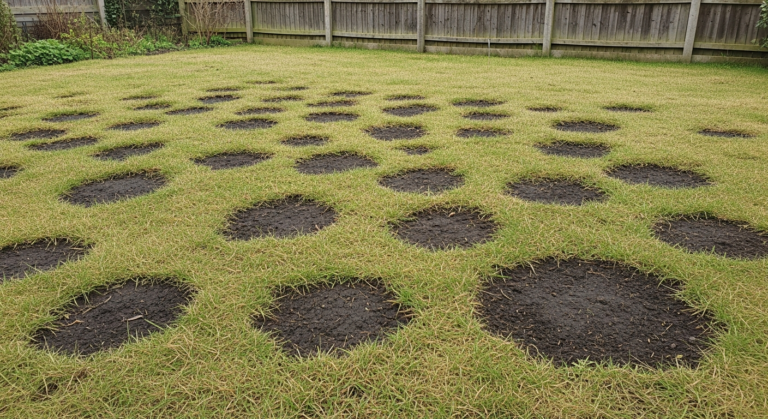
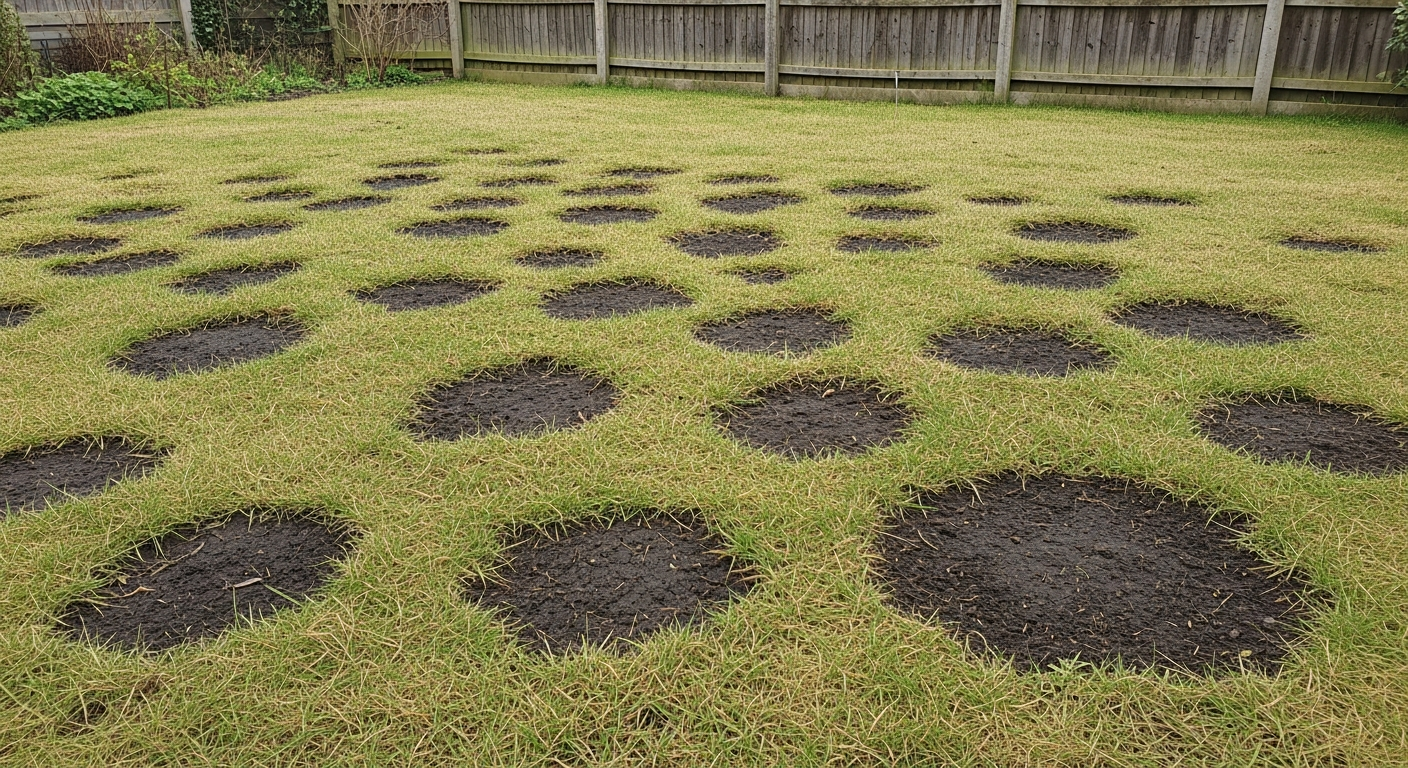
Seed a bare lawn by clearing debris, loosening the top 5–10 cm of soil, raking level, sowing grass seed at the recommended rate, and keeping it watered until established. Mid-spring or early autumn gives the best germination results in the UK.


Loosen and prepare the soil
Break up the top 5–10 cm of soil using a garden fork, working backwards to avoid treading on loosened ground. On heavy clay, incorporate a generous layer of sharp sand and garden compost to improve drainage and structure. For very compacted ground, fork deeply and repeat twice at 90 degrees to each other. Good soil contact is the single biggest factor in successful germination — loose, fine, crumb-like soil is your target.
Level and firm the seedbed
Rake the loosened soil to a consistent level, removing any remaining stones or clumps larger than a marble. Once level, firm the surface by walking slowly across it heel-to-toe, or use a light lawn roller — you want it firm but not compacted. Rake again lightly across the firmed surface to leave a fine tilth ready for seed. A level seedbed prevents water pooling in low spots, which causes patchy germination and moss.
Apply pre-seeding fertiliser
Scatter a pre-seeding fertiliser evenly across the prepared area according to the manufacturer’s rate — typically around 50 g per square metre. Rake it lightly into the top centimetre of soil. This provides phosphorus for early root development, giving seedlings the best start before the first mow. Do not use a general lawn feed at this stage — the nitrogen ratio is too high and will promote leaf at the expense of roots.
Sow the grass seed evenly
Choose a seed mix suited to your conditions — shade-tolerant blends for areas under trees, hard-wearing mixes for family lawns. Sow at the rate stated on the packet, typically 35–50 g per square metre for overseeding or up to 70 g per square metre for bare ground. Divide your seed into two equal halves: sow the first half walking north to south, then the second half walking east to west. This cross-hatching technique ensures an even spread with no stripes. Rake very lightly to just cover the seed, then firm again with the roller or plank. If you are also dealing with thin patches rather than fully bare areas, see our advice on how to fix a patchy lawn.
Water, protect, and maintain until established
Water immediately after sowing using a fine rose or sprinkler — never a strong jet that displaces seed. Keep the seedbed consistently moist throughout germination, which takes 7–21 days depending on temperature and seed type. In dry spells, water twice daily in the early morning and evening. Cover the seeded area with bird-repellent netting or horticultural fleece to protect against birds and frost. Do not walk on it. Your first mow should come when grass reaches approximately 5–6 cm — set blades high and remove no more than one third of the blade height. For ongoing care after establishment, the UK lawn care calendar will keep your new lawn in good condition year-round.
Frequently Asked Questions
When is the best time to seed a bare lawn in the UK?
The two ideal windows are mid-spring (April to May) and early autumn (late August to September). At these times, soil temperatures are above 8°C for reliable germination and rainfall is typically sufficient to keep the seedbed moist without additional watering every day.
How long does grass seed take to germinate?
Most grass seed will show signs of germination within 7–21 days under good conditions — warm soil, consistent moisture, and adequate light. Fescue-heavy mixes can take up to 21 days; ryegrass-dominant mixes are often visible within 7–10 days.
How much grass seed do I need per square metre?
For fully bare ground, use 50–70 g per square metre. For overseeding thin areas, 35–50 g per square metre is sufficient. Always check the specific rate on your seed packet, as mixes vary. Weigh out a test handful to calibrate your hand spreader before starting.
Should I use turf or seed for a bare lawn?
Seed is more cost-effective and gives a wider choice of grass types, but requires patience — typically 8–12 weeks before it can take light use. Turf delivers an almost-instant result but costs significantly more and must be laid within 24 hours of delivery. For a full comparison, see our guide to laying turf.
Why is my grass seed not germinating?
The most common causes are cold soil (below 8°C), dry conditions, poor seed-to-soil contact, or seed eaten by birds. Check soil temperature with a thermometer, ensure you are watering daily, and confirm netting is in place. Old seed past its use-by date will also have poor germination rates, so always use fresh stock. For broader lawn health troubleshooting, visit our Garden Guide for further resources.
After raking in your seed, lightly top-dress the entire area with a 2–3 mm layer of sieved topsoil or fine lawn dressing — just enough to partially cover the seed without burying it. This thin layer retains moisture around each seed, significantly improving germination speed and uniformity, particularly in fast-draining sandy soils.
Sources
- RHS — Sowing a New Lawn from Seed — rhs.org.uk
- Which? — How to Grow a Lawn from Seed — which.co.uk
- RHS — Lawn Problems: Poor Germination — rhs.org.uk
This guide is for general information only. Always work safely and follow manufacturer instructions. DIYnut accepts no liability for injury or damage arising from DIY work.