How to Clean and Pressure Wash a Patio – DIY Guide
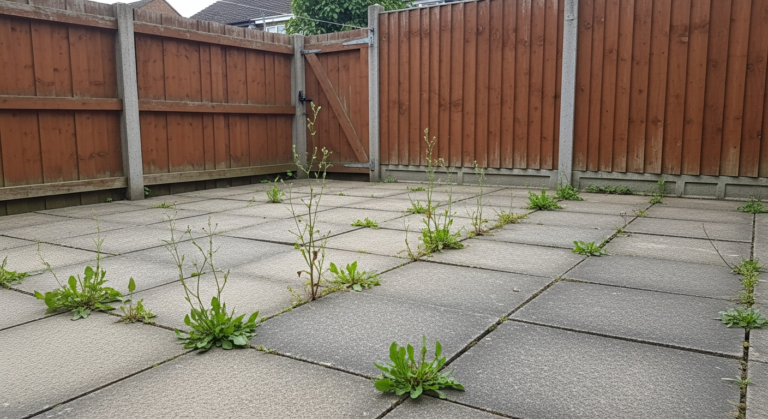
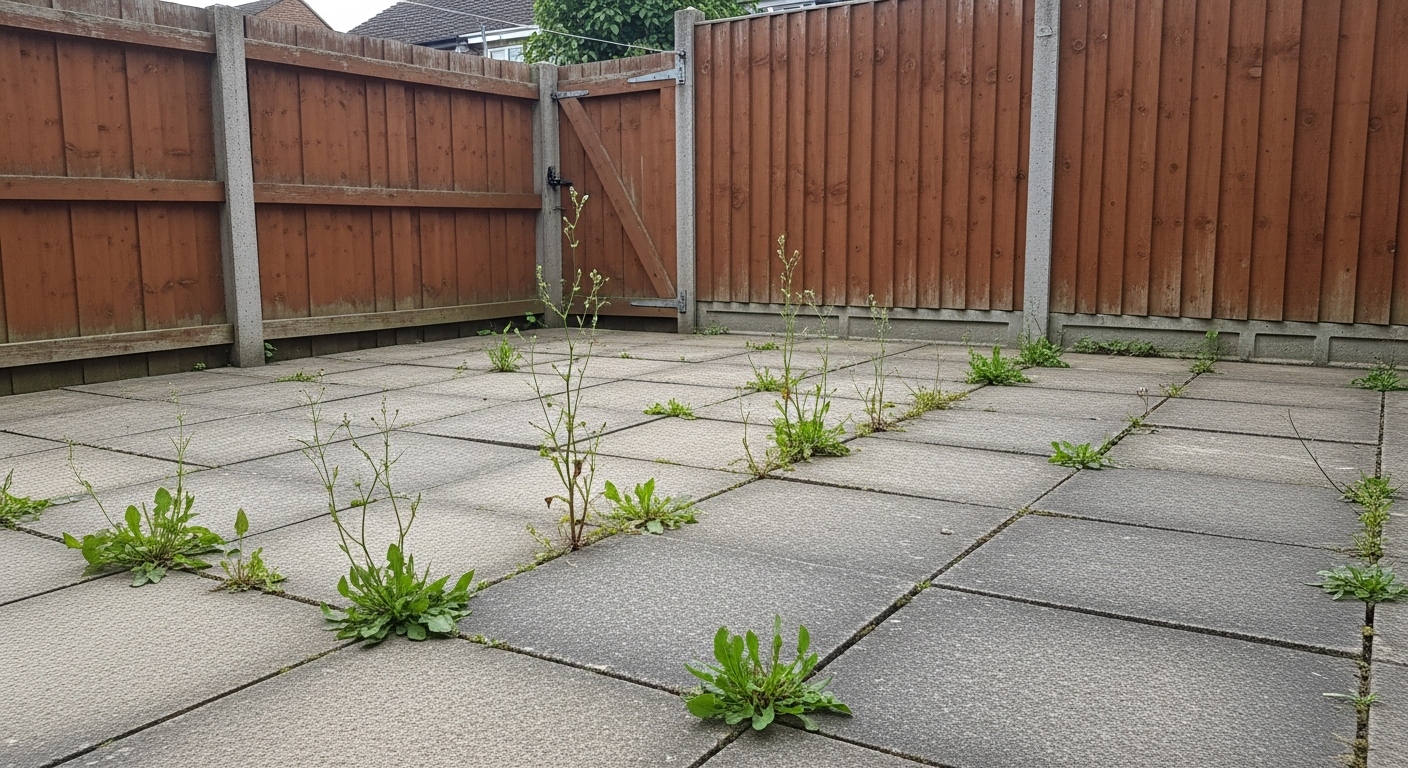
To clean and pressure wash a patio, clear the surface, apply a patio cleaner or diluted bleach solution to kill algae, leave to dwell, then pressure wash at 90–120 bar working in sections. Rinse thoroughly and allow to dry before repointing or sealing.

- Pressure washer
- Stiff-bristle brush
- Garden hose
- Safety goggles
- Waterproof gloves
- Plastic watering can or garden sprayer
- Broom
- Knee pads
- Patio cleaner or patio algae remover
- Household bleach (sodium hypochlorite solution)
- Patio sealer (optional)
- Patio jointing compound or kiln-dried sand (for repointing after washing)
- Plastic sheeting or bin bags (to protect borders)
- Clean water
Step-by-Step Guide
Clear and Sweep the Patio
Remove all furniture, pots, and debris from the patio surface. Sweep thoroughly with a stiff broom to remove loose dirt, leaves, and grit — pressure washing over loose debris spreads mess rather than removing it. Take this opportunity to inspect for any cracked, sunken, or loose slabs that need attention before you start. If you have planted borders directly alongside the patio, cover them with plastic sheeting to protect plants from chemical overspray. For related landscaping work, see our Garden Guide for a full overview of outdoor DIY projects.
Apply Patio Cleaner or Bleach Solution
Dilute a proprietary patio cleaner according to the manufacturer’s instructions, or mix one part household bleach with five parts cold water. Apply the solution evenly across the entire patio surface using a plastic watering can or garden sprayer — work in manageable sections of roughly 2–3 square metres. The solution needs to sit on the surface and penetrate algae, moss, and lichen rather than simply run off. Leave it to dwell for 15–20 minutes. Do not allow the solution to dry on the surface; if it starts to dry on a warm day, mist lightly with water. Wear safety goggles and waterproof gloves throughout — bleach and patio chemicals are corrosive to skin and eyes, and the Health and Safety Executive advises appropriate PPE whenever handling chemical cleaning agents.
Pre-Scrub Heavy Staining
For heavily stained areas — particularly grout lines, green algae patches, or oil marks — work the solution in with a stiff-bristle brush before pressure washing. Scrubbing breaks up compacted grime and gives the pressure washer less work to do, which means you can run at a lower, safer pressure and reduce the risk of blasting out mortar from between slabs. If you have a patio that needs repointing after cleaning, our guide to laying a patio on a budget covers the materials you will need to restore the joints once the surface is clean and dry.
Pressure Wash in Sections
Set your pressure washer to 90–120 bar for standard concrete or natural stone slabs. Use a 25-degree fan nozzle — a zero-degree (pencil jet) nozzle concentrates too much force and will etch stone and strip mortar. Hold the lance 20–30 cm from the surface and work in smooth, overlapping strokes in one consistent direction, moving backwards so you are always washing onto unwashed patio rather than across clean areas. Keep the nozzle moving at all times; pausing in one spot will damage the surface. Work section by section, rinsing each area with a final clean-water pass before moving on. If you are also washing a driveway on the same day, our Driveways & External Guide covers the appropriate pressures and techniques for tarmac and concrete surfaces.
Rinse the Entire Surface
Once you have pressure washed every section, do a final rinse of the whole patio with clean water using the garden hose or a clean-water pass with the pressure washer on its lowest setting. This flushes away any remaining cleaning chemical, loosened grit, and residue. Pay particular attention to washing any chemical runoff away from planted borders and lawns — bleach-based products can scorch grass and damage soil biology. If runoff has reached a lawn, flush the affected area with plenty of clean water immediately. For lawn recovery advice, see our guide to fixing a waterlogged lawn for tips on soil drainage and recovery.
Allow to Dry, Then Seal or Repoint
Leave the patio to dry completely — allow at least 24–48 hours in mild weather, longer if conditions are cool or damp. Do not apply sealer or jointing compound to a wet surface; moisture trapped beneath will prevent adhesion and cause patchy results. Once dry, inspect the joints: pressure washing often dislodges loose mortar and kiln-dried sand, so top up any gaps with fresh jointing compound or kiln-dried sand brushed into the joints. Applying a proprietary patio sealer at this stage will help repel algae regrowth, staining, and water ingress — brush or roller it on in thin, even coats following the product instructions. A sealed patio is significantly easier to clean next time and typically stays cleaner for longer between washes.
Frequently Asked Questions
What pressure should I use to pressure wash a patio?
For most concrete or natural stone patio slabs, 90–120 bar with a 25-degree fan nozzle is the right range. Softer stones such as sandstone should be washed at the lower end — around 80–100 bar — to avoid etching the surface.
Can I pressure wash a patio without a pressure washer?
Yes. Apply a patio cleaner or diluted bleach solution, allow it to dwell for 20 minutes, then scrub vigorously with a stiff-bristle brush and rinse with a garden hose. It takes more effort but works well for lightly soiled or smaller patios.
How often should I clean my patio?
A thorough pressure wash once a year — ideally in early spring or late summer — keeps most patios in good condition. If your patio is in a shaded or damp spot, you may need to treat for algae twice a year, and a patio sealer applied after cleaning will extend the time between deep cleans.
Will pressure washing damage the mortar between patio slabs?
It can if you use too high a pressure, hold the lance too close, or aim the jet directly along grout lines. Keep to 90–120 bar, use a fan nozzle, and angle the jet slightly — never directly perpendicular into the joint. Inspect joints after washing and refill any gaps with fresh jointing compound or kiln-dried sand.
Is it safe to use bleach on a patio near grass or plants?
Use it carefully. Cover planted borders with plastic sheeting before applying the solution and rinse any overspray off grass and soil immediately with plenty of clean water. Bleach at high concentrations can scorch turf and alter soil pH — our guide to feeding and weeding a lawn covers how to restore grass health if it has been affected.
After pressure washing, while the surface is still slightly damp, spray a diluted biocidal patio treatment across the entire area and leave it to dry in — do not rinse it off. This residual layer actively inhibits algae and lichen spore germination for months, cutting your next cleaning time in half compared with leaving the stone untreated.
Sources
- HSE — Pressure cleaning and washing: health and safety guidance — hse.gov.uk
- Which? — How to clean a patio — which.co.uk
- RHS — Algae, lichens and moss on hard surfaces — rhs.org.uk
This guide is for general information only. Always work safely and follow manufacturer instructions. DIYnut accepts no liability for injury or damage arising from DIY work.