Lawn Patchy
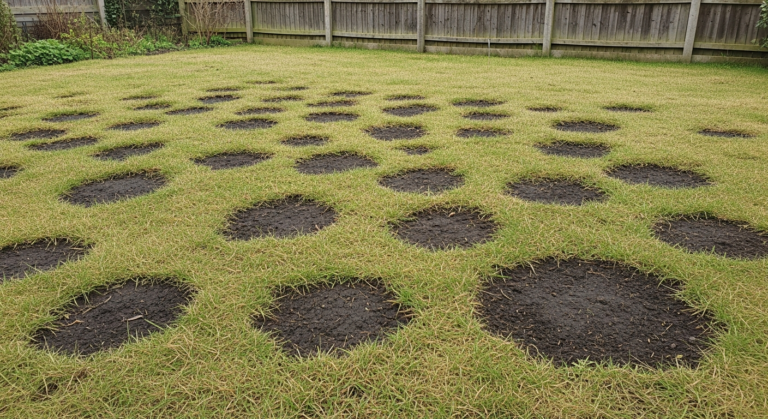
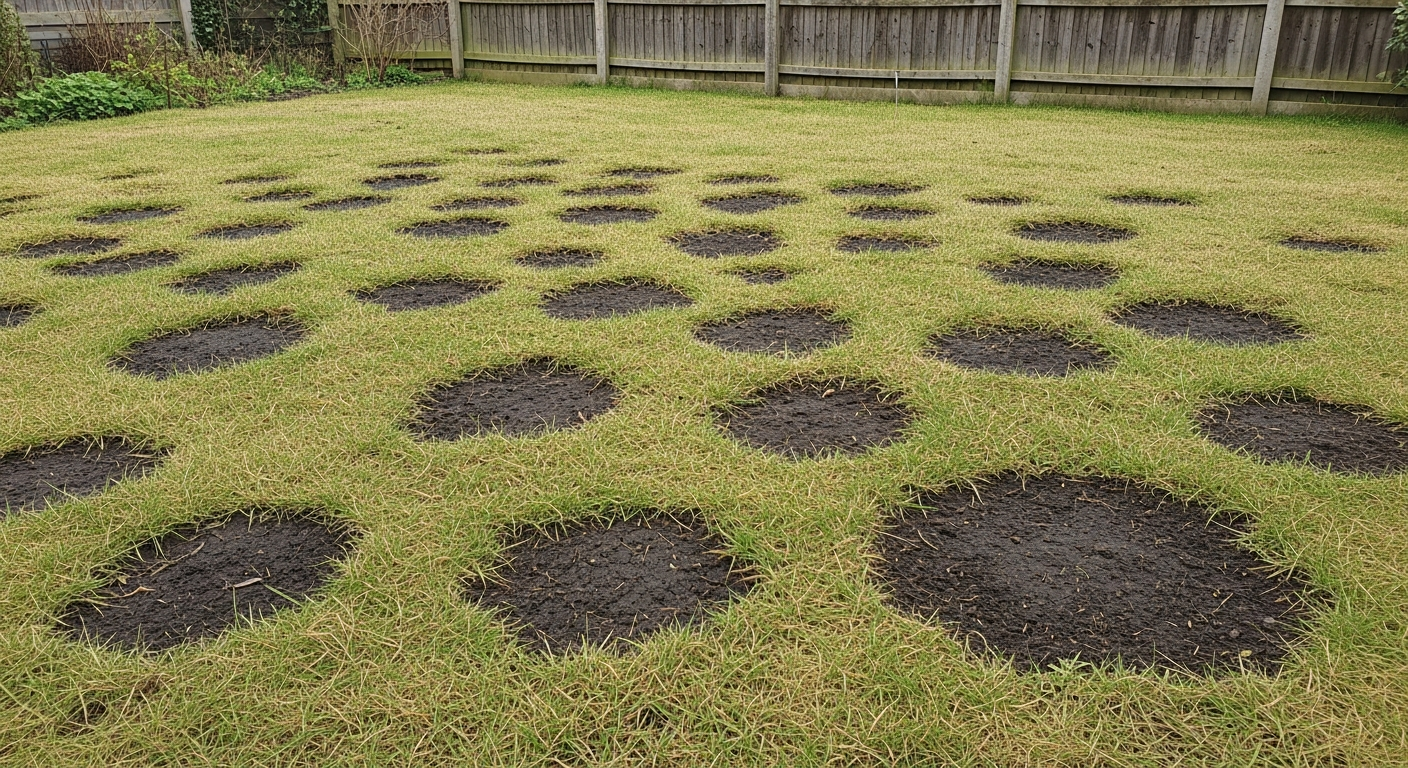
A patchy lawn is most commonly caused by uneven feeding, compacted soil, or worn grass from heavy foot traffic. Identifying the pattern of the patches helps pinpoint the cause. Most patchy lawns can be fixed with overseeding, aeration, or targeted feeding.

What’s Causing This?
Uneven feeding or nutrient deficiency is the most common reason for a patchy lawn. If fertiliser is applied inconsistently — too heavy in some spots, missed in others — the grass grows at different rates and colour. Yellowed or pale patches that don’t match the rest of the lawn are a classic sign. See our guide on how to feed and weed a lawn to correct this.
Heavy foot traffic and compaction wears away grass in regularly used routes or play areas, leaving bare or thin patches. Compacted soil underneath prevents root development, making recovery slow without intervention. Our guide to scarifying and aerating a lawn covers the fix in full.
Dry or waterlogged conditions cause grass to die back in localised areas. Drought stress creates straw-coloured patches, while waterlogged spots kill roots through oxygen deprivation. If your lawn has persistent wet patches alongside bare areas, read our fix a waterlogged lawn guide before reseeding.
Lawn disease or fungal infection can cause irregular patches that spread over time. Red thread, fusarium, and dry patch fungus all produce distinctive discolouration — pink tinges, bleached rings, or greasy-looking areas. These require targeted treatment before reseeding will succeed.
Moss, thatch, or weed invasion crowds out grass in shaded, damp, or neglected areas, leaving thin or bare patches once the moss or weeds are removed. Regular scarification prevents build-up. Check the UK lawn care calendar to time treatment correctly.
How to Diagnose the Exact Cause
- Look at the pattern of patches. Irregular scattered patches often point to disease or uneven feeding. Patches in straight lines or high-traffic routes suggest compaction and wear. Round, defined rings suggest fungal activity.
- Check the soil beneath a bare patch. Push a screwdriver or finger into the bare area. If the soil is rock hard, compaction is the likely cause. If it’s waterlogged or spongy, drainage is the issue.
- Examine the grass colour in patchy areas. Yellowing or pale green patches in otherwise healthy lawn indicate a nutrient problem. Straw-brown patches after dry spells suggest drought stress. Pink or bleached areas with a ring pattern indicate fungal disease.
- Look for moss or thatch. Run your fingers through the grass at the edge of patches. A thick, springy layer below the grass blades is thatch. Green, spongy growth matting down the grass is moss — both compete with grass and create thin patches.
- Assess shade and drainage. Note whether patches are under trees, along fence lines, or at the lowest point of the garden. Shade and poor drainage are common causes of persistent bare areas that won’t respond to reseeding alone.
- Review recent maintenance history. If patches appeared after a dry summer, drought recovery is likely. Patches appearing in autumn or winter often indicate disease or waterlogging. Patches after mowing too short point to scalping.
How to Fix It
Uneven feeding: Apply a balanced lawn fertiliser evenly across the whole lawn using a spreader, then water in. Follow seasonal guidance to avoid scorching. Full instructions in our feed and weed a lawn guide.
Compaction and wear patches: Aerate the affected areas with a garden fork or hollow-tine aerator, then overseed with a suitable grass seed mix for your conditions. Full steps in our scarify and aerate a lawn guide.
Bare patches needing reseeding: Rake the bare area to loosen the surface, apply seed at the recommended rate, firm down, and keep moist. See our seed a bare lawn guide for full technique.
Waterlogged patches: Improve drainage by spiking the affected area and working sharp sand into the holes. In severe cases, a French drain may be needed. Read the full fix a waterlogged lawn guide.
Large-scale bare areas or complete lawn failure: If the lawn is beyond overseeding, laying turf gives quicker, more reliable results. See our guide on how to lay turf for full preparation and laying steps.
Lawn disease: Treat with an appropriate lawn fungicide, remove affected debris, and avoid feeding with high-nitrogen fertiliser until the disease clears. Reseed only once the infection has been resolved.
When to Call a Tradesman
Most patchy lawn problems are well within DIY capability. However, if your lawn has persistent bare patches that return despite reseeding, or if you suspect a serious soil contamination issue — such as buried builders’ rubble, chemical spillage, or underground drainage failure — it is worth having a lawn care specialist or landscaper assess the site. A professional soil test can identify pH imbalances or toxic contamination that no amount of seed or feed will overcome. If waterlogging is severe and localised near a boundary, your neighbour’s land drainage may be contributing — in this case, a specialist should investigate rather than you attempting drainage works that cross a boundary. There are no legal restrictions on reseeding or feeding your own lawn.
How to Prevent It Happening Again
- Follow a seasonal lawn care routine — feed in spring and autumn, aerate in autumn, and overseed thin areas every year before they become bare. The UK lawn care calendar sets out the correct timing.
- Mow at the right height for the season — never remove more than a third of the grass blade in a single cut, and raise the cutting height during dry spells to reduce stress.
- Scarify and aerate annually to prevent thatch build-up and compaction before they cause visible patches.
- Improve drainage in known wet spots before problems develop — top-dressing with sharp sand after aeration helps over time and reduces waterlogging damage.
Frequently Asked Questions
Why does my lawn go patchy every summer?
Summer patchiness is usually drought stress — grass in thinner or compacted areas dries out faster. Raising your mowing height and watering deeply but infrequently during dry spells helps retain moisture and reduces bare patches forming.
Can I reseed a patchy lawn in autumn?
Yes — early autumn (September to mid-October) is one of the best times to overseed in the UK. The soil is still warm from summer but rain is more reliable, giving seed good germination conditions before winter.
Will grass seed grow on compacted soil?
No — you need to loosen and aerate compacted soil before sowing seed, otherwise germination rates are very poor and the new grass will struggle to establish roots. Fork or hollow-tine the area first.
How do I know if my patchy lawn has a fungal disease?
Fungal patches typically have a ring-like edge, unusual colouring (pink, orange, bleached white), or a greasy appearance. They often appear in autumn or after humid weather. If patches spread despite feeding and watering, disease is likely.
Is it better to reseed or re-turf a badly patchy lawn?
Reseeding is cheaper but slower — results take 6–8 weeks. Turfing gives near-instant results and is better for large areas or where the lawn is too far gone to recover by seed. The right choice depends on the extent of the damage.
When overseeding patchy areas, use a seed variety that matches the existing lawn as closely as possible — mixing a fine fescue seed into a coarse ryegrass lawn will create visible striping that persists for years. Check the seed bag for species composition before buying.
Sources
- RHS — Lawn problems: causes and solutions — rhs.org.uk
- RHS — Lawn renovation and repair — rhs.org.uk
- GOV.UK — Pesticides: guidance for amateur and home users — gov.uk
This guide is for general information only. Always work safely and follow manufacturer instructions. DIYnut accepts no liability for injury or damage arising from DIY work.