Garden Waterlogged
A waterlogged garden is most commonly caused by compacted soil or clay subsoil that prevents drainage. Identify the cause first — surface aeration, French drains, or raised beds can all help. Most fixes are DIY-friendly unless a land drain needs connecting to a soakaway.

What’s Causing This?
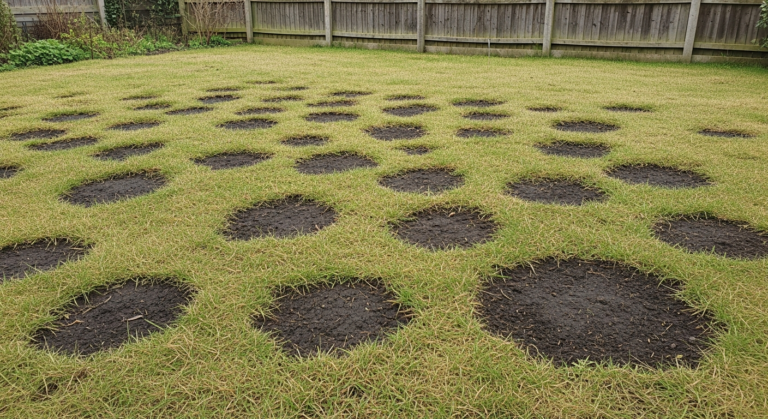
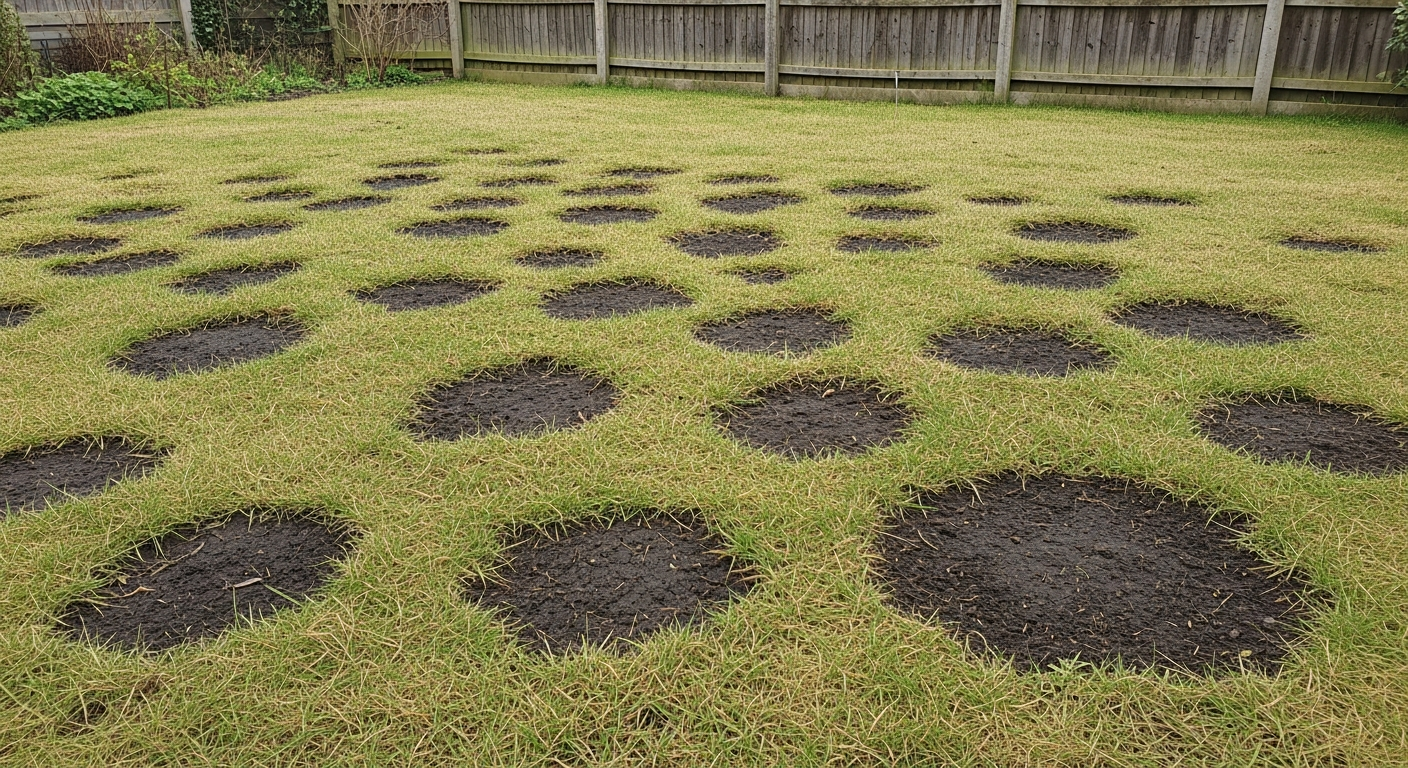
Compacted or clay-heavy soil — the most common cause in UK gardens. Clay soil has poor permeability; when compacted by foot traffic or machinery, water cannot soak away and pools on the surface. See our guide to Fix a Waterlogged Lawn for the full approach.
Blocked or absent land drains — older gardens often have clay pipe drainage systems that collapse or silt up over time. Without functioning drains, water has nowhere to go after heavy rain. A drainage contractor can camera-survey existing runs before you dig.
Impermeable hard surfaces nearby — patios, paths, and driveways without adequate falls or drainage channels direct runoff onto lawn and border areas. Check the gradient of any adjacent paving; see Fix Sunken Patio Slabs if slabs have settled and are holding water.
A high water table — in low-lying areas, especially near rivers or on reclaimed land, the natural water table may sit close to the surface during winter months. This is a site condition, not a defect, but it requires managed drainage rather than simple aeration.
Poor garden grading — if your plot sits in a bowl or slopes toward the house, surface water naturally collects. Incorrect ground levels from building works are a frequent trigger, particularly after extensions or landscaping.
How to Diagnose the Exact Cause
- Observe after rain. Note exactly where water pools and how long it takes to clear. Puddles gone within 24 hours suggest surface compaction; water sitting for several days points to deeper drainage failure or a high water table.
- Do a percolation test. Dig a hole 300 mm deep and 300 mm wide. Fill it with water and time how long it takes to empty. If it takes more than 24 hours, your soil drainage is poor. Repeat in two or three locations to identify problem zones.
- Check the soil profile. Dig a spade’s depth and examine the layers. Orange or grey mottling (gleying) indicates prolonged waterlogging. A distinct hard pan layer — soil that resists the spade — confirms compaction.
- Look for existing drains. Check around inspection covers, gullies, and the perimeter of the garden. Probe the ground with a metal rod to locate buried clay or plastic pipes. If you find drains, flush them with a hose and watch for blockages or slow flow.
- Assess hard surfaces. Stand on the patio or path during rain and watch where water flows. Any fall directed towards lawn or beds will worsen pooling. Use a spirit level on slabs to confirm the gradient.
- Consider the wider site. If neighbours share the same problem or a nearby field or road drains towards your plot, the issue may be structural and require a professional drainage survey.
How to Fix It
Compacted or clay soil: Aerate the lawn by spiking with a garden fork or hollow-tine aerator, then top-dress with sharp sand and organic matter worked into the holes. For severe cases, install a French drain or soakaway. Full step-by-step in Fix a Waterlogged Lawn. You can also raise growing areas above the problem level — see Build Raised Beds Cheaply.
Blocked or absent land drains: Locate and rod existing drains to clear silt. If pipes are collapsed, excavate and replace with modern perforated pipe wrapped in geotextile fabric, running to a soakaway or watercourse (with appropriate consent). This is a larger excavation job — see When to Call a Tradesman below.
Impermeable hard surfaces: Re-lay slabs or paving with correct falls (minimum 1:80 away from the house and borders) and add a channel drain at the lowest edge. For new surfaces, use permeable materials. See Lay a Patio on a Budget for guidance on correct bedding and falls.
High water table: Deep drainage is rarely practical for a DIYer. A raised-bed approach using imported topsoil lifts growing areas above the waterlogged zone. Adding gravel paths through the garden also helps manage surface movement — see Lay a Gravel Path.
Poor grading: Re-grade the affected area by removing turf, importing topsoil, and re-establishing a positive fall away from structures. Re-seed or turf once levels are correct. See Seed a Bare Lawn after regrading work is complete.
When to Call a Tradesman
Call a qualified drainage contractor if standing water persists for more than 48 hours after rain stops, as this suggests a drainage failure beyond surface aeration. If you need to connect a new soakaway or French drain to a watercourse, ditch, or public sewer, you may require consent from your local lead local flood authority under the Flood and Water Management Act 2010, or a permit from the Environment Agency — do not connect without checking first (gov.uk outlines which consents apply). Where groundwater is the cause and the plot is in a flood-risk zone, an independent drainage engineer should assess the site and design a solution. Similarly, if waterlogging is undermining foundations or causing damp ingress to a building, appoint a structural engineer before any groundworks begin.
How to Prevent It Happening Again
- Aerate annually. Spike or hollow-tine the lawn each autumn before the wet season, following the seasonal tasks in the Lawn Care Calendar UK to keep drainage open year-round.
- Avoid compaction. Keep heavy machinery, wheelbarrows, and foot traffic off wet ground. Use scaffold boards or stepping stones to spread load when working in wet conditions.
- Maintain hard-surface drainage. Clear gullies, channel drains, and soakaways of leaves and silt each autumn so they can handle winter rainfall without backing up onto planted areas.
- Improve soil structure long-term. Dig in composted organic matter to heavy clay borders each year. Over time this improves drainage significantly without any engineered solution.
Frequently Asked Questions
How long should water take to drain from a garden after heavy rain?
In a healthy garden with reasonable soil, surface water should clear within 24 hours of rain stopping. If puddles persist beyond 48 hours regularly, your drainage needs attention.
Does spiking a waterlogged lawn actually work?
Yes, for compacted topsoil. Hollow-tine aeration removes plugs of soil and allows water to penetrate more quickly, especially when followed by a top-dressing of sharp sand. It won’t fix a high water table or broken land drains.
Can I connect a French drain to my neighbour’s drain or a street gully?
No. Connecting private drainage to a public sewer or highway drain without consent is illegal under the Water Industry Act 1991. Contact your local lead local flood authority or the Environment Agency before discharging to any watercourse.
Will adding topsoil solve a waterlogged garden?
Only if poor grading is the cause. Adding topsoil to a garden with impermeable clay or a blocked drain simply raises the problem temporarily — you need to address the underlying drainage first.
What plants tolerate a waterlogged garden while I sort the drainage?
Moisture-tolerant species such as ligularia, astilbe, and gunnera will survive boggy conditions. For lawns, perennial ryegrass has better waterlogging tolerance than fine fescue mixes and can handle periodic inundation.
When installing a French drain, wrap the perforated pipe in geotextile fabric before backfilling with clean angular gravel — this prevents fine clay particles migrating into the pipe and silting it up within a few winters. Many DIY installs fail within five years because this step is skipped.
Sources
- Environment Agency — Ordinary watercourse consent (OWC) guidance — gov.uk
- HSE — Flood and Water Management Act 2010 overview — legislation.gov.uk
- RHS — Improving drainage in gardens — rhs.org.uk
This guide is for general information only. Always work safely and follow manufacturer instructions. DIYnut accepts no liability for injury or damage arising from DIY work.