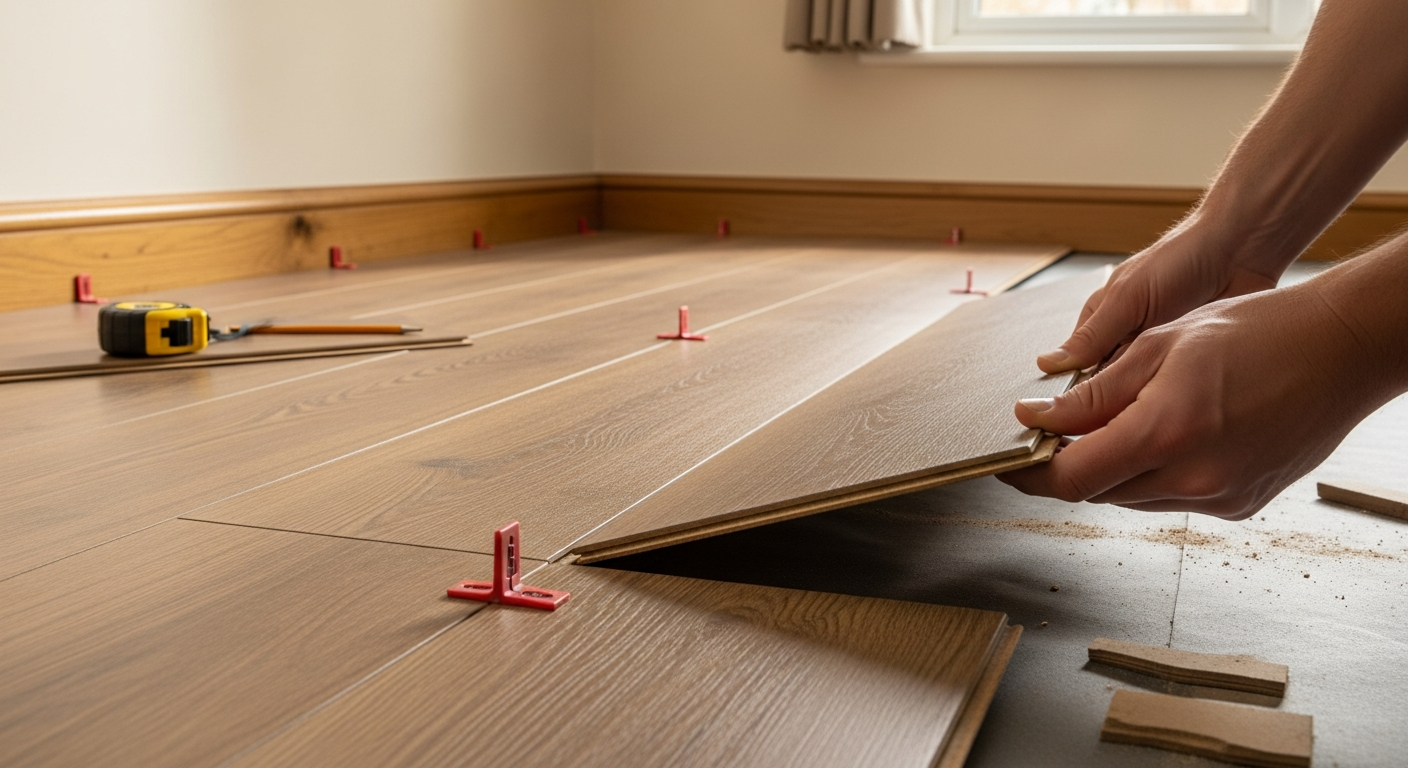
Cost of Laminate Flooring
Laminate flooring typically costs £800–£2,500 for a medium-sized room, including materials and fitting. DIY installation saves £300–£900 in labour. Costs vary by room size, board quality, subfloor condition, and whether old flooring needs removing first.

What Affects the Cost
Room size and layout: The bigger the room, the more boards and underlay you need. Awkward shapes with alcoves, bay windows, or multiple doorways increase waste and fitting time. Most installers price per square metre, so get your measurements right before requesting quotes.
Board quality and thickness: Laminate is graded by AC wear rating (AC1–AC5) and thickness, typically 7mm–12mm. Budget boards cost around £8–£15 per m², while mid-range options sit at £15–£25 per m², and premium boards reach £25–£40 per m². Thicker boards feel more solid underfoot and tend to be quieter. See our Laminate Flooring Buying Guide for a full breakdown of grades and what they mean in practice.
Underlay: Never skip underlay — it affects warmth, sound insulation, and how the floor feels underfoot. Standard foam underlay costs around £1–£2 per m², while acoustic or thermal underlay runs £3–£6 per m². Some boards come with underlay pre-attached, which reduces this cost. Read our guide on choosing the best underlay for laminate before you buy.
Subfloor preparation: An uneven subfloor can cause boards to creak, lift at the edges, or fail prematurely. If your subfloor has dips or humps, you may need self-levelling compound before laying begins. If you already have a dip in the floor, address it before installation — a tradesman will charge extra for this work.
Removal of existing flooring: Lifting and disposing of old carpet, tiles, or vinyl adds cost. Expect to pay £50–£150 for removal and skip hire depending on volume and your location.
Door trimming and finishing: Laminate raises floor height, which usually means undercutting door frames and fitting new beading or threshold strips. These small extras add up, particularly in hallways or open-plan spaces with multiple doorways.
UK Average Cost Breakdown
| Task | DIY Cost | Trade Cost | Notes |
|---|---|---|---|
| Budget laminate boards (per m²) | £8–£15 | £8–£15 | Material cost is the same; trade may get minor bulk discount |
| Mid-range laminate boards (per m²) | £15–£25 | £15–£25 | Most popular price bracket for living rooms and bedrooms |
| Premium laminate boards (per m²) | £25–£40 | £25–£40 | Thicker boards, better AC rating, more realistic wood finish |
| Underlay (per m²) | £1–£6 | £1–£6 | Acoustic or thermal underlay at the higher end |
| Fitting labour (per m²) | — | £10–£20 | Varies by region and room complexity |
| Old flooring removal | £0 (DIY) | £50–£150 | Depends on floor type and skip hire |
| Subfloor levelling | £20–£60 materials | £100–£300 | Only required if subfloor is uneven |
| Threshold strips and beading | £20–£60 | £40–£100 inc. fitting | Depends on number of doorways and room transitions |
| Typical room total (15–20 m²) | £350–£900 | £800–£2,500 | Mid-range boards, standard room, basic prep included |
DIY vs Tradesman — Is It Worth It?
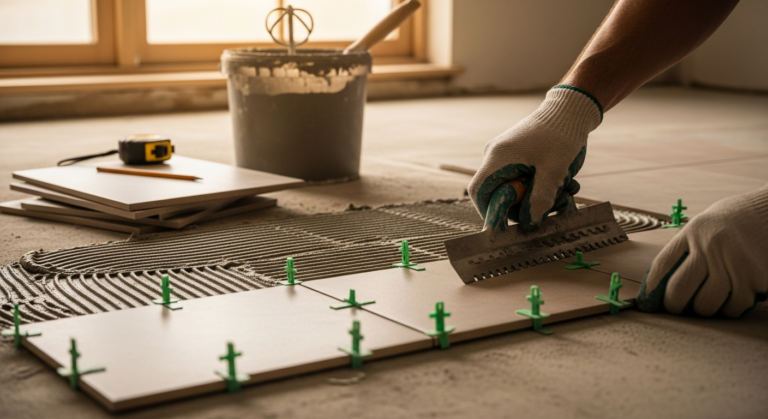
Laminate flooring is one of the more accessible flooring jobs for a competent DIYer. The click-lock fitting system used by most modern laminate boards does not require adhesive or specialist tools — a pull bar, tapping block, and a mitre saw or jigsaw are usually sufficient. A straightforward rectangular room with no underfloor heating and a flat subfloor is a realistic first project for someone with basic DIY confidence. Our step-by-step guide on how to lay laminate flooring covers the full process from prep to finishing trim.
The DIY saving is real and meaningful — typically £300–£900 in labour for an average room — but there are situations where a tradesman earns their fee. Complex room shapes, multiple doorways requiring precise cuts, uneven subfloors needing levelling compound, or existing issues such as lifting laminate edges from a previous job all add difficulty. If you get the prep wrong — particularly the subfloor flatness — you risk squeaking, movement, and boards failing at the joints within a year or two. A professional fitter who spots and resolves subfloor problems before laying begins can save you more than their labour charge in the long run. If you are comparing laminate to other options, our Vinyl Plank vs Laminate guide explains the trade-offs clearly.
Regional Price Variations
Labour rates for flooring installation in London and the South East are noticeably higher than elsewhere in the UK. Fitters in London typically charge £15–£20 per m² for labour, compared with £10–£15 per m² in the Midlands, North of England, Wales, and Scotland. Material costs are broadly consistent across the country, though delivery charges to rural areas can add a small premium. For large jobs, it is worth requesting quotes from at least three local fitters — platforms such as Checkatrade allow you to compare vetted tradespeople by region.
How to Get the Best Price
- Buy 10–15% extra material. Waste from cuts around doorways, alcoves, and diagonal laying patterns is unavoidable. Buying too little and having to order a second batch risks a colour or batch mismatch.
- Compare at least three quotes. Prices vary significantly between fitters. Ask each one to quote on the same specification — same board, same underlay — so comparisons are like-for-like.
- Time your purchase off-peak. Flooring retailers often discount heavily in January and late summer when demand is lower. Buying boards and underlay in a sale while booking a fitter for a later date can reduce total spend.
- Do your own prep work. Lifting old carpet, removing gripper rods, and clearing furniture yourself before the fitter arrives reduces billable time. Confirm with your fitter in advance what they expect the room condition to be.
- Ask about board wastage policy. Some fitters will help you calculate how many packs you need accurately, reducing over-ordering. Others charge a flat room rate that includes materials — compare both models before committing.
What a Good Quote Should Include
- A per-m² labour rate and a clear total for the room area quoted, not just a rough estimate
- Confirmation of whether subfloor preparation, levelling, or old floor removal is included or charged separately
- Specification of the board, underlay, and any threshold strips or beading to be fitted — so you can compare quotes on the same basis
- A clear statement of what the fitter is and is not responsible for — particularly door trimming, skirting removal, and making good after installation
- Details of any guarantee on the fitting work itself, separate from the manufacturer’s product warranty
Hidden Costs to Watch For
- Door height reduction. Laminate raises the floor level by 10–15mm including underlay. Internal doors often need the bottoms trimmed to clear the new surface — this is easy to overlook and adds cost if a fitter charges extra for it.
- Skirting board removal and replacement. Some fitters prefer to remove skirting boards and refit them over the new floor rather than using cover beading. Removal without damaging plaster and walls is a skilled job — check our guide on removing skirting boards without damage if you plan to do this yourself. Refitting and repainting skirting adds both time and cost.
- Underfloor heating compatibility. Not all laminate boards are rated for use over underfloor heating systems. Using an incompatible board can void the warranty and cause warping. Confirm compatibility before purchasing, as suitable boards often cost more.
- Disposal charges. Skips and trade waste collections are not always included in a fitter’s quote. Clarify upfront who is responsible for removing and disposing of old flooring and packaging waste.
Frequently Asked Questions
How much does it cost to lay laminate flooring in a living room?
For a typical living room of around 15–20 m², expect to pay £800–£1,800 in total including mid-range boards, underlay, and professional fitting. DIY installation of the same room would cost £350–£700 in materials alone.
Is laminate flooring cheaper than carpet?
Laminate is often comparable in total cost to mid-range carpet when you include fitting for both. Budget carpet with fitting can be cheaper, but laminate generally lasts longer, is easier to clean, and retains its appearance better with heavy use.
How long does it take a professional to fit laminate flooring?
An experienced fitter can typically lay 15–20 m² in a single day, assuming basic subfloor preparation is already done. Larger rooms, complex layouts, or subfloor levelling will add time.
Do I need to remove skirting boards before fitting laminate?
No — it is common practice to fit cover beading or scotia around the perimeter instead. However, some fitters prefer to remove and refit skirting for a cleaner finish. Discuss the approach before work begins, as it affects both cost and finish quality.
Can laminate flooring be fitted in a bathroom?
When laying laminate in a long, narrow hallway, start your first row against the longest straight wall and work towards the door — not the other way around. This keeps your most visible boards full-width and avoids ending up with a sliver of board at the entrance where it will look awkward and catch underfoot.
Sources
- Which? — Laminate flooring costs — which.co.uk
- Checkatrade — Cost to fit laminate flooring — checkatrade.com
- HSE — Manual handling in flooring trades — hse.gov.uk
This guide is for general information only. Always work safely and follow manufacturer instructions. DIYnut accepts no liability for injury or damage arising from DIY work.