How to Plane a Sticking Door – DIY Guide
How to Plane a Sticking Door
Fix a door that catches, drags, or won’t close properly — without removing the frame.
To plane a sticking door, identify where it binds, mark the high spots with a pencil or chalk, remove the door if needed, and use a hand plane or power planer to shave material from the marked edges. Rehang and test the fit before sealing the bare timber.

- Hand plane (jack or smoothing plane)
- Power planer
- Screwdriver
- Hammer
- Pencil or chalk
- Straightedge or spirit level
- Sandpaper block
- Paintbrush
- Coarse and medium grit sandpaper
- Candle wax or bar of soap (for hinge lubrication)
- Wood primer or paint
- Wood sealer or exterior grade wood finish (for external doors)
- Replacement hinge screws (longer gauge, if needed)
- Timber filler (if over-planed)
Step-by-Step Guide
Identify Where the Door Is Binding
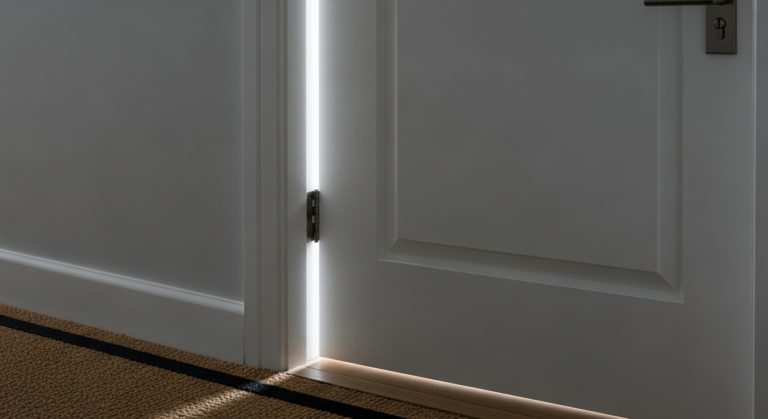
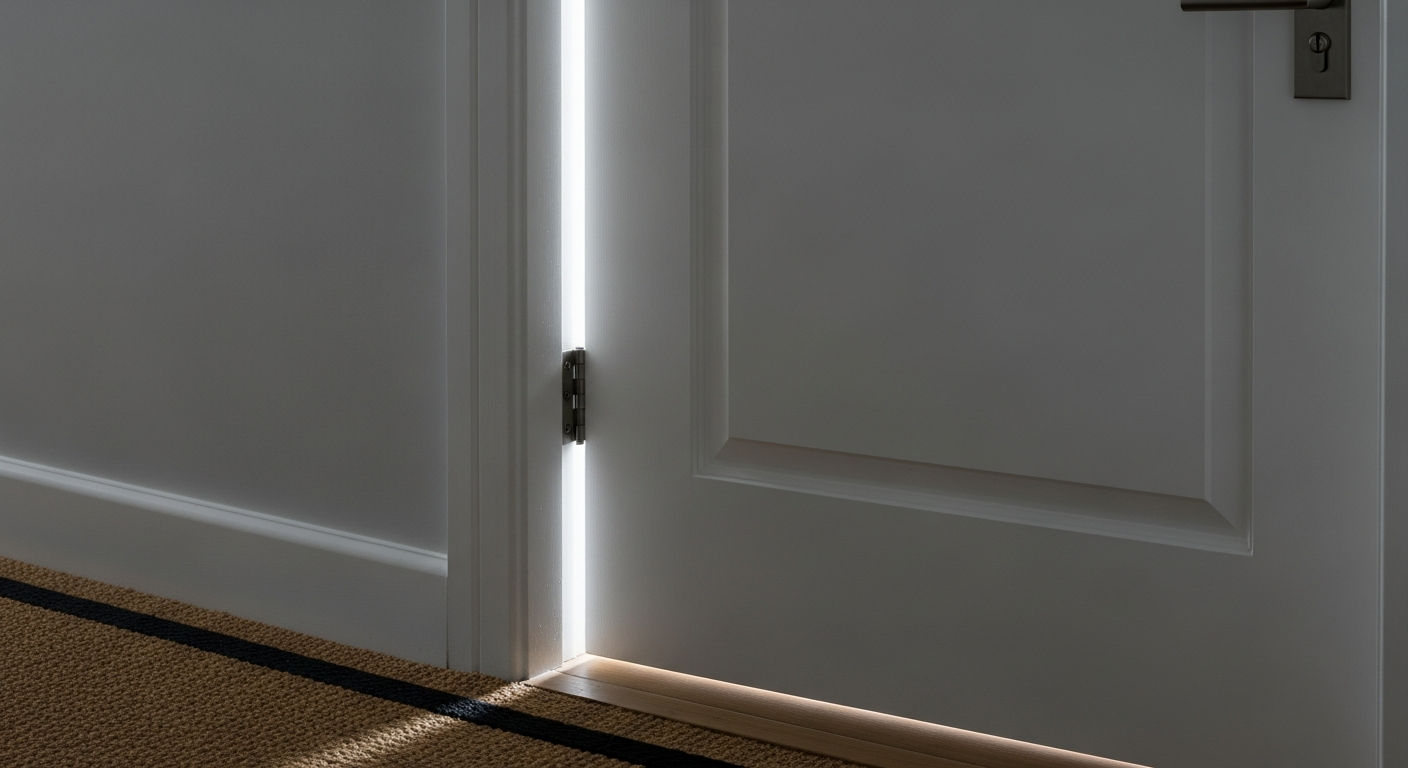
Close the door slowly and watch where it catches — look for rubbing marks, paint scuffing, or shiny patches along the edge or face. Slide a piece of card around the door gap to find where clearance disappears. Mark each binding point clearly with a pencil. If the door sticks only in summer, it is likely swelling due to moisture absorption rather than a structural problem, and you can often fix this with light planing combined with sealing the bare timber edges to slow future movement.
Check the Hinges Before Reaching for the Plane
A loose or dropped hinge causes the door to sag and bind at the top latch corner — the most common cause of a sticking door. Tighten all hinge screws fully; if the screw holes are worn, remove the screws, pack the holes with matchsticks and wood glue, let it cure fully, then refit with the original screws. A hinge recess that is cut too deep can also pull the door out of plumb: pack behind the hinge leaf with a thin strip of card to bring it flush. Only move on to planing once you have ruled out hinge problems. You can find more on working with timber joinery components in our Timber & Joinery Guide .
Remove the Door from Its Hinges
For any planing beyond a very light skim, take the door off its hinges — it is far easier and safer to work on a flat surface. Tap a screwdriver up through the base of the hinge pin to drive it out, or unscrew the hinge leaves from the door. Lift the door clear with a helper if it is a heavy solid door. Rest it flat on a pair of sawhorses or prop it securely on its edge in a workbench vice. If you are only removing a fraction of a millimetre from a top edge and can plane in situ, work carefully and protect the floor below.
Plane Down the Marked High Spots
Set your hand plane to a fine cut — no more than 0.5 mm per pass — and work with the grain wherever possible to avoid tearing the timber. On the top edge, plane across the full width in steady, even strokes. On the latch edge, work from each end towards the middle to prevent splitting at the corners. If using a power planer, set the depth to 1 mm maximum, keep the tool moving at a consistent speed, and check frequently with your pencil marks rather than removing too much in one pass. Aim for a 2–3 mm clearance gap all around the door when rehung. If the door is a hollow-core type, be cautious: there is very little material in the edges — typically 20–25 mm — before you hit the void. On hollow-core doors, check our guide to fitting architrave if the frame itself needs attention alongside the door work.
Rehang the Door and Test the Fit
Lift the door back onto its hinges and fasten the hinge leaves. Open and close the door several times, checking the gap is even around all edges. The door should swing freely without catching and latch without force. If it still binds, mark the new contact points and repeat the planing process in small increments. Do not try to remove all the material in one aggressive pass — it is much easier to take a little more off than to fill an over-planed edge. When the fit is correct, sand the planed surfaces smooth with medium then fine grit sandpaper to remove any plane tracks.
Seal All Bare Timber Edges
Any raw timber left exposed after planing will absorb moisture and swell again — often undoing your work within months, especially on external doors or in humid rooms. Apply a coat of wood primer, paint, or exterior-grade sealer to every planed surface before refitting the door permanently. This is the step most people skip, and it is the reason sticking returns. On internal doors, two coats of the wall or woodwork paint in use is sufficient. On external doors, use a proper exterior wood finish. If the door now has a paint finish that you want to refresh on the face, our guide on how to repair a wooden window frame covers compatible prep and finishing steps for painted timber.
Frequently Asked Questions
Can I plane a door without taking it off its hinges?
For very light trimming of a top edge — a shaving of less than 1 mm — you can sometimes work in situ with a hand plane. For anything more, take the door off: it is far safer, easier to control the cut, and you get a cleaner result.
Why does my door stick only in summer?
Timber absorbs moisture from the air in warm, humid conditions and expands. If the door closes freely in winter but sticks in summer, the fix is to plane a small amount off the binding edge and seal all bare timber surfaces so moisture cannot re-enter the wood as readily.
How much can I plane off a hollow-core door?
Hollow-core doors typically have a solid timber frame around 20–25 mm wide at the edges. Going beyond that exposes the internal void, which weakens the door and makes it look poor. If you need to remove more than 10 mm, the door may be the wrong size and should be replaced rather than planed further. If you are dealing with related flooring clearance issues, see our guide to filling gaps in skirting boards for complementary trimming techniques.
My door sticks at the bottom — do I need to plane there?
If the door drags across the floor or new flooring has been laid, planing the bottom edge is the correct fix. Alternatively, the hinges can be adjusted to lift the door slightly — check this first. If the floor is uneven rather than the door being too long, look at the floor itself rather than removing timber from the door.
Should I use a hand plane or a power planer?
A sharp hand plane gives you more control and is better for small amounts — it is the right choice for most DIYers tackling a sticking door. A power planer removes material faster but can take off too much if you are not experienced with it; keep the depth set very low and check after every pass. For detailed guidance on working with timber fittings around doors, see our guide to removing skirting boards without damage for comparable timber-working principles.
Before you plane anything, run a wax candle along the hinge-side rebate and the door stop — sometimes a sticking door just needs lubrication rather than material removed. If you do plane, mark the door edge with a felt-tip pen and watch where the pen line disappears first: that pinpoints the exact high spot and stops you removing timber from the wrong area.
Sources
- Which? — How to fix a sticking door — which.co.uk
- HSE — Safe use of hand tools — hse.gov.uk
- Historic England — Maintenance and repair of timber windows and doors — historicengland.org.uk
This guide is for general information only. Always work safely and follow manufacturer instructions. DIYnut accepts no liability for injury or damage arising from DIY work.