Porcelain vs Ceramic Tiles
Porcelain tiles are denser, harder-wearing and more water-resistant than ceramic, making them better for wet rooms and heavy-traffic floors. Ceramic tiles cost less and are easier to cut, making them a practical choice for walls and lighter-use floors.

What Is Porcelain?
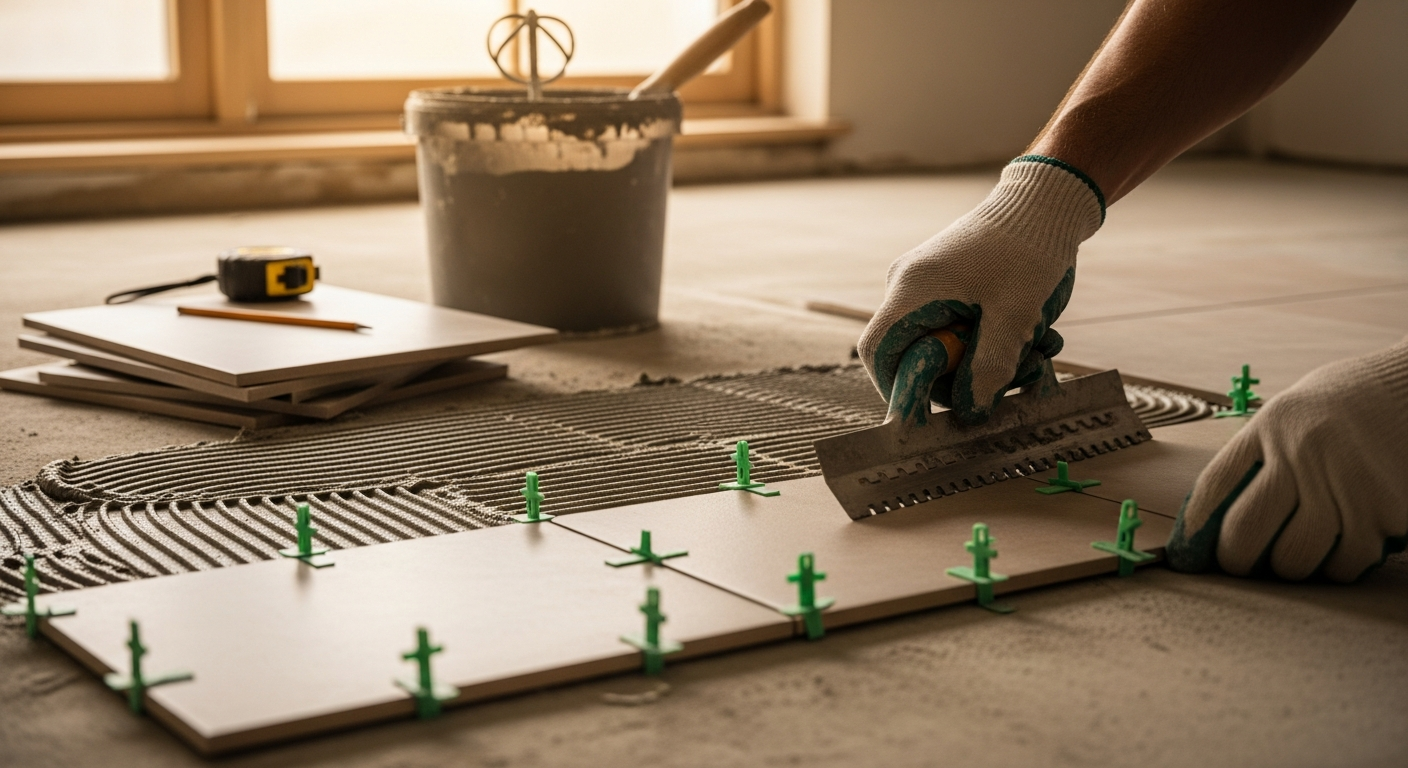
Porcelain is a type of ceramic tile fired at a much higher temperature — typically above 1,200°C — using refined, finely ground clay. This process produces a denser, harder tile with a water absorption rate below 0.5%, making it highly resistant to moisture, frost and heavy wear. Porcelain is suitable for floors, walls, wet rooms, kitchens and even outdoor use. It is available in both glazed and through-body (full-bodied) finishes; through-body porcelain retains its colour and pattern all the way through, so chips are far less visible. For a full step-by-step installation guide, see How to Lay Floor Tiles.
What Is Ceramic?
Ceramic tiles are made from a mixture of natural clays and minerals, pressed and fired at lower temperatures than porcelain — typically between 900°C and 1,150°C. The result is a less dense tile with a water absorption rate of 3–7%, which makes it more porous and less suitable for outdoor or high-moisture environments without proper sealing. Most ceramic floor tiles have a protective glaze applied before firing, which provides colour, pattern and surface protection. Ceramic is lighter and softer than porcelain, which makes it easier to cut with a standard tile cutter — a real advantage for DIY fitting. For step-by-step fitting advice, visit How to Lay Floor Tiles.
Side-by-Side Comparison
| Factor | Porcelain | Ceramic |
|---|---|---|
| Cost per m² | £20–£80+ (tile only) | £8–£35 (tile only) |
| Durability | Excellent — very hard, scratch and chip resistant | Good — more prone to chipping under heavy impact |
| Appearance | Wide range including stone and wood-effect finishes; consistent through-body colour | Wide range of glazed colours and patterns; glaze sits on surface only |
| Install Difficulty | Harder — requires a wet saw or angle grinder to cut cleanly | Easier — cuts with a standard manual tile cutter |
| Maintenance | Very low — unglazed types may need sealing; grout still requires regular cleaning | Low — glazed surface easy to wipe; grout lines need regular attention |
| Lifespan | 30–50+ years with correct installation | 15–30 years depending on traffic and use |
Porcelain — Pros and Cons
Pros
- Extremely hard-wearing — suitable for high-traffic floors, hallways and commercial-style kitchens
- Water absorption below 0.5% — ideal for wet rooms, bathrooms and outdoor use
- Through-body colour means chips are far less noticeable
- Frost-resistant grades available for external patios and paths
- Wide range of large-format sizes for a seamless, contemporary look
Cons
- More expensive than ceramic — both material and installation costs are higher
- Heavy — requires a structurally sound, level subfloor; may need reinforcement on timber floors
- Harder to cut — a standard tile cutter is often insufficient; a wet saw or diamond blade is needed
- Dense body means adhesive coverage must be checked carefully to avoid hollow spots
Ceramic — Pros and Cons
Pros
- Lower cost per m² — a budget-friendly option for larger areas or tighter projects
- Lighter weight — easier to handle and more forgiving on timber subfloors
- Easier to cut with a manual snap tile cutter — more accessible for DIYers
- Wide variety of colours, textures and glazed finishes available
- Widely available from UK tile retailers and builders’ merchants
Cons
- Higher water absorption — not recommended for outdoor use or unprotected wet rooms without careful sealing of grout
- Glaze can chip to reveal a different-coloured body underneath, making chips more obvious
- Less durable under heavy impact or point loading compared with porcelain
- Shorter lifespan in high-traffic areas — may need replacing sooner
Which Is Better For…?
- Bathroom or wet room floors: Porcelain — its low water absorption rate makes it the safer choice where standing water and steam are a regular occurrence. Ensure grout lines are sealed and consider using the best flooring options for bathrooms before committing.
- Kitchen floors: Porcelain is the stronger choice for busy kitchens where spills, dropped items and heavy foot traffic are common. Ceramic can work in a lighter-use kitchen but expect more maintenance over time.
- Hallways and living areas: Porcelain — particularly a textured or matt finish — handles foot traffic better and resists surface wear more effectively than ceramic over the long term.
- DIY-friendly budget renovations: Ceramic — lower material cost, lighter tiles and easier cutting make it far more manageable for a competent DIYer working without specialist tools. For tips on achieving a flat finish, see how to lay floor tiles without lippage.
- Outdoor patios and paths: Porcelain only — specifically a frost-resistant rated tile. Ceramic is too porous to withstand freezing temperatures and will crack over time if used externally in the UK climate.
UK Cost Comparison
Ceramic floor tiles in the UK typically cost between £8 and £35 per m² for the tile alone, with basic wall tiles available at the lower end of that range. Porcelain floor tiles generally range from £20 to £80+ per m², with large-format or designer stone-effect tiles pushing costs higher. Installation costs are similar for both — typically £25–£50 per m² for a professional tiler, depending on region and subfloor condition — but porcelain can add to this if specialist cutting equipment or additional preparation is required. When budgeting, add 10% to your tile order for cuts and wastage, and factor in adhesive, grout and any self-levelling compound needed to prepare the subfloor. If you plan to regrout existing tiles in future, see the guide on how to regrout floor tiles. For broader flooring cost context, the Flooring Guide covers all main flooring types and their associated costs.
Frequently Asked Questions
Can you use ceramic tiles on a floor, or are they just for walls?
Ceramic tiles can be used on floors, but you must check the tile’s PEI wear rating — floor tiles should be rated PEI 3 or above. Wall-only ceramic tiles are not hardened enough to withstand foot traffic and will wear or crack quickly if used underfoot.
Is porcelain slippery when wet?
Glazed porcelain can be slippery when wet, so always check the tile’s slip resistance rating (R rating) before buying. For bathroom floors or wet rooms, choose a tile rated R10 or above. Matt and textured finishes generally offer better grip than polished or gloss surfaces.
Can you tile porcelain over existing ceramic tiles?
It is possible to tile over existing ceramic tiles if they are fully bonded, flat and structurally sound — but you must check that the additional weight and height won’t cause problems with door clearances or floor transitions. A flexible, S1-class adhesive is required when tiling over tile.
Do porcelain tiles need to be sealed?
Glazed porcelain tiles do not require sealing on the surface, but grout lines should be sealed to prevent staining. Unglazed or polished porcelain tiles may benefit from a penetrating impregnator sealer applied before grouting to protect the surface from oils and dirt.
Which tile is better for underfloor heating?
Both porcelain and ceramic are excellent conductors of heat and work well with underfloor heating systems. Porcelain is marginally more efficient due to its density. Ensure the adhesive and grout you use are rated as flexible and compatible with underfloor heating, as thermal cycling can crack rigid adhesives over time.
When laying large-format porcelain tiles (600mm or larger), back-butter the tile in addition to combing the subfloor — this ensures full adhesive coverage and eliminates hollow spots that can cause cracking under point loads. A minimum of 95% adhesive contact is the industry standard for wet areas.
Sources
- Which? — Tiling costs and advice for UK homeowners — which.co.uk
- HSE — Slip and trip guidance: assessing floor surfaces — hse.gov.uk
- Tile Association (TTA) — Guidance on tile selection and installation standards — tiles.org.uk
This guide is for general information only. Always work safely and follow manufacturer instructions. DIYnut accepts no liability for injury or damage arising from DIY work.