Drain Blocked
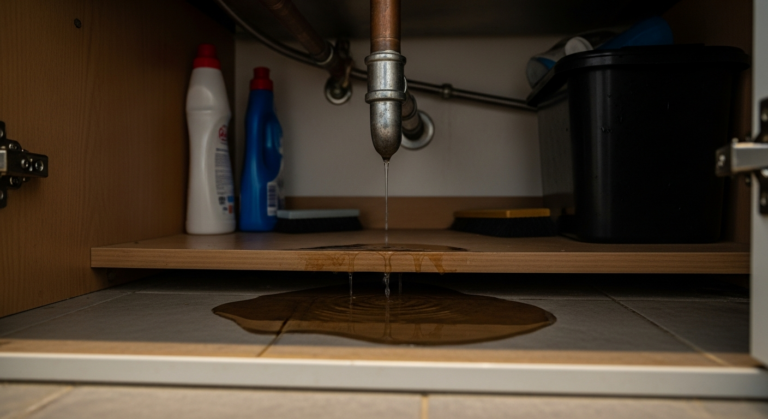
A blocked drain is most commonly caused by a build-up of hair, grease, or food debris inside the pipe. Most household blockages can be cleared with a plunger or drain snake without calling a tradesman. Start by identifying which drain is affected before attempting any fix.

What’s Causing This?
Hair and soap scum accumulation — The most frequent cause of blocked bath and shower drains. Hair binds with soap residue to form a dense plug inside the trap or waste pipe. See our guide to unblock a bath drain for step-by-step removal.
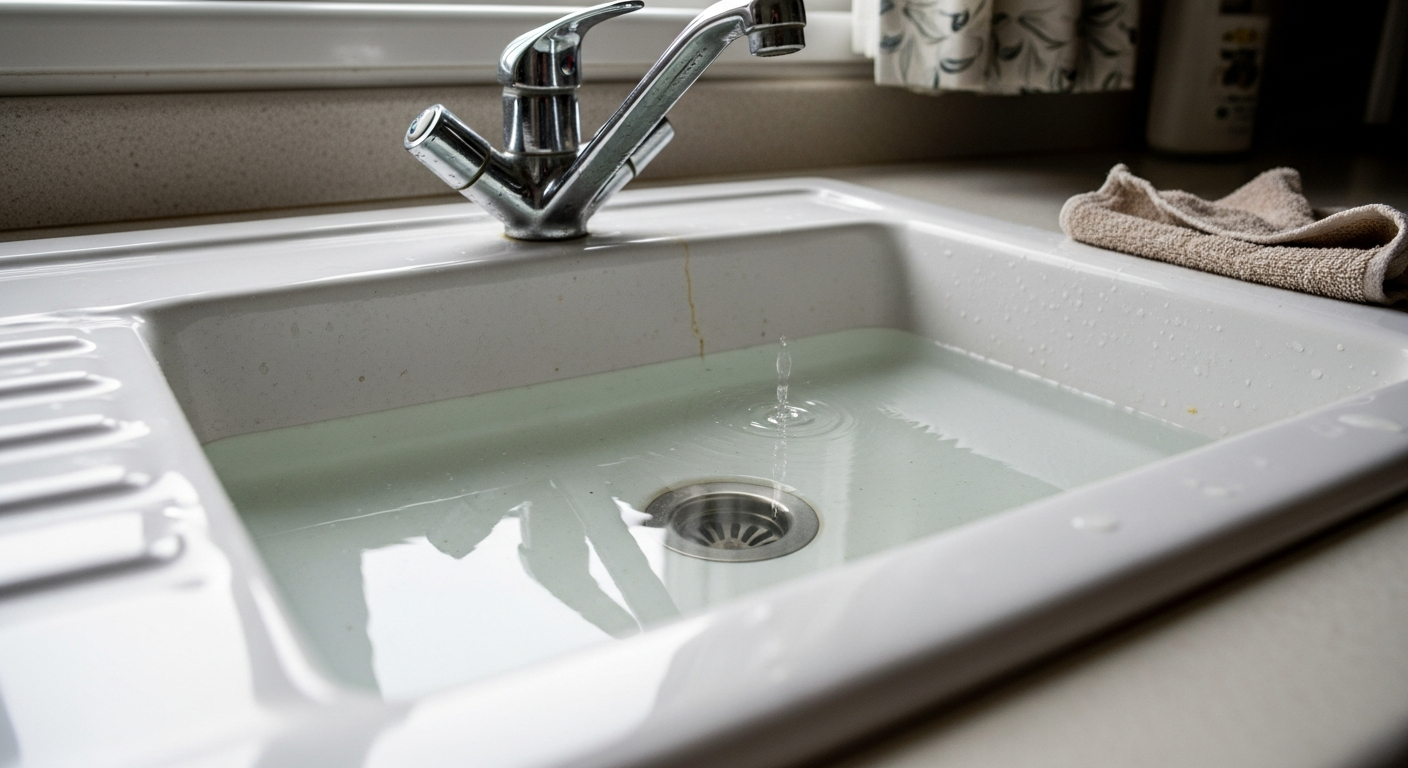
Grease and food debris in kitchen drains — Cooking fat poured down the sink solidifies as it cools, trapping food particles and gradually narrowing the pipe. This is the leading cause of blocked kitchen sinks. Our guide to unblock a kitchen sink walks you through clearing it safely.
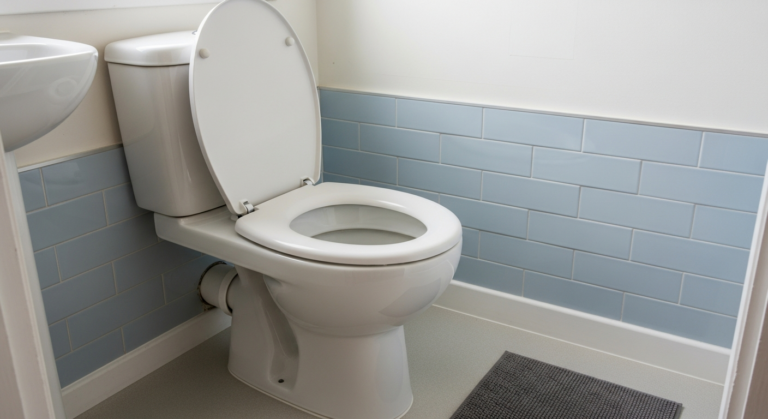
Foreign objects or wet wipes in the toilet — Non-flushable items including wet wipes, cotton pads, and sanitary products are a common cause of toilet blockages. Follow our guide to unblock a toilet before calling a plumber.
Leaves, silt, and debris in outside drains — External drain covers accumulate fallen leaves, soil, and grit, particularly in autumn. Blockages here can cause water to back up into the property. Read our full guide to unblock an outside drain.
Collapsed or misaligned underground pipework — Older clay pipes can crack, sag, or become offset at joints, causing recurring blockages that cannot be cleared by hand. This requires professional CCTV survey and repair — see the “When to Call a Tradesman” section below.
How to Diagnose the Exact Cause
- Identify which drain is blocked. Test every sink, bath, shower, and toilet in the property. If only one fixture is slow or blocked, the obstruction is local to that appliance’s trap or waste pipe. If multiple fixtures on the same floor are affected, the blockage is likely in a shared branch drain.
- Check all ground-floor fixtures and the outside drain. If ground-floor toilets and sinks are backing up while upper floors drain freely, the main soil stack or underground drain is likely blocked. Lift the nearest external inspection chamber cover — if it is full of water, the blockage is downstream of that point.
- Look inside the trap. For sinks and basins, remove the trap (the U-shaped pipe beneath the plughole). If it is packed with debris, the trap itself is the blockage. If it is clear, the obstruction is further along the waste pipe.
- Inspect the plughole for visible debris. For baths and showers, remove the drain cover and use a torch. A compacted mat of hair is often visible just below the surface and can be hooked out directly.
- Check the toilet pan for a slow-drain pattern. If water rises high before draining slowly, the blockage is in the toilet trap or the soil pipe close to it. If water fills the pan and does not drain at all, the obstruction is complete and closer to the pan exit.
- Rule out a collapsed pipe. If the blockage recurs within days of being cleared, or if you notice ground subsidence near drain runs, suspect a structural pipe fault. A drainage contractor can confirm this with a CCTV inspection.
How to Fix It
Hair and soap scum in bath or shower drain: Remove the drain cover, pull out the hair plug with a drain hook or bent wire, then flush with hot water. For stubborn build-up, a bicarbonate of soda and vinegar treatment can help. Full method: Unblock a Bath Drain.
Grease blockage in kitchen sink: Use a cup plunger first. If ineffective, remove and clean the trap, then use a drain snake to clear further down the waste pipe. Avoid caustic chemical drain cleaners on a regular basis — they can damage older pipework. Full method: Unblock a Kitchen Sink.
Toilet blocked by foreign object: Use a toilet plunger (flange type) with firm, steady strokes. A toilet auger (closet snake) can dislodge objects the plunger cannot reach. Never use caustic chemicals in a toilet. Full method: Unblock a Toilet.
Blocked outside drain: Lift the inspection chamber cover, remove standing debris with gloves, then use a set of drain rods to break up and push the blockage to the next chamber. Hose down the chamber once clear. Full method: Unblock an Outside Drain.
Collapsed or cracked underground pipe: This cannot be fixed by DIY. A drainage contractor must carry out a CCTV drain survey to locate the fault and determine whether lining or excavation is needed. See the “When to Call a Tradesman” section.
When to Call a Tradesman
Call a qualified drainage contractor or plumber if: sewage is backing up into the property through multiple fixtures simultaneously, as this indicates a main drain failure that is a health hazard under the Public Health Act 1936; the outside inspection chamber is overflowing and rodding has not cleared it; you suspect a collapsed, cracked, or root-invaded underground pipe; or the blockage has recurred more than twice in a short period despite being cleared. In England and Wales, homeowners are responsible for drains within their property boundary, while shared sewers are the responsibility of the water company — check with your water supplier if the blockage appears to be in the shared sewer (gov.uk and Ofwat publish guidance on this boundary). Always use a drainage contractor registered with the National Association of Drainage Contractors (NADC) or a plumber on a recognised trade register. Working inside a confined inspection chamber without appropriate safety equipment is dangerous — the HSE classifies deep inspection chambers as confined spaces requiring specialist precautions.
How to Prevent It Happening Again
- Fit a hair-catcher or fine mesh drain cover over bath and shower plugholes and clean it after every use — this alone prevents the majority of bathroom drain blockages.
- Never pour cooking fat or oil down the kitchen sink; collect it in a container and dispose of it with general waste or at a local recycling centre. Wipe greasy pans with kitchen paper before washing.
- Only flush the three Ps — pee, poo, and paper — down the toilet. Wet wipes, cotton wool, and sanitary products must go in the bin, even if packaging claims they are flushable.
- Clear leaf litter from external drain covers and gullies each autumn, and flush outside gullies with a bucket of hot water monthly to prevent grease and silt from setting. For ongoing maintenance advice, see our guide to cleaning drains without chemicals.
Frequently Asked Questions
Can I use caustic soda to unblock a drain myself?
Caustic soda can clear organic blockages but it is corrosive and can damage older PVC and metal pipework if used repeatedly. It is also a hazardous substance — the HSE advises full PPE including gloves and eye protection. For most household blockages, mechanical methods such as plunging or drain snaking are safer and equally effective.
Who is responsible for a blocked drain — me or the water company?
In England and Wales, you are responsible for drains that run solely within your property boundary. Once a drain connects to a shared sewer it becomes the water company’s responsibility under the Water Industry Act 1991. Check with your water supplier if you are unsure where the boundary lies — gov.uk publishes guidance on this.
Why does my drain keep blocking in the same place?
Recurring blockages in the same location usually point to a structural fault — a collapsed section, a misaligned joint, or tree root ingress. A CCTV drain survey carried out by a drainage contractor will identify the exact fault so it can be repaired rather than just cleared.
Is a slow-draining sink the same problem as a fully blocked drain?
A slow drain is an early-stage partial blockage — grease, hair, or silt is narrowing but not yet fully obstructing the pipe. It is easier to clear at this stage than when it becomes a complete blockage. See our guide to fix a slow draining sink for targeted advice.
Can a blocked drain cause damp or structural damage to my home?
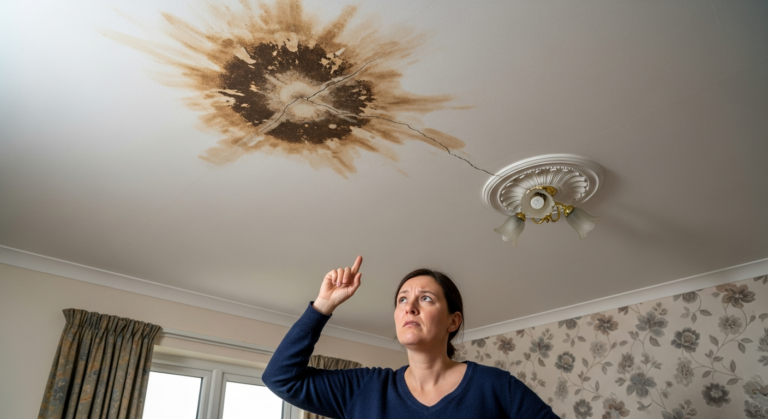
Yes. A blocked outside drain or soil pipe that overflows can saturate the ground around foundations, leading to damp penetration and, in serious cases, subsidence. Sewage backing up inside the property is also a significant health hazard. Persistent or external blockages should be treated as urgent.
When rodding an outside drain, always rotate the rods clockwise only — anti-clockwise rotation can unscrew the rod connections inside the pipe, leaving you with rods to retrieve as well as a blockage. Add rods one at a time and keep firm downward pressure to feel when the obstruction breaks.
Sources
- Which? — Blocked drains: how to unblock a drain — which.co.uk
- HSE — Confined spaces: A brief guide to working safely — hse.gov.uk
- gov.uk — Drainage and sewer responsibility — gov.uk
Safety Notice: Electrical and plumbing work can be dangerous if done incorrectly. In the UK, certain electrical work must comply with Part P of the Building Regulations and certain plumbing work with Part G. If in doubt, consult a qualified electrician (NICEIC/NAPIT registered) or plumber (CIPHE/WaterSafe registered). This guide is for general information only — it is not a substitute for professional advice.