Install Garden Drainage: Trade vs DIY
Garden drainage is DIY-able for most homeowners tackling French drains or soakaways on straightforward ground. Simple systems cost £200–£500 in materials. Complex waterlogging, clay-heavy soil, or drainage connecting to mains sewers typically requires a qualified contractor.
The DIY Option
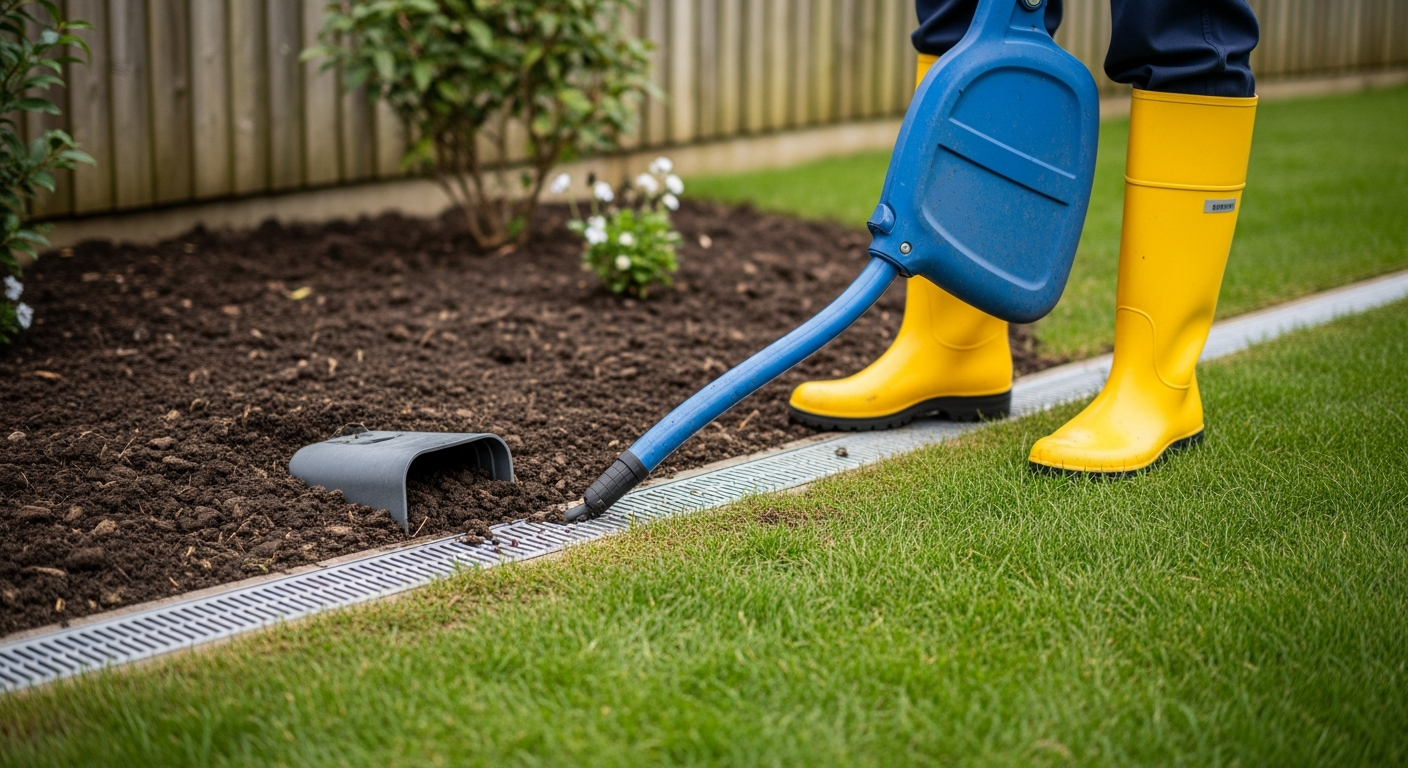
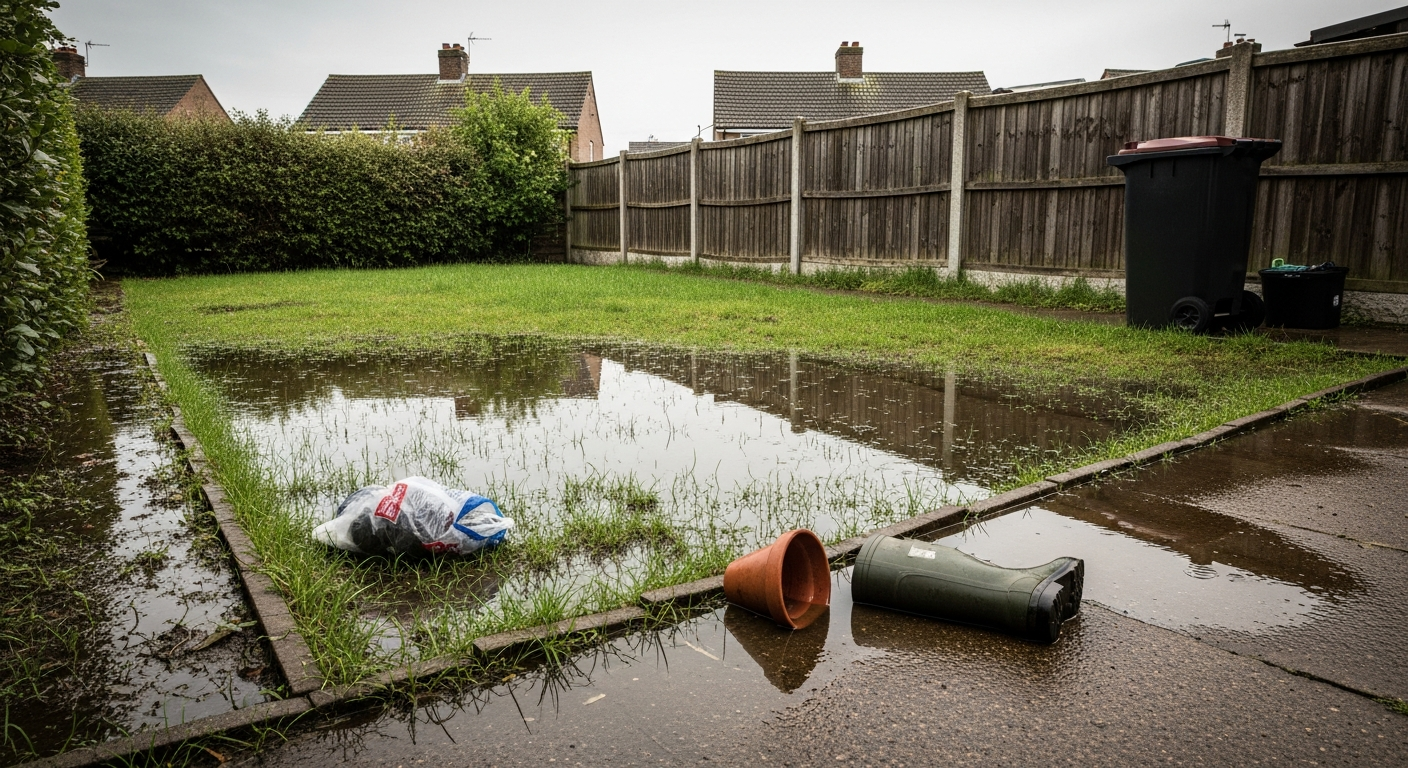
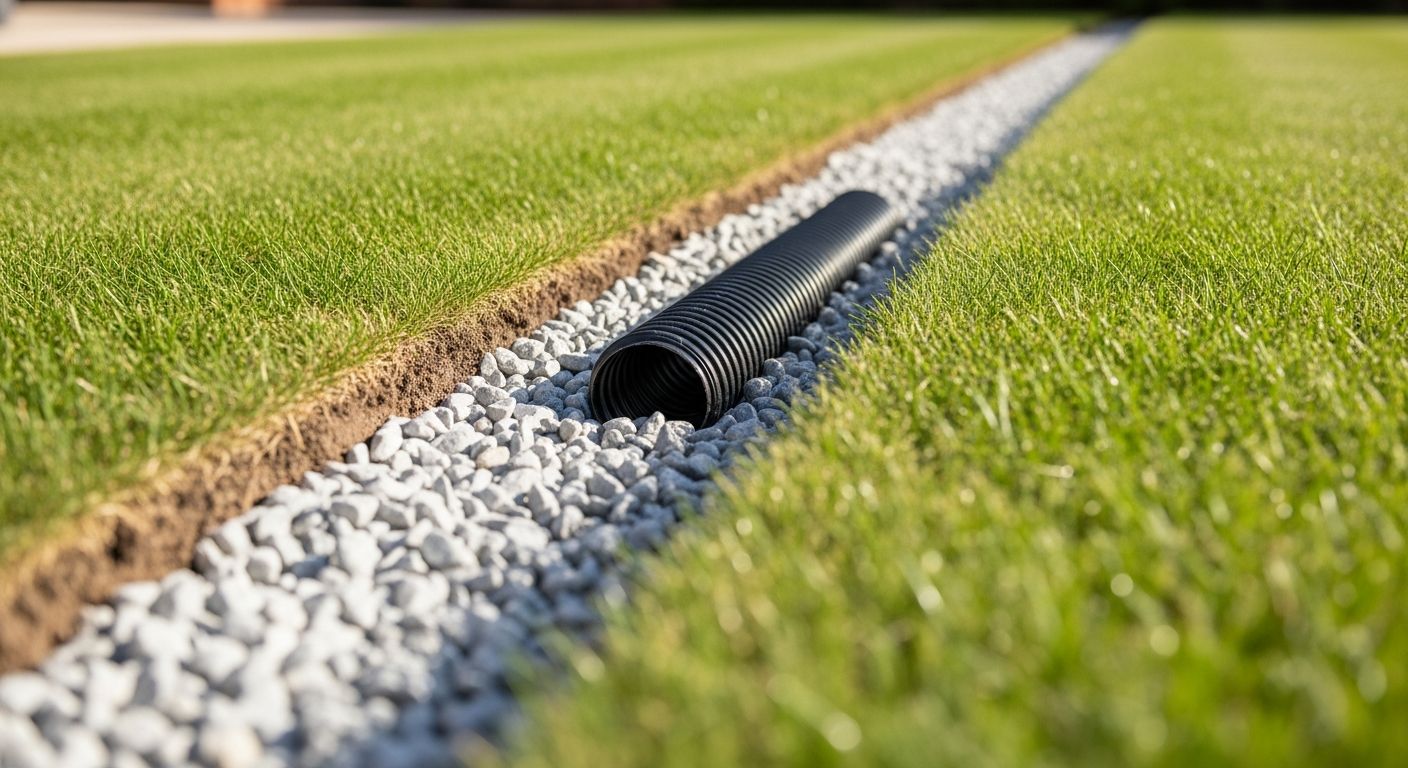
Installing basic garden drainage — such as a French drain, soakaway, or channel drain on a patio — sits comfortably within the reach of a competent DIYer. You’ll need a reasonable level of physical fitness and some confidence with groundworks. Expect to spend a full weekend on a typical garden: one day digging, one day laying pipe or aggregate and backfilling. Essential tools include a spade, mattock or mini-digger hire (for deeper runs), spirit level, string line, and a saw for cutting perforated pipe. Materials for a straightforward French drain — perforated pipe, geotextile membrane, and gravel — typically run to £200–£500 depending on the run length and depth required. If you’re dealing with a waterlogged lawn, a simple soakaway or slit drainage system is well within DIY capability. The main risks are poor gradient (water won’t flow), inadequate depth (pipe damage from foot traffic or frost), and connecting to the wrong outfall — you must not connect garden drainage to a foul sewer without approval. If your drainage will discharge to a watercourse, you may need an environmental permit from the Environment Agency. For guidance on companion groundworks, see our guide to laying a patio on a budget.
The Trade Option
A professional drainage contractor will assess your site using a trial hole or percolation test to determine soil absorption rates before specifying the right system. Trades involved include landscape drainage specialists, civil engineers (for larger schemes), and groundworkers. A professionally installed soakaway or French drain system for a typical garden typically costs £800–£2,500, rising significantly for pump-assisted systems, land drainage across large plots, or where excavation requires a tracked machine. For complex or high-volume water management — for example where drainage must integrate with a new driveway or hard landscaping — a specialist groundworker is the right call. To find a reputable contractor, use a vetted trade directory such as Checkatrade or TrustAMark, or seek a member of the British Association of Landscape Industries (BALI). Always get at least three written quotes and confirm the contractor carries public liability insurance.
Side-by-Side Comparison
| Factor | DIY | Trade |
|---|---|---|
| Cost | £200–£500 (materials only) | £800–£2,500 (fully installed) |
| Time | 1–2 weekends | 1–3 days on site |
| Skill Required | Intermediate — basic groundworks competence needed | Professional groundworker or drainage specialist |
| Risk Level | Low–Medium (incorrect gradient or outfall connection) | Low (professional specification and installation) |
| End Quality | Good if planned carefully; risk of failure on heavy clay | High — specified and installed to suit your soil |
| Legal Requirements | Environmental permit may be needed to discharge to watercourse; no connection to foul sewer without approval | Contractor must comply with Environment Agency rules and Building Regulations where applicable |
When DIY Makes Sense
- You have a manageable area of waterlogging on a lawn or border, without standing water that persists for more than 24–48 hours after heavy rain.
- Your soil is sandy or loamy — percolation tests confirm water drains away within a reasonable time, meaning a simple soakaway or French drain will work without specialist engineering.
- Your drainage outfall is to a suitable soakaway or an existing surface water drain (not a foul sewer), and no environmental permit is required for your outfall location.
- You’re comfortable with physical digging, trench excavation, and setting accurate pipe gradients — and you’re happy to hire a mini-digger if the run exceeds 10–15 metres.
When You Must Use a Tradesman
- Heavy clay soil or high water table: Where percolation tests show water does not drain away, soakaways will fail. A specialist is needed to design a pumped system, attenuation tank, or engineered drainage scheme.
- Connection to mains surface water drainage: Any new connection to an adopted sewer or public surface water drain requires approval from your water authority under the Water Industry Act 1991 — this is not a DIY task.
- Discharge to a watercourse: If water will discharge to a stream, ditch, or other watercourse, an environmental permit or land drainage consent from the Environment Agency or Internal Drainage Board may be required under the Land Drainage Act 1991.
- Basement or structural drainage: Any drainage work adjacent to foundations, retaining walls, or a basement must be designed and overseen by a qualified engineer to avoid undermining structural integrity — Building Regulations may apply.
- Shared or boundary drainage: Where drainage crosses a neighbour’s land or affects a shared system, legal agreements and professional involvement are essential.
If You DIY — Where to Start
If you’ve decided to tackle garden drainage yourself, the best starting point is our detailed step-by-step guide: Fix a Waterlogged Lawn. It walks you through diagnosing the problem, conducting a simple percolation test, choosing the right drainage solution for your soil type, and laying a French drain or soakaway correctly. Before you start digging, also check our Garden Guide for an overview of related groundworks, and if your drainage project is linked to a patio or path, read our guidance on fixing sunken patio slabs — poor drainage is frequently the root cause. Always call 0800 96 99 66 (Dial Before You Dig) to check for buried services before any excavation.
Frequently Asked Questions
Do I need planning permission to install garden drainage in the UK?
Planning permission is not usually required for garden drainage installed within your own property boundary. However, if you need to discharge water to a watercourse or connect to an adopted sewer, you must obtain consent from the Environment Agency or your water authority before work begins.
How deep should a French drain be in a UK garden?
A French drain in a typical UK garden is usually installed at 300–600mm depth for surface water drainage, with perforated pipe laid to a minimum fall of 1:100 (1cm drop per 1 metre of run) to ensure water flows freely to the outfall.
Can I connect garden drainage to my household drains?
You must never connect garden surface water drainage to a foul sewer without prior approval from your water and sewerage company, as this is illegal under the Water Industry Act 1991. You may be able to connect to a surface water drain with consent — contact your water authority first.
What is a percolation test and do I need one?
A percolation test measures how quickly water drains through your soil, which determines whether a soakaway will work on your site. Dig a test hole 300mm square and 300mm deep, fill it with water, and measure how long it takes to empty — if it takes more than a few hours, your soil is unlikely to support a standard soakaway.
How long does a DIY garden drainage installation take?
A straightforward French drain or soakaway in a typical back garden takes most DIYers one to two weekends — one day for planning, digging, and laying pipe, and another for backfilling, testing, and reinstating turf or paving.
Always lay geotextile membrane around gravel-filled French drains and soakaways, with the fabric folded over the top before backfilling — omitting this step causes silt migration into the aggregate within two to three years, blocking the system entirely. Use a minimum 100mm perforated pipe rather than 80mm; the larger bore is significantly less prone to blockage on runs over 10 metres.
Sources
- Environment Agency — Guidance on drainage and flood risk for householders — gov.uk
- HSE — Safe excavation and avoiding buried services — hse.gov.uk
- Checkatrade — Average cost of garden drainage installation UK — checkatrade.com
This guide is for general information only. Always work safely and follow manufacturer instructions. DIYnut accepts no liability for injury or damage arising from DIY work.