Hardwood vs Laminate Flooring
Hardwood flooring is a natural, long-lasting option that can be sanded and refinished multiple times. Laminate is a budget-friendly alternative that mimics wood using a photographic layer. Both suit most UK homes, but your choice depends on budget, foot traffic, and moisture levels.

What Is Hardwood Flooring?
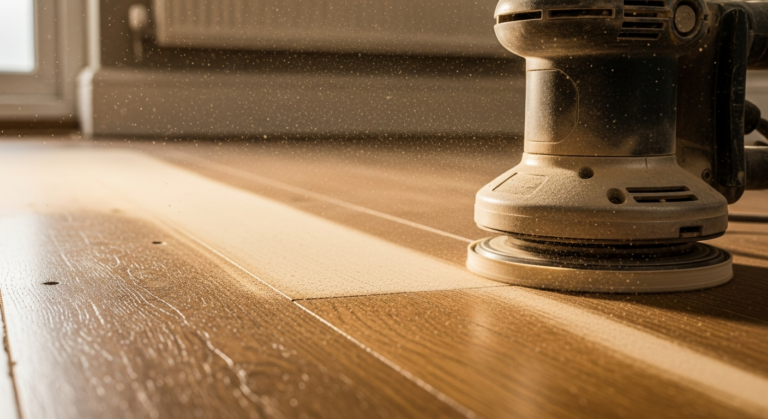
Hardwood flooring is made from solid or engineered timber cut from deciduous trees such as oak, ash, or walnut. Solid hardwood boards are milled from a single piece of wood throughout, while engineered hardwood uses a real timber top layer bonded to a plywood core for added stability in fluctuating humidity. Both types can be stained, oiled, or lacquered to suit your interior. Hardwood is a long-term investment — solid boards can be sanded and refinished several times over decades. See our guide to How to Lay Hardwood Flooring for a full installation walkthrough.
What Is Laminate Flooring?
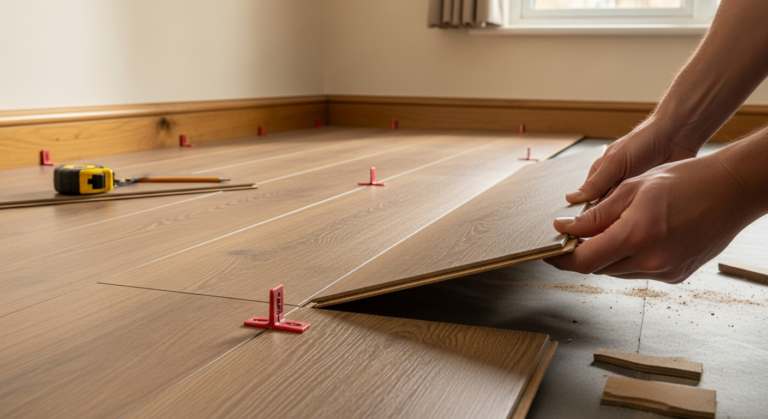
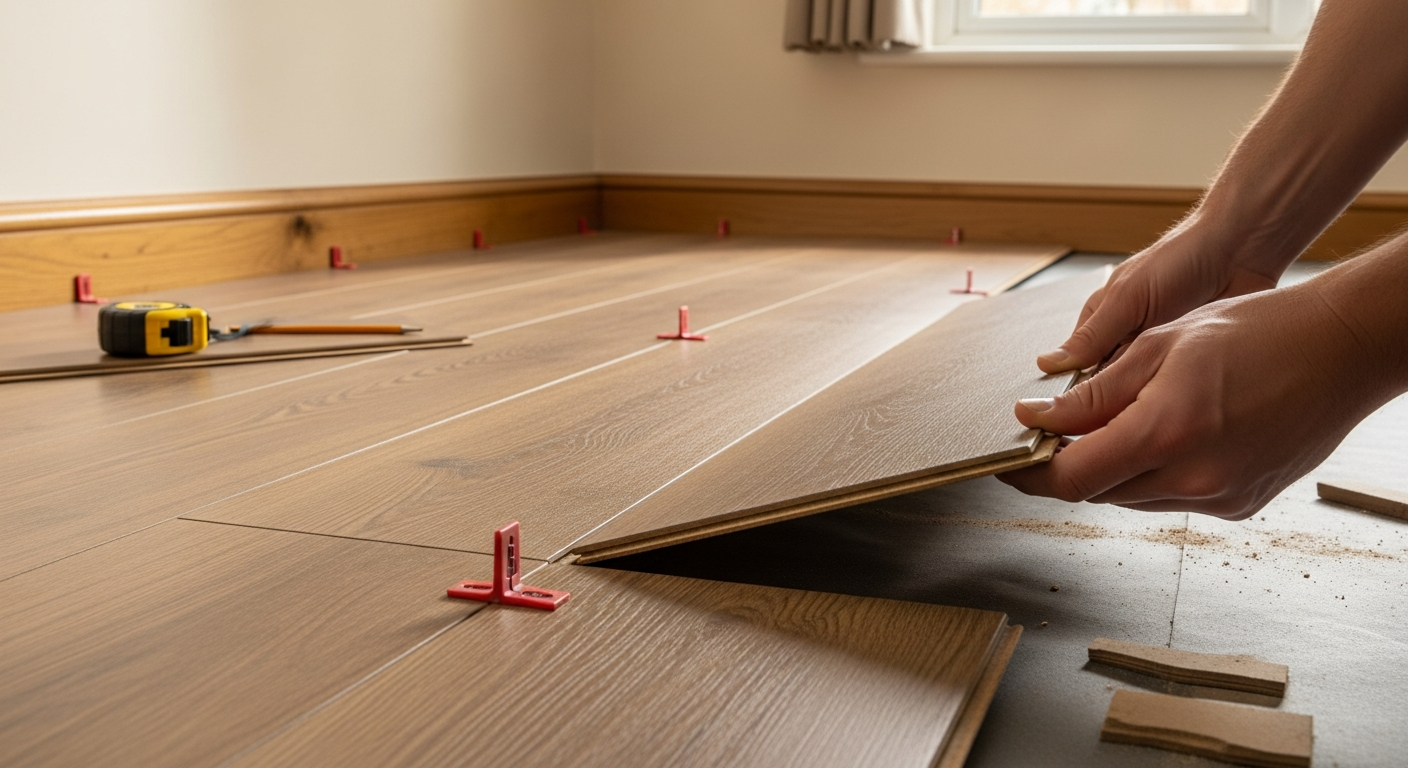
Laminate flooring is a manufactured product made up of several fused layers: a wear layer, a photographic film that replicates the look of wood or stone, a high-density fibreboard (HDF) core, and a backing layer for stability. It clicks together using a tongue-and-groove system and floats over the subfloor without adhesive or nails. Modern laminate can be convincingly realistic, and AC ratings indicate durability for residential or commercial use. It cannot be sanded or refinished — once the wear layer is damaged, boards must be replaced. Visit our How to Lay Laminate Flooring guide before you start.
Side-by-Side Comparison
| Feature | Hardwood | Laminate |
|---|---|---|
| Cost per m² | £40–£120+ (materials only) | £8–£30 (materials only) |
| Durability | Very high — handles decades of use | Moderate — wear layer can scratch over time |
| Appearance | Genuine grain, improves with age | Realistic print, consistent pattern repeat |
| Install Difficulty | Moderate–High (nailing or gluing required for solid) | Low–Moderate (click-lock floating system) |
| Maintenance | Periodic oiling or re-lacquering; can be refinished | Easy daily cleaning; damaged boards replaced, not repaired |
| Lifespan | 50–100+ years (solid); 25–40 years (engineered) | 10–25 years depending on AC rating and use |
Hardwood Flooring — Pros and Cons
Pros
- Genuine natural material — each board is unique
- Can be sanded and refinished multiple times, extending its life significantly
- Adds measurable value to a property
- Improves in character and warmth as it ages
- Better acoustic quality — less hollow underfoot sound
Cons
- Significantly higher material and installation cost
- Sensitive to moisture — not suitable for bathrooms or wet rooms
- Solid hardwood can expand and contract with humidity changes
- Professional installation often required for solid boards
- Scratches are more visible on softer species such as pine or cherry
Laminate Flooring — Pros and Cons
Pros
- Low cost — accessible for most budgets
- DIY-friendly click-lock installation suits confident beginners
- Scratch-resistant wear layer performs well in busy households
- Wide range of finishes including wood, stone, and tile effects
- Easier to fit around obstacles — see our guide on laying laminate around doors
Cons
- Cannot be sanded or refinished — boards must be replaced when worn
- Can sound hollow or plasticky underfoot without quality underlay
- Most standard grades are not suitable for bathrooms or kitchens with standing water
- Does not add the same resale value as real hardwood
- Pattern repeat on cheaper boards can look artificial
Which Is Better For…?
- Period or traditional UK homes: Hardwood — real timber suits older properties authentically and can be matched to existing boards. Laminate can look incongruous alongside original features.
- Rental properties: Laminate — lower upfront cost, easy replacement of individual boards, and resilient to tenant wear. Check our Laminate Flooring Buying Guide for AC rating advice.
- Households with dogs or young children: Laminate — higher scratch resistance on the wear layer and easier to clean up spills quickly. See also Best Flooring for Dogs.
- Open-plan kitchen-diners: Engineered hardwood — more stable than solid in humidity fluctuations, looks premium throughout, and handles moderate kitchen splashes better than solid wood.
- Living rooms on a budget: Laminate — delivers a wood-look finish at a fraction of the cost, and a good-quality underlay significantly improves comfort and acoustics.
UK Cost Comparison
Laminate flooring typically costs between £8 and £30 per m² for materials, depending on thickness, AC rating, and finish quality. Budget boards start around £8–£12 per m²; mid-range options with a realistic texture sit at £15–£22 per m². Hardwood flooring carries a much higher price: engineered hardwood generally runs from £40 to £75 per m² for materials, while solid hardwood boards from premium UK and European species can reach £80–£120 or more per m². Labour costs for professional fitting add roughly £15–£25 per m² for laminate and £25–£45 per m² for solid hardwood, depending on subfloor preparation, region, and whether skirting boards need to be removed first. Budget for underlay separately — good-quality underlay for laminate costs £3–£8 per m² and makes a significant difference to feel and sound insulation. Factor in the cost of removing existing skirting boards if you plan to run flooring underneath them.
Frequently Asked Questions
Can laminate flooring be used in a kitchen or bathroom?
Standard laminate is not recommended for wet rooms or bathrooms where standing water is common. Some manufacturers produce water-resistant or waterproof-rated laminate suitable for kitchens, but always check the product specification before fitting in damp areas.
How long does hardwood flooring last compared to laminate?
Solid hardwood flooring can last 50 to 100 years or more with proper care and periodic refinishing. Laminate typically lasts 10 to 25 years depending on the AC rating and how much foot traffic it receives before the wear layer deteriorates.
Does hardwood flooring add value to a UK property?
Real hardwood floors are widely regarded by UK estate agents as a desirable feature that can positively influence buyer perception and property value, particularly in period homes. Laminate is less likely to influence valuation in the same way.
Can I lay laminate over an existing floor?
In many cases, yes — laminate can be laid over existing vinyl, tiles, or a smooth concrete subfloor, provided the surface is level, dry, and structurally sound. Always check the manufacturer’s guidance and ensure the total floor height does not cause issues with doors or thresholds.
What underlay do I need for laminate flooring?
Laminate requires a foam or fibre underlay to cushion the boards, reduce impact noise, and provide a slight moisture barrier. If laying over concrete, choose an underlay with a built-in damp-proof membrane. Thickness and density affect both comfort and acoustic performance.
When fitting hardwood in a UK home, acclimatise the boards in the room for at least 72 hours before installation — central heating creates very low humidity in winter, and boards laid without acclimatising can shrink and develop visible gaps within weeks. Engineered hardwood is inherently more stable than solid in these conditions and is often the better choice for homes with underfloor heating.
Sources
- Which? — Best flooring for your home — which.co.uk
- Checkatrade — Cost of hardwood flooring — checkatrade.com
- Checkatrade — Cost of laminate flooring installation — checkatrade.com
This guide is for general information only. Always work safely and follow manufacturer instructions. DIYnut accepts no liability for injury or damage arising from DIY work.