Block Paving vs Resin Driveway
Block paving costs less upfront and suits DIY installation, but resin driveways offer a smoother, low-maintenance finish with better drainage compliance. Resin is the premium choice for appearance and longevity; block paving wins on repairability and cost.

What Is Block Paving?
Block paving is a driveway surface made from individual concrete or clay blocks laid in a pattern over a compacted sub-base and bedding layer of sharp sand. The blocks interlock to create a firm, load-bearing surface that can be lifted and relaid if repairs are needed. It is widely used across UK driveways and paths, available in a range of colours and laying patterns including herringbone and stretcher bond. For a full walkthrough of laying block paving yourself, see the Driveways & External Guide.
What Is a Resin Driveway?
A resin driveway is created by mixing aggregate stones with a two-part resin binder — either polyurethane or epoxy — and trowelling the mixture over an existing concrete or tarmac base, or a newly prepared sub-base. Once cured, the surface is smooth, hard-wearing, and available in a wide range of stone colours and finishes. Permeable resin-bound systems allow rainwater to drain through, which is important for planning compliance on front driveways in England under permitted development rules. For related surface guidance, visit the Driveways & External Guide.
Side-by-Side Comparison
| Factor | Block Paving | Resin Driveway |
|---|---|---|
| Cost per m² | £50–£120 installed | £40–£85 materials; £70–£150 installed |
| Durability | High — individual blocks can shift or crack under heavy loads | Very high — seamless surface resists cracking when laid correctly |
| Appearance | Traditional or contemporary; wide pattern choice | Smooth, modern finish; broad stone and colour options |
| Install Difficulty | DIY-possible with skill; physically demanding | Specialist installer recommended; not suited to DIY |
| Maintenance | Weeds in joints; periodic re-sanding and pressure washing required | Very low — occasional rinse; no joints to weed |
| Lifespan | 20–30 years with maintenance | 15–25 years depending on base preparation |
Block Paving — Pros and Cons
- Lower installed cost per m² than resin in most cases
- Individual blocks can be lifted and replaced without disturbing the whole surface
- DIY installation is achievable for competent homeowners
- Wide range of patterns, colours, and finishes available
- Long lifespan when laid on a properly compacted sub-base
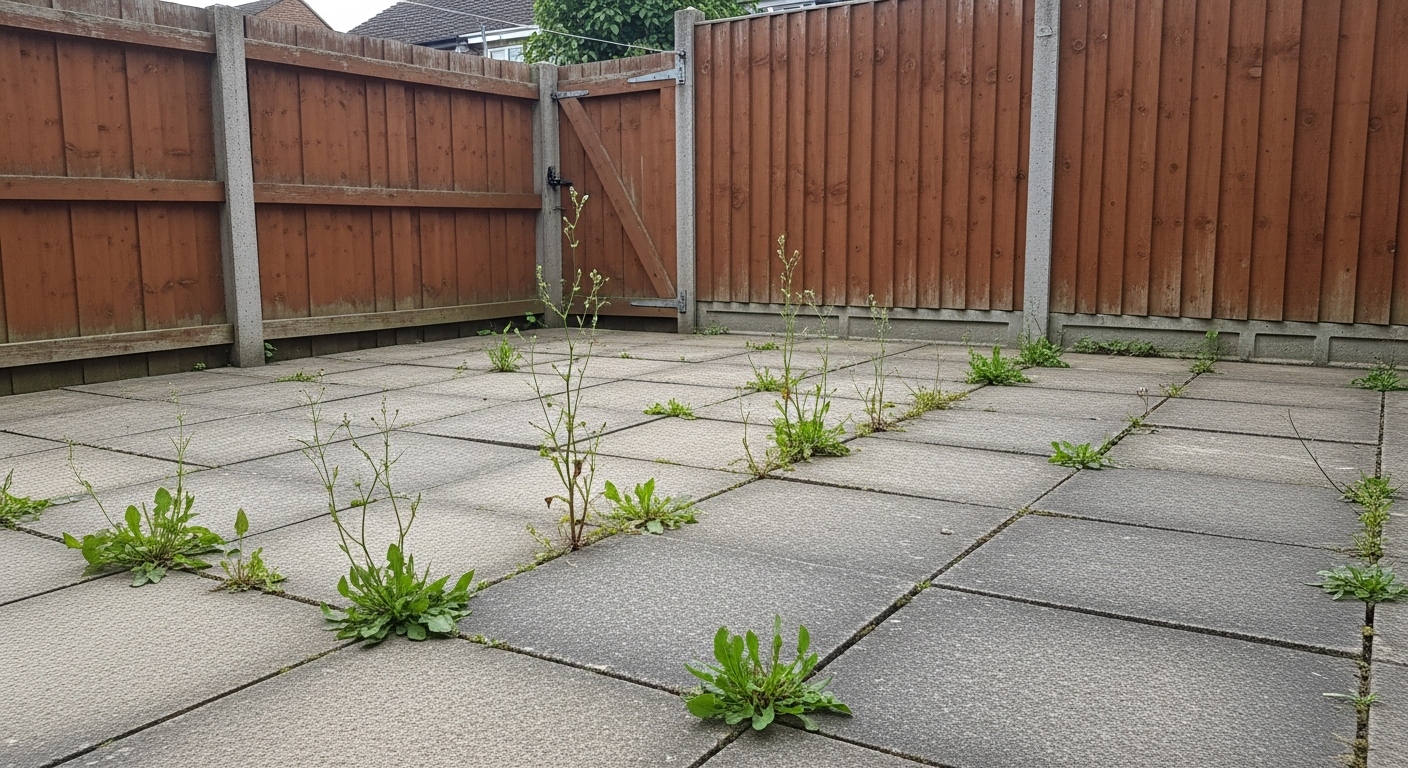
- Joints attract weeds and moss — requires ongoing treatment or regular cleaning
- Blocks can sink or shift if the sub-base settles — see how to fix sunken slabs for principles that apply
- Impermeable unless permeable blocks are specified — planning rules may apply for front driveways
- Labour-intensive to install correctly; poor prep leads to early failure
Resin Driveway — Pros and Cons
- Permeable resin-bound systems comply with permitted development drainage rules for front driveways
- Seamless surface with no joints means virtually no weed growth
- Smooth, attractive finish that adds kerb appeal and can increase perceived property value
- Highly resistant to oil and fuel staining
- Available in a wide variety of aggregate colours and stone sizes
- Higher installed cost than block paving in most scenarios
- Requires a sound, stable base — laying over a failing sub-base will cause delamination
- Not DIY-friendly; poor mixing ratios or trowelling technique cause patchy curing
- Localised damage (e.g. from sharp impacts) is harder to repair invisibly than block paving
- UV degradation can affect some resin binders over time — quality of product matters
Which Is Better For…?
- A front driveway needing planning compliance: Resin-bound (permeable) wins — it satisfies the requirement under English permitted development rules that front driveways over 5m² must use a permeable surface or direct run-off to a lawn or border. Non-permeable block paving requires planning permission in this scenario.
- A budget-conscious homeowner: Block paving — lower installed cost and DIY-possible if you have the groundwork skills, reducing labour spend significantly.
- A low-maintenance finish: Resin — no joints to weed, easy to rinse clean, and resistant to most stains without specialist treatment.
- A period or traditional property: Block paving — clay or tumbled concrete blocks in a herringbone pattern complement Victorian and Edwardian terraces far better than a smooth resin finish.
- A modern new-build or contemporary home: Resin driveway — clean lines, smooth texture, and contemporary stone finishes suit modern architecture and are favoured by estate agents for kerb appeal. Also consider reviewing the Best Patio Materials Guide if extending the look across your outdoor space.
UK Cost Comparison
Block paving typically costs between £50 and £120 per m² fully installed in the UK, depending on block type (concrete being cheaper than clay), pattern complexity, and sub-base condition. A standard 50m² driveway therefore runs from roughly £2,500 to £6,000 installed. DIY block paving using concrete blocks can reduce costs significantly, with materials alone often falling between £20 and £45 per m². Resin driveways cost between £70 and £150 per m² installed, with a 50m² driveway typically ranging from £3,500 to £7,500. Materials-only prices for resin-bound kits start at around £40–£85 per m², but professional installation is strongly recommended to avoid adhesion failures. Prices vary by region, with London and South East quotes typically 15–25% higher than the national average. Always obtain at least three written quotes and check installers are registered with a relevant trade body such as the British Association of Landscape Industries (BALI). For further guidance on external surfacing costs, visit the Driveways & External Guide.
Frequently Asked Questions
Do I need planning permission for a resin driveway in the UK?
For front driveways in England, you do not need planning permission if the surface is permeable (such as resin-bound) or if run-off is directed to a lawn or border. Non-permeable surfaces over 5m² do require permission. Rules differ in Scotland, Wales, and Northern Ireland — check with your local planning authority.
Can I lay block paving myself?
Yes, block paving is one of the more achievable DIY driveway projects for competent homeowners, provided the sub-base is properly excavated and compacted. The most common failure is inadequate sub-base depth — aim for at least 100–150mm of compacted MOT Type 1 hardcore beneath the bedding sand.
How long does a resin driveway last?
A well-installed resin-bound driveway typically lasts 15–25 years. Lifespan depends heavily on base preparation — a resin surface laid over a cracked or unstable base will delaminate within a few years regardless of the resin quality.
Which driveway surface is easier to maintain?
Resin driveways require far less ongoing maintenance than block paving. There are no joints for weeds to colonise, and the surface can be kept clean with a regular hose-down. Block paving needs periodic weed treatment, re-sanding of joints, and pressure washing to stay looking its best.
Can a resin driveway be repaired if it gets damaged?
Small areas of resin can be patched, but achieving an invisible repair is difficult because the new resin rarely blends perfectly with the cured original. Block paving is far easier to repair — individual blocks can be lifted, the sub-base corrected, and replacement blocks relaid with minimal visible difference.
When getting quotes for a resin driveway, ask the installer to confirm the resin-to-aggregate ratio in writing — reputable installers use UV-stable polyurethane resin at the manufacturer’s specified ratio; diluting the resin to cut costs is a common cause of early surface failure and discolouration. For block paving, specify that the sub-base be compacted in 75mm layers with a wacker plate rather than in a single pass — this single step prevents the majority of sinkage complaints within the first two years.
Sources
- Which? — Driveway costs and paving guide — which.co.uk
- GOV.UK — Paving your front garden (permitted development rules) — gov.uk
- Checkatrade — How much does a resin driveway cost? — checkatrade.com
This guide is for general information only. Always work safely and follow manufacturer instructions. DIYnut accepts no liability for injury or damage arising from DIY work.