Spring Lawn Repair
Spring lawn repair starts once soil temperature reaches 8–10°C — typically March to April in the UK. Scarify to remove thatch, aerate compacted areas, overseed bare patches, and apply a spring lawn feed to kick-start recovery before summer.

Why This Season Matters
Spring is the single most important window for lawn recovery. As soil temperatures climb above 8°C, grass roots begin active growth — making this the ideal time to repair winter damage before weeds and moss take hold. Acting too early, when the ground is still frozen or waterlogged, can compact soil and set recovery back by weeks.
Leave repairs too late into May and early June, and newly sown seed will compete with established weeds and struggle in drier conditions. The March to mid-April window gives seed the moisture, warmth, and space it needs to establish properly.
Your Complete Checklist
- Check soil temperature is consistently above 8°C before starting any repair work — use a soil thermometer
- Rake off debris, leaves, and dead moss from the entire lawn surface
- Scarify the lawn to remove thatch and improve air circulation at the base of grass plants
- Aerate compacted areas using a garden fork or hollow-tine aerator, working to a depth of around 10–15cm
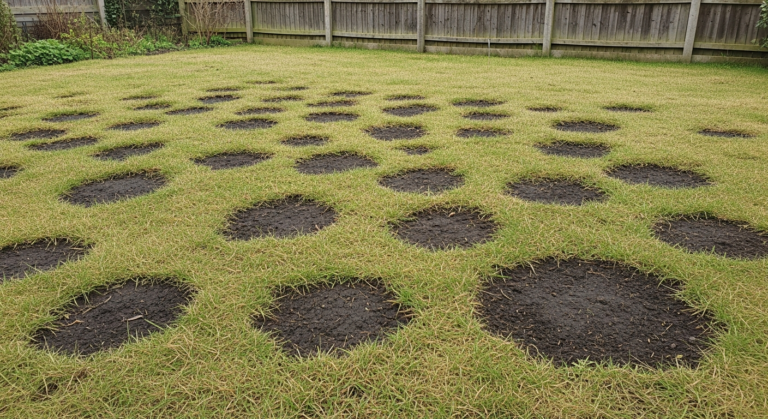
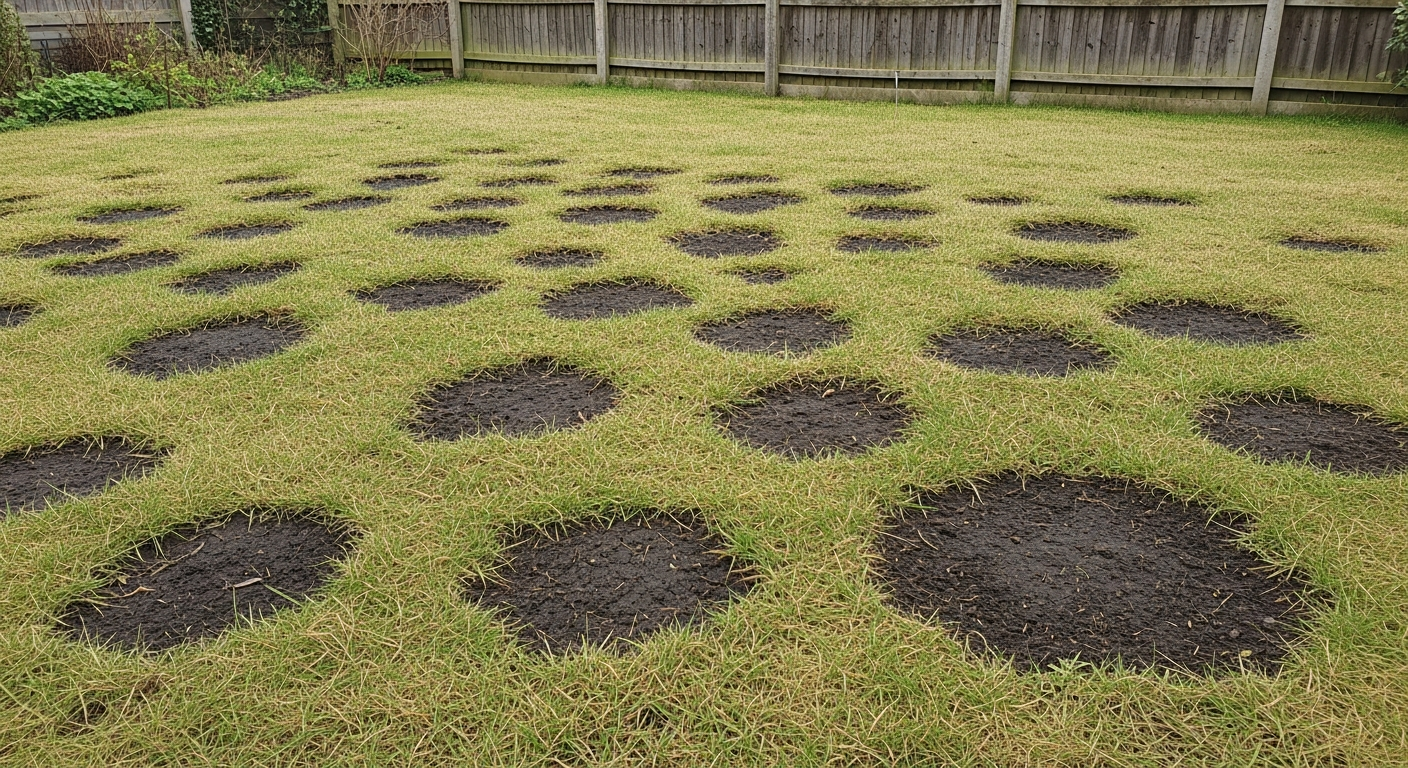
- Repair bare and patchy areas by roughing up the soil surface and overseeding
- Overseed bare patches with a suitable grass seed mix matched to your lawn’s light conditions
- Apply a spring lawn feed with a higher nitrogen content to encourage green, leafy growth
- Top-dress with a fine mix of sharp sand, loam, and compost to level uneven areas after aeration
- Treat moss and broad-leaved weeds with an appropriate lawn treatment once grass is actively growing
- Address any persistently waterlogged areas before overseeding to prevent seed rotting
- Set the mower blade to its highest setting for the first cut of the season — never remove more than one-third of the grass height in a single cut
- Check garden hose and tap connections are ready for the drier weeks ahead — see our guide to fixing a garden tap if you find any issues
Step-by-Step for Each Task
Scarifying and aerating: Begin by mowing the lawn slightly shorter than usual — around 4cm — to make scarifying effective. Using a spring-tine rake or mechanical scarifier, work in parallel passes across the lawn to pull up thatch and moss. Once scarified, push a garden fork 10–15cm deep every 15cm across any compacted patches, or use a hollow-tine aerator to extract cores of soil. Brush a top-dressing of sharp sand and loam into the holes to improve drainage long-term.
Overseeding bare patches: Scratch the bare soil surface with a hand fork to create a rough seedbed. Sprinkle grass seed at the rate recommended on the packet — typically around 35g per square metre for overseeding — then rake lightly to make contact between seed and soil. Firm down with the back of a spade or a roller if available. Keep the area moist for at least two to three weeks until germination is visible. Avoid walking on seeded areas during this period.
Feeding the lawn: Once grass is actively growing and daytime temperatures are consistently above 10°C, apply a granular spring lawn feed using a spreader for even coverage. Water in if no rain is forecast within 48 hours. Avoid applying fertiliser to newly seeded patches until the new grass has been mown at least twice — doing so too early can scorch vulnerable seedlings.
First mow of the season: Set the cutting height to its highest or second-highest setting — typically around 5–6cm. Remove any clippings rather than leaving them as a mulch at this stage, as this can harbour fungal disease on a lawn still recovering from winter. Gradually lower the cutting height over subsequent weeks as the lawn thickens up.
Tools and Materials You’ll Need
- Soil thermometer
- Spring-tine rake or mechanical scarifier
- Garden fork or hollow-tine aerator
- Lawn mower with adjustable cutting height
- Lawn spreader (hand-held or wheeled)
- Hand fork or soil rake for seedbed preparation
- Watering can or garden hose with fine rose attachment
- Grass seed suitable for your lawn conditions (shaded, hard-wearing, or general purpose)
- Spring/summer granular lawn fertiliser (higher nitrogen formulation)
- Top-dressing mix (sharp sand, loam, and fine compost)
- Garden brush or besom broom for working in top-dressing
- Knee pads for patch work
Common Mistakes to Avoid
- Working on frozen or waterlogged ground. Walking or using machinery on saturated soil compacts the structure and damages grass roots. Wait until the lawn is firm enough to walk across without leaving deep footprints.
- Scarifying too aggressively early in the season. Heavy scarifying before the grass is actively growing can stress the lawn beyond recovery. Start with a light pass in early spring and follow up more thoroughly once growth is well underway.
- Choosing the wrong seed mix. Using a sun-loving mixture on a shaded lawn, or a fine ornamental seed on a family lawn that takes heavy wear, leads to thin, patchy results within months. Match the seed type to the actual conditions.
- Applying fertiliser too early or in cold weather. Fertiliser applied when soil is below 8°C will not be taken up by the grass and is likely to be washed away, causing run-off. Check the forecast and wait for consistent warmth.
- Cutting too short too soon. Scalping a lawn in its first spring cut weakens grass plants and creates bare areas that weeds colonise quickly. Keep the blade high until the lawn has recovered thickness and vigour.
Frequently Asked Questions
When is the best time to repair a lawn in the UK?
The best time is mid-March to mid-April, once soil temperature is consistently above 8°C. Repairing before this point risks compaction and poor seed germination, while leaving it too late into May means competing with established weeds.
Can I overseed an existing lawn without killing the existing grass?
Yes. Lightly scarify or rake the surface to create contact between seed and soil, then scatter seed at roughly half the new-lawn rate. The existing grass will blend with new growth provided you keep the area watered consistently for the first few weeks.
How long does grass seed take to germinate in spring in the UK?
Under typical spring conditions — soil temperatures of 8–12°C — expect germination in 10 to 21 days. Warmer spells can accelerate this. Keep the seedbed moist throughout and avoid walking on it until the new grass is at least 5cm tall.
Is it worth scarifying a lawn that has a lot of moss?
Scarifying removes dead moss but will not prevent it returning if the underlying causes — shade, compaction, poor drainage, or low soil pH — are not addressed. Treat moss first with a suitable iron sulphate-based product, wait two weeks for it to blacken and die, then scarify and overseed.
Do I need to aerate as well as scarify, or is one enough?
They do different jobs. Scarifying removes surface thatch; aeration relieves compaction deeper in the soil profile and improves drainage and root oxygen levels. For most UK lawns that have seen winter use, doing both in spring delivers noticeably better results than either alone.
After hollow-tine aeration, brush a top-dressing of 70% sharp sand and 30% fine compost into the holes rather than leaving them open — this permanently improves drainage structure in that spot rather than letting the holes simply close back over. On clay-heavy soils, this incremental approach across two or three springs can transform a lawn that repeatedly waterlogged.
Sources
- RHS — Lawn care: feeding, weeding and moss control — rhs.org.uk
- RHS — Lawn renovation and repair — rhs.org.uk
- RHS — Scarifying lawns — rhs.org.uk
This guide is for general information only. Always work safely and follow manufacturer instructions. DIYnut accepts no liability for injury or damage arising from DIY work.