Kitchen DIY: Complete UK Guide 2026
Kitchen DIY: Complete UK Guide 2026
The kitchen takes more punishment than any other room in the house, and most of the common issues — loose hinges, worn worktops, dripping taps — are well within reach of a competent DIYer with the right guidance. This guide covers the three areas we get asked about most: Cabinets & Cupboards, Worktops, and Taps & Sinks. Get it right first time and you’ll save hundreds on call-out fees.
Browse Kitchen Guides
Cabinets & Cupboards
Kitchen Taps
Kitchen Tiling
Splashbacks
Costs & Pricing
Materials Guide
Trade vs DIY
Frequently Asked Questions
Can I fit a new kitchen myself in the UK without using tradespeople?
You can do most of the physical installation yourself — carcasses, doors, worktops, and even the plumbing if you’re competent — but gas connections must be carried out by a Gas Safe registered engineer, and any new electrical circuits or consumer unit work requires a Part P-qualified electrician. Isolating and reconnecting an existing cooker point or gas supply isn’t a DIY job, full stop. Plan the trade elements in advance so they don’t hold up the rest of the fit.
How do I stop my kitchen cabinet doors from dropping over time?
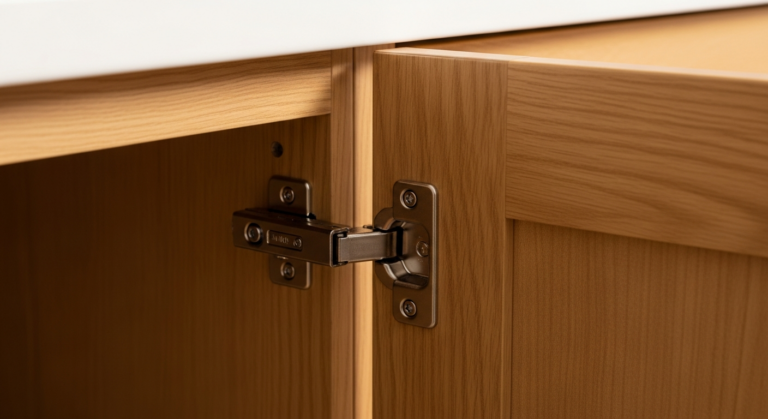
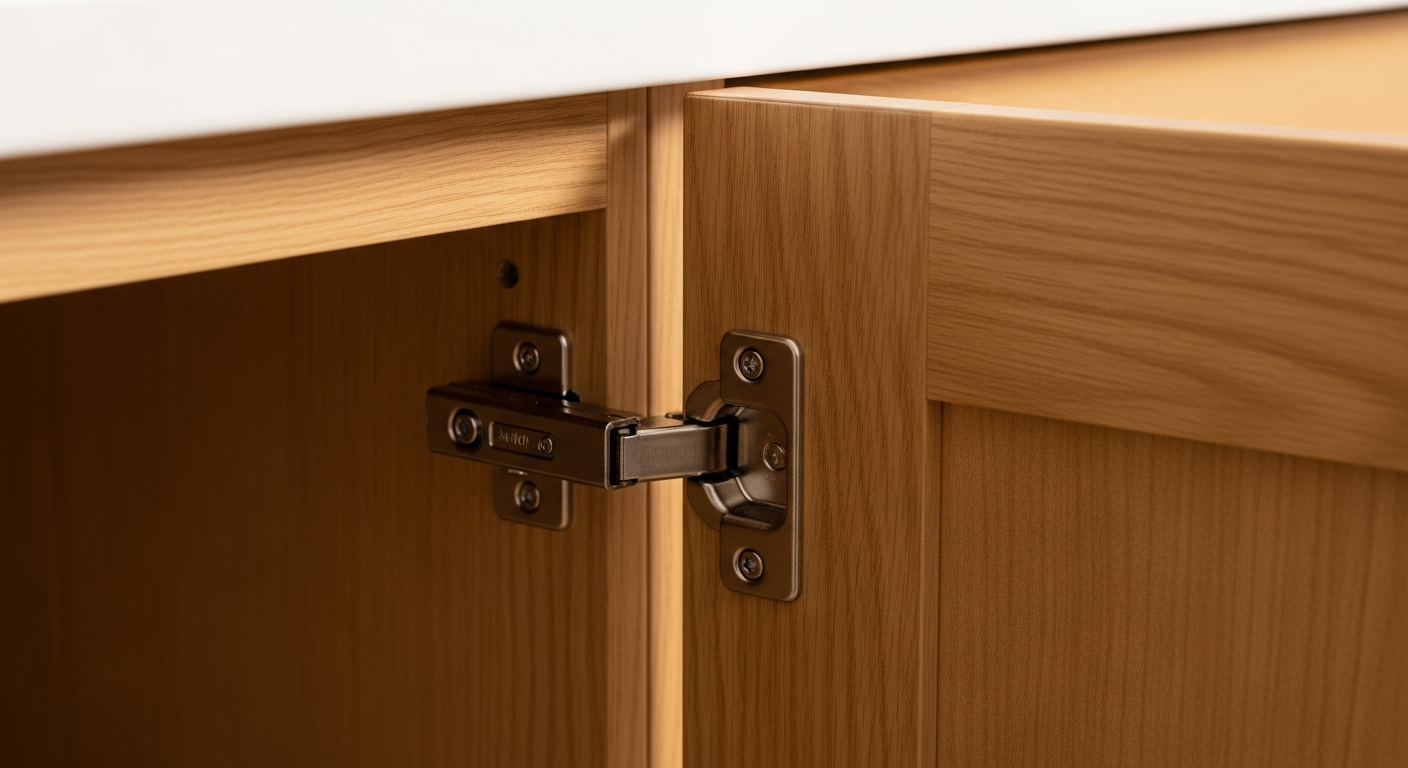
Door drop is almost always down to the hinge cup screws working loose in the carcass — the fix is usually to remove the screws, inject a little wood glue or push in a wooden toothpick to give the screw fresh material to bite into, then refit and re-tighten. Most modern concealed hinges have three-way adjustment built in, so once the door is level you can fine-tune height, depth, and side-to-side alignment with a screwdriver in under five minutes. If the hinge itself is broken or the cup hole has completely blown out, replacement hinges are cheap and universally available from any DIY merchant.
What’s the best way to cut a worktop for an inset sink?
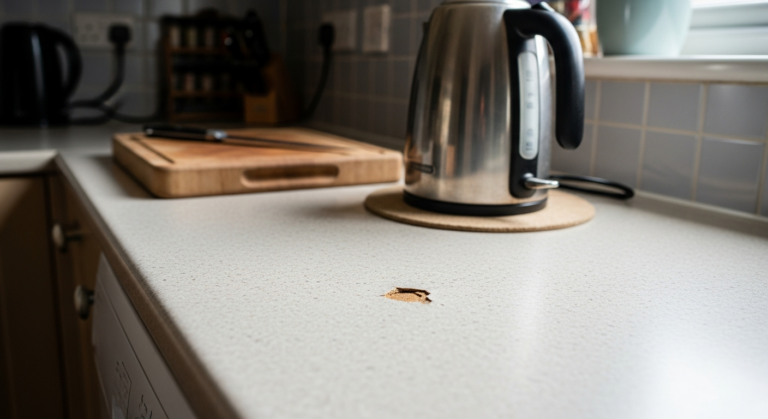
Use the template supplied with the sink — if one wasn’t included, trace around the sink upturned and then draw a second line 12–15mm inside that to give the lip something to sit on. Drill a starter hole just inside your cut line, then use a sharp jigsaw blade designed for laminate to cut slowly and steadily, supporting the offcut as you finish to prevent it tearing away and chipping the surface. Always cut from the underside if the worktop is laminate, as jigsaws cut on the upstroke and will chip the face if you cut from the top.
My kitchen tap is dripping — is it worth repairing or should I just replace it?
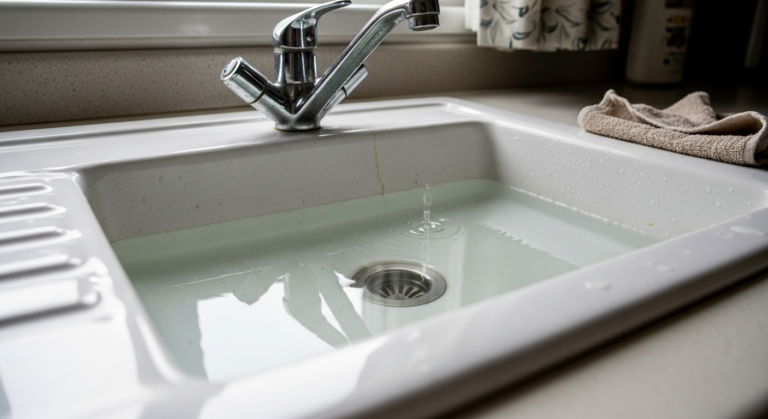
If it’s a traditional pillar tap with a rubber washer, a washer replacement costs pennies and takes twenty minutes once you’ve isolated the supply — well worth doing. On ceramic disc cartridge taps, replacement cartridges are available for most brands and are a straightforward swap, though finding the right cartridge for a budget or unbranded tap can be frustrating. If the tap body itself is corroded, the spout is pitting, or you’ve had it more than fifteen years, a full replacement is the smarter spend.
Do I need building regulations approval to refit my kitchen in the UK?
A like-for-like kitchen refit — same layout, no structural changes — doesn’t typically require building regulations approval in England, Wales, or Scotland. However, if you’re moving a load-bearing wall, adding a new electrical circuit, or altering gas pipework, those elements individually trigger the relevant regulations and must be notified to your local authority or carried out by a competent person registered under an approved scheme. Always check with your local building control if you’re unsure, as getting it wrong can cause problems when you come to sell.
- Which? — Kitchen renovation costs UK — which.co.uk
- HSE — Gas safety in the home — hse.gov.uk
Get the Full Guide with DIYnut AI
Photograph your space, tell the app what you want, and get an AI-generated after image, full materials list, and step-by-step guide in seconds.