How to Fill Cracks in Plaster – 2026 Guide
DIY Guides › Plastering & Walls
How to Fill Cracks in Plaster
Repair hairline and structural cracks cleanly for a smooth, paint-ready finish.
To fill cracks in plaster, rake out loose material, dampen the area, apply filler in thin layers, allow each coat to dry, then sand smooth before decorating. Most hairline cracks can be filled and ready to paint within a few hours.


- Filling knife (100mm)
- Scraper or putty knife
- Paintbrush (for dampening)
- Sanding block
- Vacuum or stiff brush
- Mixing board or old plate
- Ready-mixed interior filler
- Powdered plaster filler
- Fine-surface finishing filler
- Bonding agent or PVA adhesive
- Medium-grit sandpaper (120 grit)
- Fine-grit sandpaper (240 grit)
- Dust sheet
- Damp cloth
Step-by-Step Guide
Rake Out and Clean the Crack
Use a scraper or the corner of a filling knife to rake along the crack and remove all loose plaster, dust, and debris. A vacuum or stiff brush works well to clear the cavity fully — any loose material left behind will stop the filler bonding properly and the repair will fail.
Dampen the Area with a Wet Brush
Brush clean water into the crack and onto the surrounding plaster using a paintbrush. Old plaster is highly absorbent and will pull moisture out of your filler too quickly if left dry, causing the repair to shrink, crack, and lose adhesion before it sets.
Apply a Bonding Agent for Deeper Cracks
For cracks wider than 5mm or any repair deeper than 10mm, dilute PVA adhesive roughly 1 part PVA to 4 parts water and brush it into the crack. Allow it to become tacky — not fully dry — before applying filler. This dramatically improves adhesion on porous or old plaster surfaces.
Fill the Crack in Thin Layers
Load your filling knife and press filler firmly into the crack, working across the line rather than along it so the filler is forced deep into the void. For cracks deeper than 5mm, build up in 3–4mm layers, allowing each to dry fully before applying the next — one thick application will sink and crack as it dries.
Finish Flush and Allow to Dry Fully
Once the filler is slightly proud of the surface, use the filling knife held at a low angle to skim it flush. Apply a thin final coat of fine-surface finishing filler if needed to mask any imperfections. Leave the repair to dry fully — ready-mixed filler typically takes 2–4 hours depending on depth and temperature.
Sand Smooth and Prime Before Painting
Once completely dry, sand the repair with 120-grit sandpaper to bring it level, then finish with 240-grit for a smooth surface. Wipe away dust with a damp cloth, then apply a coat of diluted emulsion or a proprietary mist coat to seal the porous filler before you paint — skipping this step will leave a flat, patchy spot visible through the final coat.
Frequently Asked Questions
What is the difference between ready-mixed filler and powdered filler?
Ready-mixed filler is convenient for small, shallow repairs and requires no mixing, but it shrinks slightly as it dries. Powdered filler mixed with water is better for deeper cracks as it is harder-setting, shrinks less, and can be built up in layers more reliably.
How do I know if a crack is structural or just cosmetic?
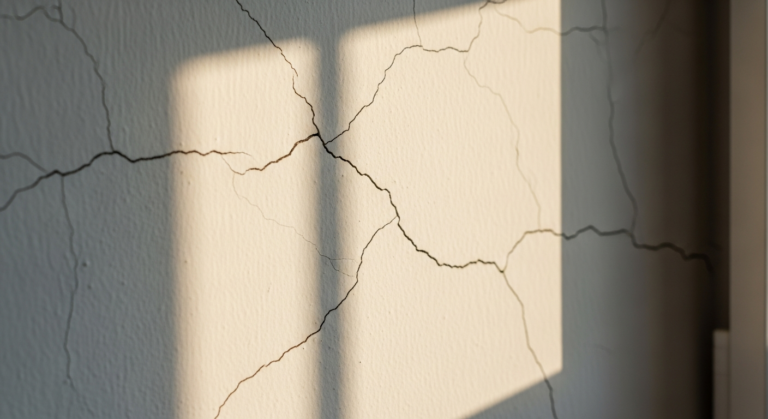
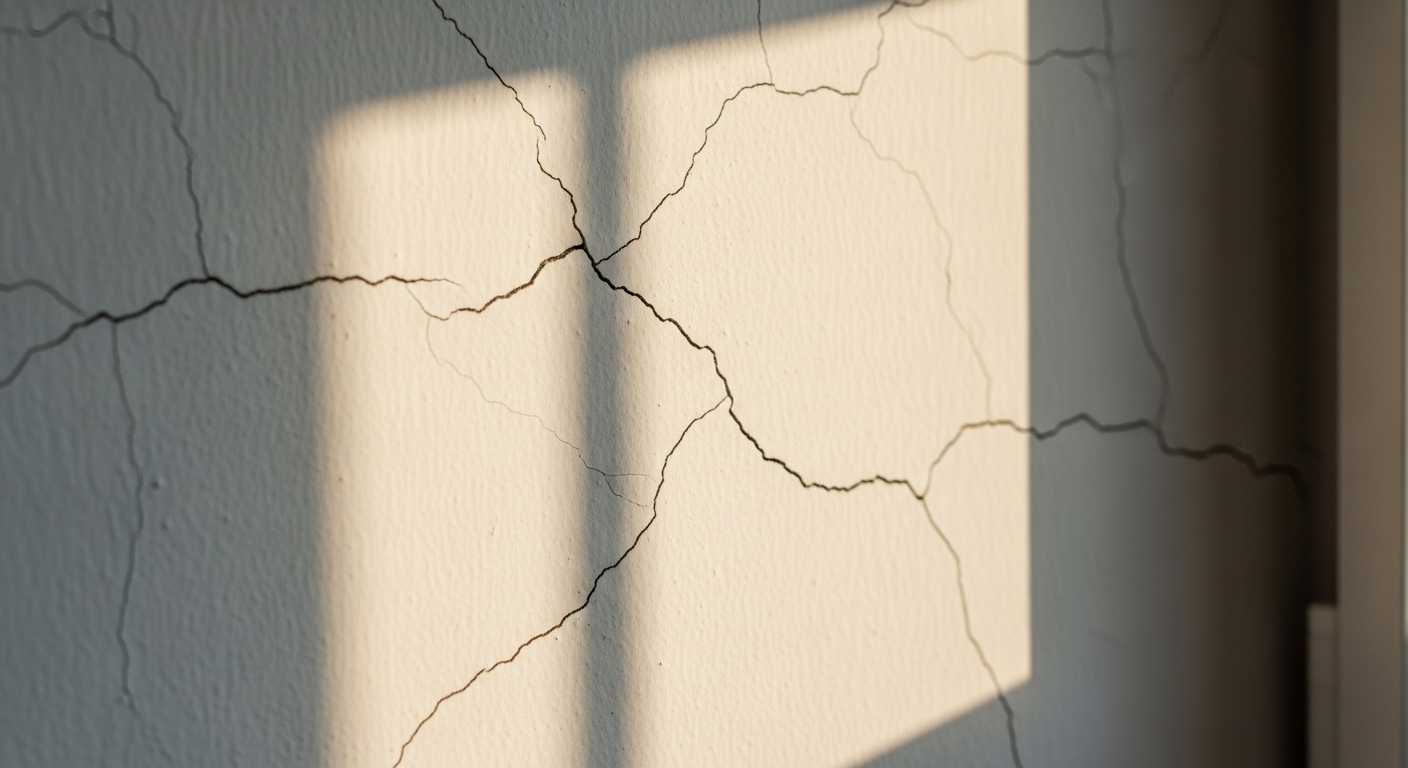
Hairline cracks that run horizontally or appear after a new build settle are generally cosmetic. Diagonal cracks running from the corners of doors or windows, cracks that are wider than 5mm, or cracks that are growing over time should be assessed by a structural surveyor before you fill them — if the plaster needs full replacement, see our guide on how to plaster a wall.
Can I fill cracks in plaster that keep coming back?
How long should I wait before painting over filled plaster?
Wait until the filler is completely dry and has turned uniformly pale — this typically takes 2–4 hours for shallow repairs and up to 24 hours for deeper fills. Painting over damp filler causes bubbling and poor adhesion.
Do I need to sand between coats of filler?
A light sand between coats with 120-grit sandpaper helps subsequent layers bond and lets you check the level of the repair. Always remove sanding dust with a damp cloth before applying the next coat.
When filling a wide crack, slightly undercut the edges with your scraper so they are wider at the base than the surface — this creates a mechanical key that grips the filler and prevents it pulling away as it dries. It is the single most reliable way to stop a repair failing at the edges.
Sources
- HSE — Plastering safety and dust control guidance — hse.gov.uk
- Which? — How to fill cracks in walls and plaster — which.co.uk
- GOV.UK — Home improvement and building regulations overview — gov.uk
This guide is for general information only. Always work safely and follow manufacturer instructions. DIYnut accepts no liability for injury or damage arising from DIY work.