How to Tile a Kitchen Splashback – 2026 Guide
How to Tile a Kitchen Splashback
Transform your kitchen with a neat, waterproof splashback you can tile yourself in a weekend.
To tile a kitchen splashback, mark a level baseline, apply tile adhesive to the wall, press tiles firmly into place using spacers, leave to cure, then grout and seal the joints. The job takes 2–4 hours and suits confident beginners.

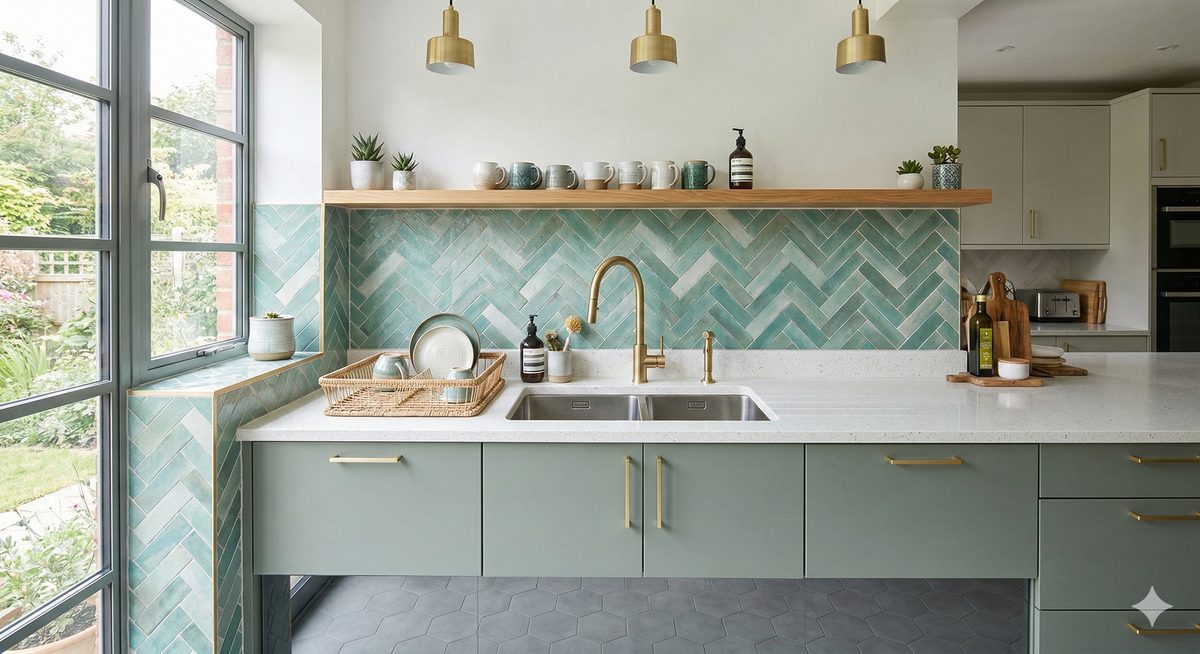
- Tape measure
- Spirit level
- Pencil
- Notched adhesive spreader
- Tile cutter or score-and-snap tool
- Rubber grout float
- Bucket and sponge
- Tile spacers
- Wall tiles
- Waterproof tile adhesive
- Grout (unsanded or fine-grain)
- Silicone sealant (kitchen-grade)
- Tile spacers
- Tile primer (for painted or glossy surfaces)
- Grout sealer
- Masking tape
Step-by-Step Guide
Prepare the wall surface
Switch off the power to any sockets in the area at the consumer unit before you start. Remove socket and switch faceplates, then clean the wall thoroughly — degrease with a sugar soap solution and allow to dry completely. If the wall is painted or glossy, apply a tile primer and leave it to cure as directed; adhesive will not bond reliably to a greasy or sealed surface, and this single step prevents most splashback failures.
Mark a level datum line
Hold a spirit level horizontally just above the worktop and draw a pencil line across the full width of the splashback area. This is your baseline — every tile row builds up from here. Do not tile directly off the worktop surface itself, as worktops are rarely truly level; following a wonky worktop edge will make every row progressively more crooked.
Dry-lay and plan your tile layout
Lay tiles along the worktop without adhesive to work out your layout before committing. Find the centre of the splashback, work outward symmetrically, and aim to avoid thin cuts at the edges — a sliver less than half a tile width looks amateur and is difficult to cut cleanly. Mark any cut lines, socket positions, and the centre point on the wall with a pencil. For guidance on wider kitchen wall tiling projects, see our How to Tile Kitchen Walls guide.
Apply adhesive and set the tiles
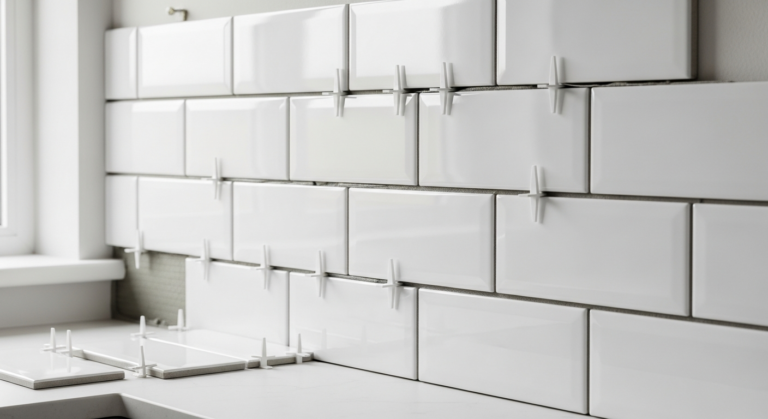
Use a notched adhesive spreader to apply waterproof tile adhesive to a 60 cm square section of wall at a time — working in small areas stops the adhesive skinning over before you place the tiles. Press each tile firmly onto the wall with a slight twisting motion to collapse the adhesive ridges and ensure full contact. Push tile spacers into each corner joint as you go to maintain consistent gaps. Check alignment with your spirit level every few tiles and tap any proud tiles back flush with a rubber mallet.
Cut tiles to fit edges and sockets
Measure each cut tile individually — never assume two gaps are identical. Use a manual score-and-snap tool for straight cuts or a tile cutter for accuracy. For socket cut-outs, score the outline carefully and use tile nippers to nibble away the waste. Smooth any sharp edges with tile file or wet-and-dry abrasive paper before fitting. Allow the full area of adhesive to cure for the time stated on the packaging — typically 12–24 hours — before grouting.
Grout, seal, and finish
Remove all tile spacers once the adhesive has fully cured. Mix grout to a firm paste and press it into the joints using a rubber grout float held at a 45-degree angle, working diagonally across the tiles to pack joints fully. Wipe off excess with a damp sponge before it dries, rinsing the sponge frequently. Once the grout has hardened, polish off any haze with a dry cloth. Apply a bead of kitchen-grade silicone sealant along the joint between the bottom tile row and the worktop — this flexible joint absorbs movement and prevents water ingress that rigid grout cannot. Refit socket faceplates only when everything is dry, then restore power at the consumer unit.
Frequently Asked Questions
Do I need to remove old tiles before tiling a kitchen splashback?
Not always. You can tile over existing tiles if they are all firmly bonded, flat, and the extra thickness will not foul socket outlets or cupboard edges. Use a suitable adhesive rated for tile-on-tile application and check the wall can bear the additional weight.
What tile adhesive should I use for a kitchen splashback?
Use a waterproof, ready-mixed or powder adhesive rated for kitchen use — check the packaging confirms suitability for wet or steam-prone areas. For a tiled area directly behind a hob, choose a heat-resistant adhesive as standard products can soften under prolonged high heat.
How long does tile adhesive take to dry before I can grout?
Most wall tile adhesives require a minimum of 12–24 hours before grouting, though manufacturer instructions vary. Grouting too soon can disturb tiles before the bond has set — always check the packaging and allow the full stated cure time.
Can I tile a kitchen splashback behind a hob myself?
Yes, but take care around the gas or electric connection — if in any doubt about proximity to the hob, consult a qualified tradesperson before starting. Use heat-resistant adhesive and grout in this zone, and ensure any silicone sealant used is also rated for high-temperature areas. For bathroom tiling technique that shares the same principles, our How to Tile a Bathroom Wall guide covers the core skills.
How do I cut tiles around plug sockets on a splashback?
Switch off the power at the consumer unit, then remove the faceplate to expose the back-box. Measure the cut-out required, mark it on the tile face, score carefully, and use tile nippers to remove the waste material in small increments. Refit the faceplate using longer screws if the tile thickness requires it, and only restore power once everything is dry and reassembled. For more detail on working safely around electrics during kitchen projects, see the Kitchen DIY Guide.
Before spreading any adhesive, hold a straightedge diagonally across the wall — if there is a hollow of more than 3 mm anywhere, fill it with patching plaster and let it set first. Adhesive is not a levelling compound, and a hollow wall means some tiles will rock, crack under pressure, or pop off months later.
Sources
- HSE — Electrical safety when working near sockets and consumer units — hse.gov.uk
- Which? — How to tile a splashback — which.co.uk
- gov.uk — Part P electrical safety in the home — gov.uk
This guide is for general information only. Always work safely and follow manufacturer instructions. DIYnut accepts no liability for injury or damage arising from DIY work.