How to Hang a Door – 2026 Guide
DIY Guides › Carpentry & Woodwork
How to Hang a Door
Fit a new internal door accurately, first time, with a clean professional finish.
To hang a door, trim the door blank to size, mark and cut the hinge rebates, fit the hinges to the door and frame, then hang and adjust until the door swings and closes cleanly with even gaps on all sides.

- Tape measure
- Pencil
- Combination square
- Circular saw or hand saw
- Chisel set
- Mallet
- Cordless drill/driver
- Plane (hand or power)
- Internal door blank
- Hinges (pair or set of three)
- Wood screws
- Timber wedges or packers
- Sandpaper (80 and 120 grit)
- Wood primer or sealant
- Door latch or handle set
- Latch keep plate
Step-by-Step Guide
Measure the Door Opening
Measure the height and width of the door frame at multiple points — frames are rarely perfectly square. Take the smallest measurement as your working size, then allow for a 2 mm gap at each side and top, and a 10 mm gap at the bottom to clear carpet or flooring. Write these figures down before you touch the door blank. If you are replacing an existing door and the frame is sound, our guide to fixing a sticking door covers whether the frame itself needs attention first.
Cut and Plane the Door to Size
Mark the cut lines on the door blank using a combination square and pencil — score the face side with a utility knife before sawing to prevent breakout. Use a circular saw with a fine-tooth blade or a sharp hand saw, keeping just to the waste side of the line. Take off any remaining material with a hand plane or power planer, working in long, even strokes. Check the door sits in the opening with the correct gaps before moving on; a 2 mm playing card makes a useful gap gauge on each side.
Mark and Cut the Hinge Rebates
Position the door in the opening using timber wedges to hold it at the correct height. Transfer the hinge positions from the existing frame directly onto the door edge — standard positions are 150 mm from the top and 225 mm from the bottom, with a third hinge centred between them on doors over 1980 mm tall. Use a sharp chisel and mallet to pare out the rebates to the exact depth of the hinge leaf: test fit each hinge flush before drilling pilot holes. A hinge that sits even fractionally proud will prevent the door from closing properly.
Fit the Hinges to the Door and Frame
Screw the hinge leaves into the rebates on the door edge first, using all fixing holes. Transfer the hinge positions to the door frame, marking around each hinge leaf with a sharp pencil, then chop out the frame rebates to match. Always drill pilot holes before driving screws — this prevents the timber splitting and keeps the screws pulling straight. Check that the door frame is plumb using a spirit level before you commit to the final fix; a frame that leans will cause the door to swing open or closed on its own. For wider context on carpentry projects like this, see our Carpentry & Woodwork Guide.
Hang the Door and Check the Fit
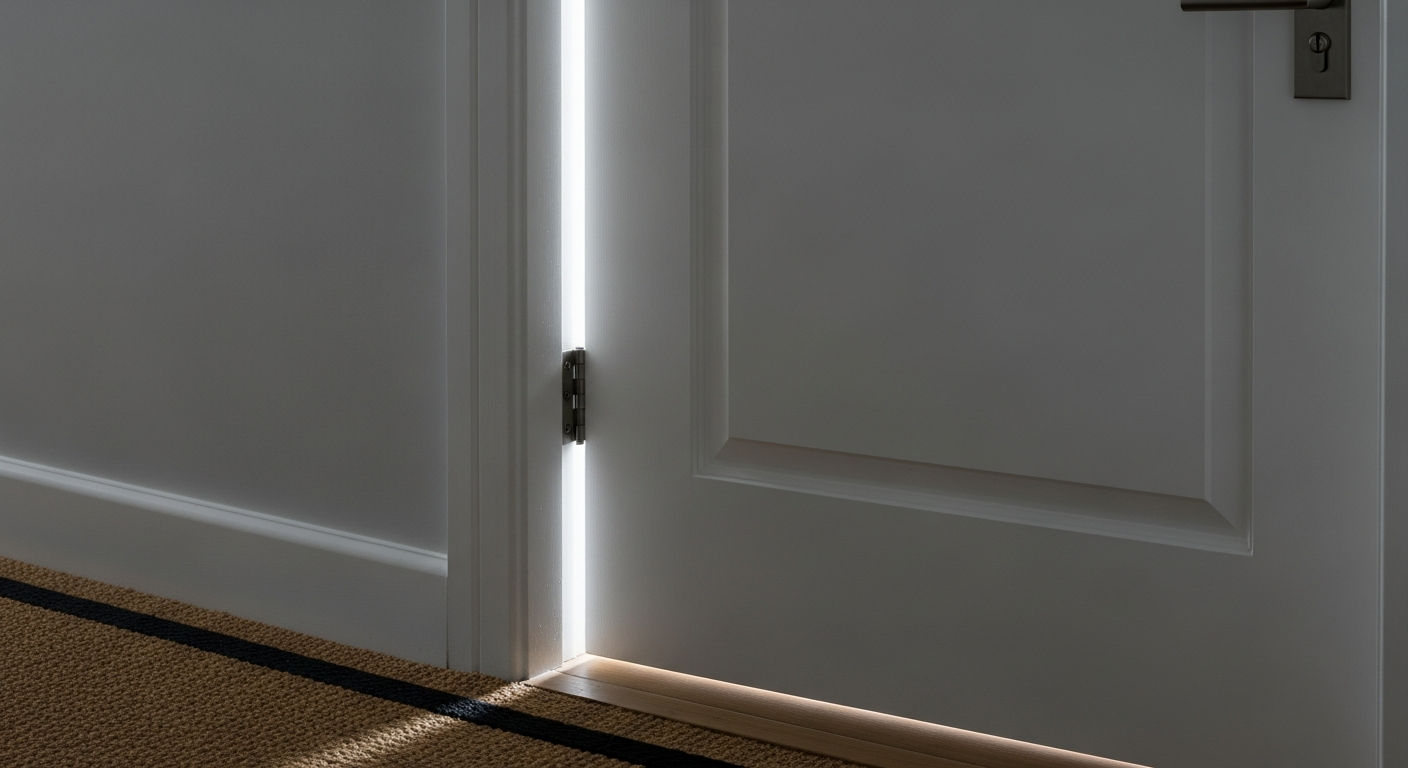
With a helper, offer the door up and engage the hinge knuckles. Insert the hinge pins and close the door slowly to check the gaps are even on all sides. If the door binds at the top latch corner, the top hinge may need to come back slightly — pack it out with a thin card shim. If it binds on the hinge side, deepen those rebates by a fraction. Make small adjustments with a plane rather than forcing the issue; removing too much material means the door will rattle when closed. Once the fit is right, open and close the door several times to confirm it swings freely without touching the frame.
Fit the Latch and Strike Plate
Mark the latch position on the door edge — typically 900 mm from the floor to the spindle centre for adult use. Drill the spindle hole through the face of the door using a flat bit or hole saw, then drill the latch bolt hole into the door edge and chisel a shallow rebate for the latch faceplate so it sits flush. Close the door, operate the latch, and mark where the bolt meets the frame to position the keep plate accurately. Chisel out the keep rebate, screw the plate in place, and test the latch engages cleanly with a firm push. Seal all exposed end grain on the door with wood primer to prevent moisture absorption — this is especially important on the bottom edge, and is covered further in our guide on painting timber for a durable finish.
Frequently Asked Questions
Do I need three hinges or will two be enough?
Two hinges are sufficient for most standard internal doors up to 1980 mm tall and 35 mm thick. Use three hinges on taller, heavier, or solid hardwood doors to distribute the load and prevent the door dropping or twisting over time.
What gap should I leave around the door?
Allow 2 mm at each side and the top, and 10 mm at the bottom for carpet — or 5 mm if the floor is bare. These tolerances give clearance without causing a draught or allowing the door to rattle in the frame. Check our sticking door guide if gaps look right but the door still catches.
Can I hang a door by myself without a helper?
It is possible solo using timber wedges to hold the door at height while you engage the hinges, but a second pair of hands makes it significantly easier and reduces the risk of dropping the door or misaligning the hinge knuckles.
My new door is slightly too narrow — can I pack the frame or use wider hinges?
Do not use wider hinges as a fix; the gap will be uneven and the door will look wrong. Instead, add a timber packer strip to the hinge side of the frame, glued and pinned flush, to reduce the opening width to match the door.
What type of hinges should I use for an internal door?
Standard 75 mm butt hinges in steel or brass are correct for most internal doors. If the door opens into a tight space, consider using swing-clear hinges, which hold the door fully clear of the frame opening when open. For fire doors, always check the door manufacturer’s specification for approved hinge types — see guidance at gov.uk fire safety guidance.
Before hanging, shoot a pencil line down the hinge side of the door frame with a long spirit level — frames that look plumb often lean 3–5 mm over their height, and correcting for this when you set your hinge positions means the door will hang dead square without needing adjustment afterwards.
Sources
- HSE — Safe use of hand tools — hse.gov.uk
- Which? — How to hang a door — which.co.uk
- gov.uk — Fire safety in the home — gov.uk
This guide is for general information only. Always work safely and follow manufacturer instructions. DIYnut accepts no liability for injury or damage arising from DIY work.