How to Fix a uPVC Door Latch – DIY Guide
How to Fix a uPVC Door Latch
Restore a stiff, misaligned, or broken uPVC door latch yourself in under an hour.
To fix a uPVC door latch, first check whether the latch is misaligned with the keep, stiff in operation, or mechanically broken. Adjust the keep plate, lubricate the mechanism, or replace the multipoint lock cassette. Most uPVC latch faults are straightforward to diagnose and fix without a locksmith.

- Flat-head screwdriver
- Phillips screwdriver
- Tape measure
- Pencil
- Mallet
- Needle-nose pliers
- Replacement uPVC latch cassette (if needed)
- Replacement multipoint lock latch module (if needed)
- Dry PTFE lubricant spray
- Wood chisel (for adjusting keep)
- Replacement keep plate (if needed)
- Stainless wood screws (to refit keep)
Step-by-Step Guide
Diagnose the fault before touching any screws
Open the door and operate the handle slowly, watching the latch bolt. A latch that springs out freely but won’t engage the keep is an alignment issue. A latch that moves sluggishly or not at all is either seized or mechanically broken. A latch that drops but won’t retract when you lift the handle points to a failed internal spring or a broken multipoint lock cassette. Identifying the root cause now stops you replacing parts you don’t need. If your door also struggles to close at all, see our guide on fixing a door that won’t close before proceeding.
Check and adjust the keep plate alignment
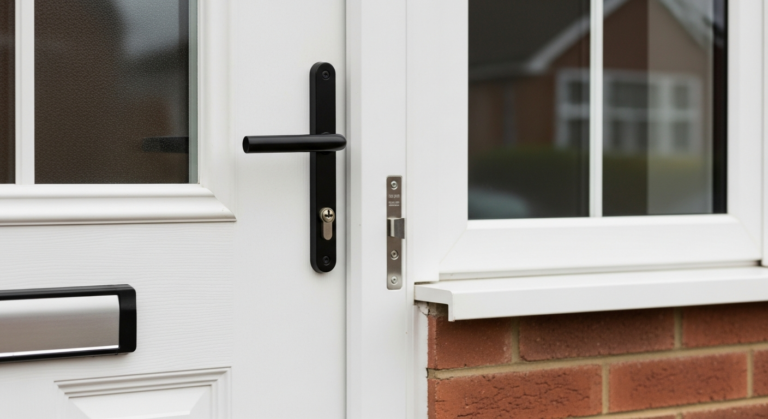
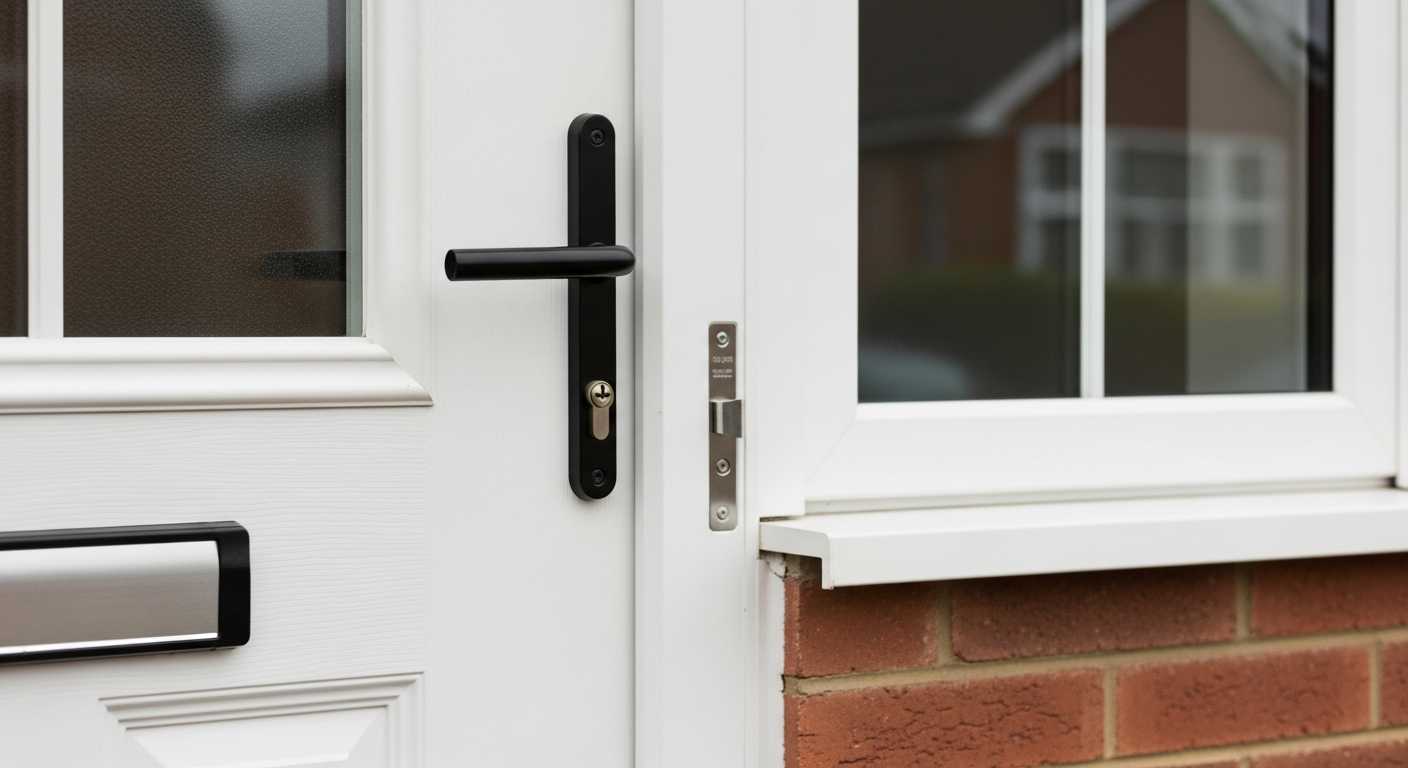
Close the door slowly and watch where the latch bolt strikes the keep. If it’s hitting the lip of the keep rather than entering cleanly, the keep needs moving. Undo the two screws holding the keep plate to the frame, slide it up or down by 2–3 mm to align with the latch bolt, and retighten. If the keep is recessed into a timber sub-frame, use a chisel to extend the mortise slightly in the required direction before repositioning the plate. A correctly aligned latch should engage with a clean single click — no rattling and no need to lift or push the door to latch it.
Lubricate the latch mechanism
A stiff latch that still moves but requires effort is almost always a lubrication issue. Do not use oil-based lubricant — it attracts grit, degrades uPVC seals, and makes the problem worse over time. Apply dry PTFE lubricant spray directly into the latch opening and onto the exposed bolt. Operate the handle ten times to work the lubricant through the mechanism. Also spray into the keyhole and along the door edge channel where the multipoint lock sits. This alone resolves the majority of stiff uPVC latch complaints and is worth doing before any part replacement.
Remove and inspect the multipoint lock cassette
If lubrication hasn’t resolved the fault, the latch cassette itself may be worn or broken. Open the door fully. Remove the door handle by undoing the two fixing screws on the inner rose, then withdraw the spindle bar. The multipoint lock is held in place by screws along the door edge — typically at 150 mm intervals. Remove these screws and slide the lock body out from the edge of the door. Inspect the latch module for cracked plastic, a broken spring, or a damaged cam mechanism. On multipoint locks, the latch cassette is often a removable sub-unit within the main body — you may be able to replace just the cassette rather than the entire lock. Check whether your door has a sticking door issue causing excessive force on the latch, as this will break replacement parts prematurely too.
Fit the replacement latch cassette or lock body
Match the replacement cassette to the original by backset (the distance from the door edge to the centre of the latch bolt — typically 35 mm or 45 mm), latch type (hook, roller, or bolt), and the case dimensions. uPVC multipoint locks are not universal — take the old part to a locksmith supplier or measure carefully and order by specification. Slide the new lock body or cassette into the edge channel, ensuring the latch faces the correct direction (bevel towards the keep). Refit the edge screws finger-tight first, check the latch operates correctly with the handle, then tighten fully. Refit the handle and spindle bar.
Test the door thoroughly before finishing
Close the door from outside and test the latch engages without lifting the handle or applying shoulder pressure. Lock and unlock the door with the key to confirm the deadbolt and other lock points operate correctly. Open and close the door ten times, checking for any stiffness or misalignment. If the door requires adjustment beyond the latch — such as sagging or a draught gap — those are hinge or frame issues covered separately in our Doors & Windows Guide. A correctly fixed latch should engage smoothly every time with the handle alone and no additional force.
Frequently Asked Questions
Why does my uPVC door latch not catch when I close the door?
The most common cause is misalignment between the latch bolt and the keep plate — the latch is striking the keep face rather than entering the pocket cleanly. Loosen the keep plate screws, reposition it 2–3 mm in the required direction, and retighten. If the door has dropped on its hinges, that’s the root cause and needs correcting first.
Can I replace just the latch part of a multipoint lock, or do I need the whole lock?
On most modern uPVC multipoint locks the latch module is a replaceable cassette that clips or slides into the main lock body. If the rest of the lock — deadbolt, hook bolts — operates correctly, you only need to replace the latch cassette. Take the lock body out and inspect whether the latch unit is separate before ordering a full replacement.
My uPVC door handle drops down and won’t spring back — is that a latch problem?
A handle that won’t return to the horizontal position usually means the internal spring in the handle mechanism or gearbox has failed, not the latch itself. This is a separate component from the latch cassette and requires replacing the handle or the gearbox unit inside the multipoint lock. Fixing a uPVC window handle follows a similar diagnosis process if you have the same issue on a window.
How do I know what size replacement multipoint lock to buy?
Measure the backset (door edge to latch bolt centre — typically 35 mm or 45 mm), the case height (overall length of the lock body), and the distance between each lock point. Also note the make stamped on the lock body or gearbox if visible. Take photos of the old lock with a tape measure in frame and use these when ordering from a locksmith supplier or uPVC hardware stockist.
Is fixing a uPVC door latch something a beginner can do safely?
Adjusting the keep plate and lubricating the mechanism are beginner tasks requiring only a screwdriver. Removing and replacing a multipoint lock cassette requires a bit more confidence but no specialist tools. What matters is correct part identification — fit the wrong cassette and neither the latch nor the deadbolt will align correctly. If you’re also dealing with a door that sticks or drags, read our guide to fixing a sticking door first.
When a uPVC latch is intermittently failing in cold weather but works fine in summer, the door frame is thermally expanding and contracting enough to cause seasonal misalignment. Instead of repeatedly adjusting the keep, elongate the keep screw holes slightly with a drill to give 2–3 mm of float — this accommodates movement and stops the fault recurring every winter.
Sources
- Which? — Door locks: how to choose and maintain them — which.co.uk
- gov.uk — Secure by Design: physical security guidance for doors — gov.uk
- HSE — Workplace health, safety and welfare: doors and gates — hse.gov.uk
This guide is for general information only. Always work safely and follow manufacturer instructions. DIYnut accepts no liability for injury or damage arising from DIY work.