How to Fix a uPVC Window Handle – DIY Guide
How to Fix a uPVC Window Handle
Replace or repair a stiff, broken, or loose uPVC window handle in under an hour.
To fix a uPVC window handle, remove the two fixing screws, pull off the old handle, note the spindle size and backset measurement, fit the new handle onto the spindle, and tighten the screws. Most uPVC window handle replacements take under 30 minutes with a screwdriver.


Remove the old handle
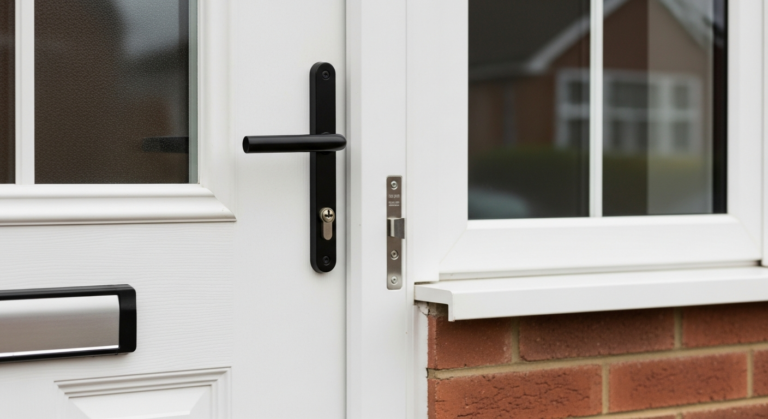
Close the window fully so the multipoint locking mechanism is not under tension. On most handles, the screws are concealed beneath a small plastic cover on the handle body — slide a flathead screwdriver under the edge of the cover and pop it off. Undo both fixing screws with a Pozidriv screwdriver (they are almost always PZ2) and keep them safe. Pull the handle away from the frame; it will slide off the spindle bar. If the handle is stuck through corrosion, apply a small amount of light machine oil around the spindle and leave it for five minutes before trying again.
Inspect the spindle and locking mechanism
With the handle off, turn the exposed spindle by hand. It should rotate smoothly through roughly 90 degrees and you should hear or feel the multipoint locking bolts moving inside the frame. If the spindle is seized, apply a drop of machine oil and work it back and forth. If the spindle bar is bent or snapped, replace it at this stage — spindle bars are sold separately and are cut to length with a utility knife or hacksaw. A faulty mechanism inside the frame is a separate repair and beyond a simple handle swap; in that case, contact a uPVC specialist. This is a good moment to check the window’s overall alignment — a full doors and windows guide covers common frame adjustments in detail.
Fit the new handle
Slide the new handle onto the spindle bar, making sure the spindle locates fully into the square recess inside the handle body — you will feel it seat home. Hold the handle at the correct operating angle (usually horizontal when the window is closed) and align the screw holes with those in the frame. If the screw holes do not line up, you have the wrong backset measurement — do not force it. Insert both fixing screws finger-tight first, then tighten them evenly with the Pozidriv screwdriver. Do not overtighten: uPVC frames can crack under excessive torque, so stop when the handle sits firm and flush. Snap the plastic cover back over the screws.
Test the handle and locking action
Open and close the window several times, operating the handle through its full range of movement. The handle should rotate firmly without excessive force and the locking bolts should extend and retract cleanly. With the window shut, lift the handle to the locked position and try pushing the sash — it should not move. If the action is stiff, a small amount of light machine oil applied to the spindle will ease it. If the handle feels loose after tightening, check that the spindle bar is fully seated; a bar that is even 1–2 mm too short will prevent the handle from gripping correctly. For comparison, replacing a door hinge follows a similar test-and-adjust approach.
Check the window seal and draught-proofing
A handle that has been broken for any length of time often means the window has been sitting slightly open or misaligned, which can allow draughts and moisture ingress. Run a finger around the rubber seal (gasket) when the window is fully closed and locked — you should feel consistent compression all the way round. If there are cold spots or the seal appears flattened and cracked, note this for a separate seal replacement job. Apply a strip of masking tape to any gap temporarily if draught-proofing is urgent. For a more thorough fix, our guide on how to fix a rotting window sill also covers related timber and seal checks worth doing at the same time.
Frequently Asked Questions
How do I know what size replacement uPVC window handle I need?
Measure the backset — the distance from the centre of the spindle hole to the centre of the nearest fixing screw hole. The two most common UK sizes are 43 mm and 70 mm. Also check the spindle bar size (usually 7 mm square) and whether your existing handle is left- or right-handed.
Can I fix a stiff uPVC window handle without replacing it?
Yes, if the handle body itself is undamaged. Apply a small amount of light machine oil to the spindle and work the handle back and forth to free any corrosion. If stiffness persists, the fault may be inside the multipoint locking mechanism rather than the handle.
Do I need special tools to replace a uPVC window handle?
No — a Pozidriv screwdriver (PZ2) is all you need for the vast majority of uPVC window handles. A tape measure is essential for getting the correct replacement, and a flathead screwdriver helps pop off any decorative covers.
My new handle does not lock the window — what is wrong?
The most likely cause is that the spindle bar is not fully seated inside the handle, so the square drive is not engaging the mechanism. Remove the handle, check the spindle bar length, and reseat it. If the spindle bar is the correct length and the issue continues, the multipoint lock gearbox inside the frame may be faulty. You can read more about adjusting uPVC door and window hardware for related mechanism checks.
Is it safe to leave a broken uPVC window handle unrepaired?
No. A broken or missing handle means the window may not lock at all, which is both a security and, on upper floors, a safety risk. The HSE and home insurance providers treat a window that cannot be secured as a hazard — repair it promptly.
Before you buy a replacement, photograph the back of the old handle where it met the frame — the spindle hole position relative to the screw holes tells you the exact backset without needing to measure into a tight recess. Trade suppliers can match a handle from that photo alone, saving a wasted return.
Sources
- GlazingVision — uPVC Window Handle Replacement Guide — glazingvision.co.uk
- Which? — Home Security: Windows and Doors — which.co.uk
- GGF — Guide to uPVC Window Maintenance — ggf.org.uk
This guide is for general information only. Always work safely and follow manufacturer instructions. DIYnut accepts no liability for injury or damage arising from DIY work.