Resin vs Concrete Driveway
Driveways & External › Driveways & External
Resin vs Concrete Driveway
Compare costs, durability, and appearance to choose the right driveway material.
Concrete is cheaper upfront at £50–£100 per m², but resin driveways cost £40–£80 per m² for bound aggregate and offer better drainage, a smarter finish, and lower long-term maintenance. Choose concrete for budget installs; choose resin for kerb appeal and SuDS compliance.

What Is a Resin Driveway?
A resin driveway uses natural aggregate — typically gravel, quartz, or granite chippings — mixed with a UV-stable polyurethane or epoxy resin binder and trowelled onto a prepared base, usually asphalt or concrete. The result is a smooth, porous surface available in a wide range of colours and textures. Because the surface is permeable, resin bound driveways comply with Sustainable Drainage System (SuDS) regulations under Schedule 3 of the Flood and Water Management Act 2010, meaning planning permission is not typically required for a standard front driveway installation. Resin bonded systems also exist — these scatter loose aggregate onto a resin-coated base — but they are not permeable and are less durable. This guide focuses on resin bound. For a step-by-step walkthrough of concrete driveway installation, see our guide on how to lay a concrete path, which covers base preparation applicable to both materials.
What Is a Concrete Driveway?
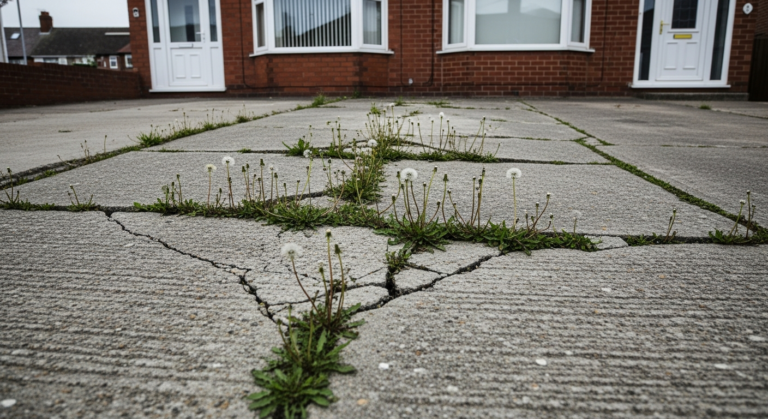
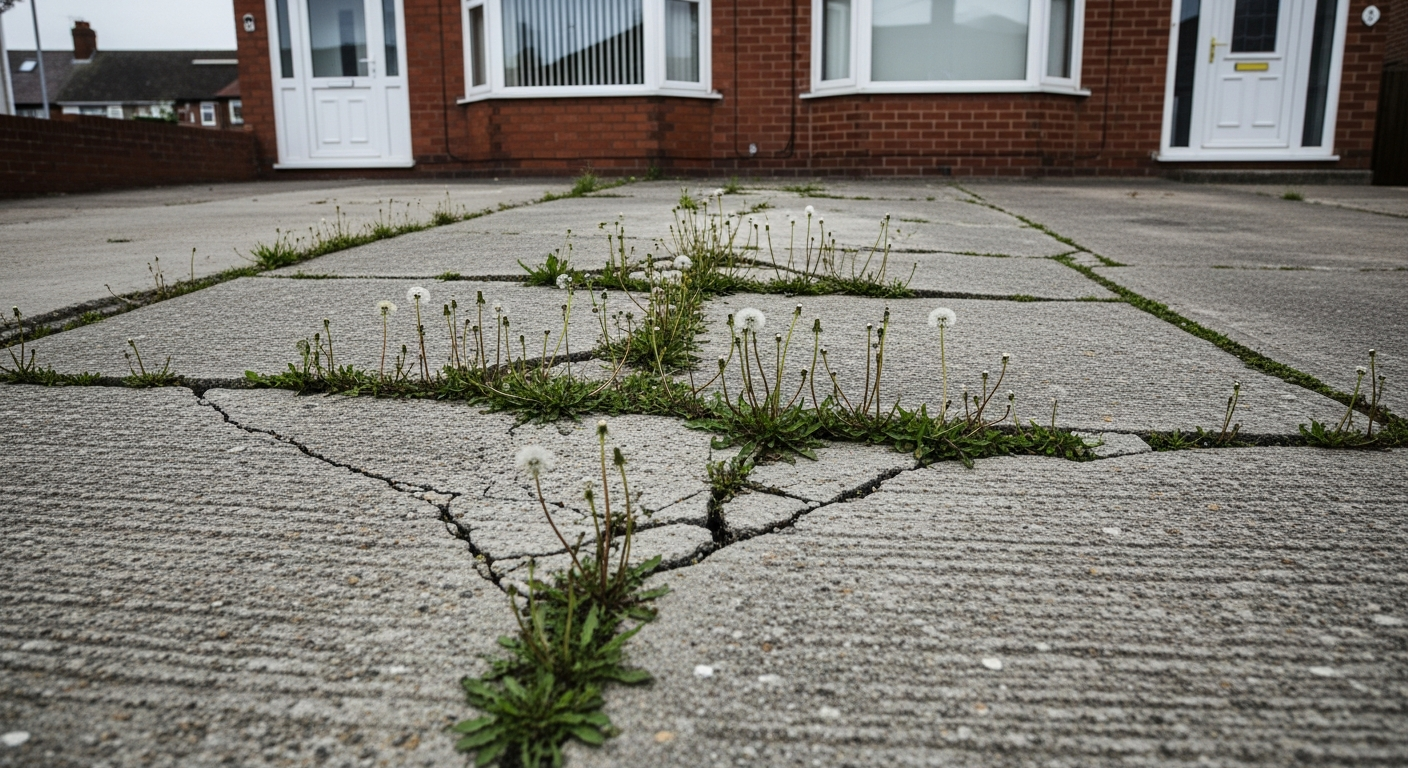
A concrete driveway is formed by pouring ready-mixed or site-batched concrete — typically a C25 or C30 mix — over a compacted sub-base and reinforcement mesh, then finishing the surface with a brush, exposed aggregate, or stamped pattern. Once cured (28 days for full strength), concrete is extremely hard-wearing and load-bearing, making it suitable for heavy vehicles. However, plain concrete is impermeable, so replacing or significantly enlarging a front garden driveway requires planning permission unless SuDS-compliant drainage is incorporated. Concrete is susceptible to surface crazing, freeze-thaw damage in colder UK climates, and oil staining. If you already have concrete and it is deteriorating, see our guide on fixing crumbling concrete for repair techniques that also apply to driveway surfaces.
Side-by-Side Comparison
| Factor | Resin Bound | Concrete |
|---|---|---|
| Cost per m² | £40–£80 (supply & lay) | £50–£100 (supply & lay) |
| Durability | High — flexible, resists cracking | Very high — hard but can crack |
| Appearance | Attractive, wide colour choice | Plain or textured; can look utilitarian |
| Install Difficulty | Professional recommended; resin is time-sensitive | Experienced DIY possible; labour-intensive |
| Maintenance | Low — occasional jet wash, weed control | Medium — sealing, crack repair needed |
| Lifespan | 15–25 years with good installation | 20–30 years, depending on climate and use |
Resin Bound — Pros and Cons
- Permeable surface — meets SuDS regulations, no planning permission required for most front driveways
- Attractive finish — wide range of aggregate colours and blend options
- Flexible — less prone to cracking than rigid concrete in freeze-thaw conditions
- Low maintenance — smooth surface resists oil penetration and is easy to clean; see our tips on how to remove oil stains from a driveway
- Weed resistant — fully bound surface offers fewer gaps for weed growth than block paving
- Higher installation cost — labour and resin materials push up the price
- Requires a professional — resin has a short working window; DIY attempts risk delamination
- UV sensitivity — cheaper epoxy resins can yellow; UV-stable polyurethane costs more
- Base dependency — performance relies entirely on the quality of the sub-base
Concrete — Pros and Cons
- Long lifespan — well-laid concrete can last 30 years or more with appropriate upkeep
- Very strong — suitable for heavy vehicles, skips, and plant machinery
- DIY-accessible — experienced DIYers can lay concrete with hired equipment
- Cost-effective base option — can later be overlaid with resin bound without full removal
- Impermeable by default — requires drainage measures to avoid planning issues on front driveways (Town and Country Planning Act 1990, as amended)
- Prone to cracking — freeze-thaw cycling, tree roots, and settlement cause surface damage over time
- Difficult to repair invisibly — patches are often visible; see our guide on repairing a cracked driveway
- Oil staining — porous concrete surface absorbs vehicle fluids and is hard to clean thoroughly
- Plain aesthetics — standard grey concrete can look industrial without decorative finishing
Which Is Better For…?
- Budget-conscious installations: Concrete is typically the lower-cost option when comparing like-for-like supply and install quotes, especially for larger driveways. Verdict: Concrete.
- Front driveways in England: Resin bound is permeable and therefore does not require planning permission for most standard residential front driveway work, in line with government guidance on permitted development rights. Verdict: Resin.
- High-traffic or HGV use: Concrete’s compressive strength makes it better suited to frequent heavy vehicle loading. Verdict: Concrete.
- Boosting kerb appeal before selling: Resin bound driveways offer a premium appearance that can improve first impressions. Which? consistently notes that driveways and external improvements are among the most valued by buyers. Verdict: Resin.
- Flood-risk or clay-soil areas: Resin bound surfaces allow rainwater to drain through to the sub-base, reducing surface runoff — particularly valuable in areas with drainage constraints or external water management challenges. Verdict: Resin.
UK Cost Comparison
For supply and professional installation in the UK (as of early 2026), resin bound driveways typically cost £40–£80 per m², with total driveway projects ranging from approximately £1,500 for a small single-car area to £4,000–£6,000 for a larger double. Concrete driveways generally cost £50–£100 per m² installed, though decorative finishes such as exposed aggregate or pattern imprinting can push costs above £120 per m². DIY concrete laying reduces cost significantly but requires plant hire, formwork, and concrete delivery, which limits savings on smaller areas. Both materials will incur additional costs for excavation, sub-base preparation, and edging, typically £15–£25 per m² regardless of surface choice. Always obtain at least three quotes from contractors and, for resin, verify that the installer uses a UV-stable polyurethane binder rather than a cheaper epoxy product. Checkatrade guidance recommends checking installer reviews and confirming whether the quote includes VAT. For related external groundworks, our Driveways & External Guide covers drainage, edging, and planning requirements in full.
Frequently Asked Questions
Do I need planning permission for a resin driveway in the UK?
In most cases, no. Resin bound driveways are permeable surfaces and are therefore permitted development under amended Town and Country Planning rules. However, if your property is listed or in a conservation area, you should check with your local planning authority before proceeding.
How long does a resin bound driveway last?
A professionally installed resin bound driveway on a sound sub-base typically lasts 15–25 years. Longevity depends heavily on the quality of the binder used, correct installation, and how well the base was prepared.
Can resin be laid over existing concrete?
Yes, resin bound aggregate can be applied over an existing concrete base provided the concrete is structurally sound, level, and free from significant cracking or movement. Any cracks must be repaired and the surface must be clean and dry before application.
Is concrete or resin easier to maintain?
Resin bound surfaces are generally easier to maintain — they resist oil penetration, are simple to jet-wash, and rarely need sealing. Concrete requires periodic sealing to prevent staining and may need crack repairs over time, particularly in climates with regular freeze-thaw cycles.
Which driveway material adds more value to a home?
Resin bound driveways tend to add more kerb appeal due to their attractive, high-end appearance, which can positively influence buyer perception. Concrete is functional but rarely viewed as a premium feature by prospective buyers or estate agents.
When comparing resin installer quotes, ask specifically whether the resin is UV-stable polyurethane — cheaper epoxy-based systems discolour to yellow within a few years of UV exposure, and installers do not always volunteer this distinction. Specifying polyurethane binder in writing protects you if colour change becomes a dispute.
Sources
- Which? — Resin Driveways: Costs, Pros and Cons — which.co.uk
- GOV.UK — Paving your front garden: planning permission guidance — gov.uk
- Checkatrade — How much does a resin driveway cost? — checkatrade.com
This guide is for general information only. Always work safely and follow manufacturer instructions. DIYnut accepts no liability for injury or damage arising from DIY work.