Cost of Tiling a Floor
Tiling a floor in the UK typically costs £800–£2,500 for a standard room, depending on tile choice, room size, and whether you hire a tradesman. Labour alone ranges from £25–£45 per m². DIY can save several hundred pounds but requires preparation skill.

What Affects the Cost
Room size and shape: The larger and more irregular the room, the more tiles, adhesive, and grout you need — and the more cuts a tiler has to make. An open-plan kitchen will cost more than a straight bathroom floor simply because of the additional metreage and time involved.
Tile material and format: Ceramic is the cheapest option, typically £10–£30 per m². Porcelain costs more — often £20–£60 per m² — and large-format tiles (600×600mm or bigger) take longer to lay and require a flatter substrate. Natural stone such as slate or travertine can push material costs well above £60 per m². If you’re choosing tiles for a wet area, see our guide to best flooring for bathrooms before committing.
Subfloor condition: A tiler must start on a sound, level surface. A timber suspended floor usually needs a layer of tile backer board; a concrete floor with dips or cracks needs levelling compound first. Either adds material and labour cost. If your floor has dips, it’s worth reading how to fix a dip in the floor before work begins.
Layout pattern and tile size: A straightforward grid lay is the fastest and cheapest. A diagonal, herringbone, or brick-bond pattern adds 10–20% to labour time due to additional cutting. Smaller mosaic tiles take significantly longer to bed than 600mm formats.
Removing existing flooring: Lifting old tiles, vinyl, or carpet before tiling starts is rarely included in a standard quote. Budget an extra £50–£150 depending on floor type and adhesive removal required. Where skirting boards need to come up first, see how to remove skirting boards without damage.
Underfloor heating: Installing electric mat or wet underfloor heating beneath tiles adds £300–£800 or more in materials and requires a compatible tile adhesive and flexible grout. The heating system itself must be commissioned by a qualified electrician or plumber before tiling over it.
UK Average Cost Breakdown
| Task | DIY Cost | Trade Cost | Notes |
|---|---|---|---|
| Supply ceramic floor tiles (per m²) | £10–£30 | £10–£30 | Material cost the same either way; trade may get trade discount |
| Supply porcelain floor tiles (per m²) | £20–£60 | £20–£60 | Large format adds to cutting time and waste |
| Tile adhesive and grout (per m²) | £3–£7 | £3–£7 | Flexible adhesive required over timber or underfloor heating |
| Tile backer board (per m²) | £8–£15 | £8–£15 | Required on suspended timber floors |
| Levelling compound (per m²) | £4–£10 | £4–£10 | Needed if concrete subfloor is uneven |
| Labour — standard ceramic/porcelain, grid lay (per m²) | — | £25–£45 | Rates vary by region; includes setting out and grouting |
| Labour — large format or pattern lay (per m²) | — | £35–£60 | Diagonal and herringbone patterns attract a premium |
| Removing old tiles (per m²) | — | £5–£15 | Often quoted separately; adhesive removal adds time |
| Full bathroom floor tiled (5–7 m²) — materials and labour | £150–£350 | £500–£900 | DIY figure covers materials only |
| Full kitchen floor tiled (12–18 m²) — materials and labour | £300–£750 | £900–£2,000 | Size, tile spec, and pattern all drive the range |
DIY vs Tradesman — Is It Worth It?
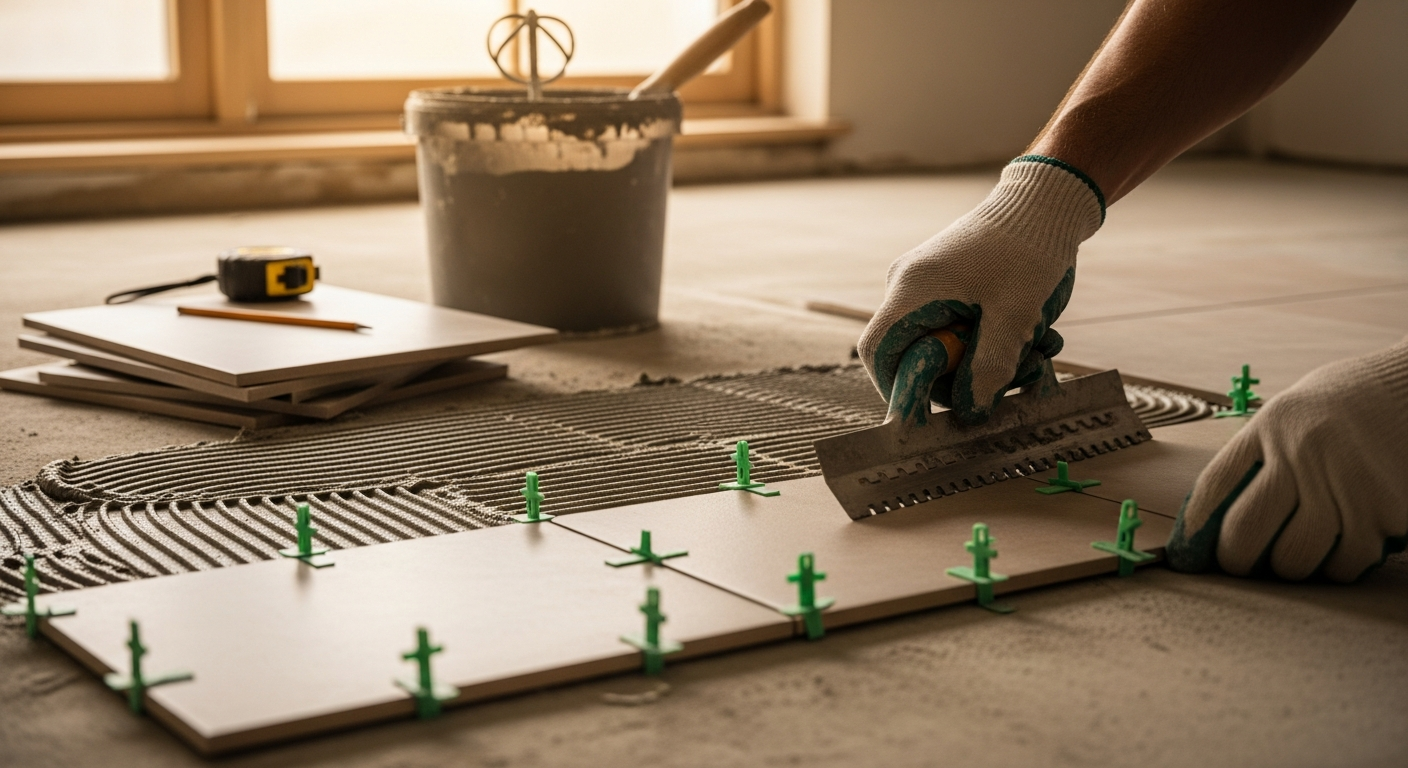
Tiling a floor is one of the more demanding DIY jobs. The prep work — getting the subfloor flat, setting out the tile layout to avoid awkward slivers at the edges, and cutting accurately around obstacles — is where most amateurs run into trouble. A floor that looks fine on day one can develop lippage (where tile edges sit at different heights) or cracked tiles within months if adhesive coverage or substrate prep was poor. Our guide on how to lay floor tiles without lippage covers the key technique points in detail.
That said, a competent DIYer with access to a quality tile cutter can achieve professional results on a straightforward concrete floor with a regular grid layout. The saving is real — typically £300–£900 on a bathroom or small kitchen — and the materials are the same either way. The risk lies in tile waste from inaccurate cuts and the cost of fixing a poorly prepared substrate later. If your floor has any movement — a timber joist floor, for example — a professional will know which system to specify. Getting it wrong means tiles and grout cracking within a year. For rooms where you’re also considering the finish and maintenance side, the guide to how to regrout floor tiles is useful background reading before starting. In short: DIY is worthwhile if you have the tools, the time, and a sound subfloor. Hire a tiler for large areas, complex patterns, or anywhere there is subfloor movement.
Regional Price Variations
Labour rates for floor tiling are noticeably higher in London and the South East, where a tiler may charge £40–£60 per m² compared with £25–£40 in the Midlands, North of England, Scotland, and Wales. Day rates follow a similar pattern — expect to pay £200–£300 per day in London versus £150–£220 elsewhere. Material costs are broadly consistent across the UK, though delivery charges for heavy tiles can add to the total if you are in a rural area or ordering large quantities. Always get at least three quotes from local tradespeople, as pricing within regions can also vary depending on demand at the time of year.
How to Get the Best Price
- Get three written quotes: Insist each quote specifies m² being tiled, materials included, subfloor prep method, and payment terms. Comparing like-for-like prevents a low headline figure hiding extra charges later.
- Buy your own tiles: Purchasing tiles directly gives you full control over quality and cost. Many tilers will accept supply-only jobs or reduce their margin if you remove the material procurement from their scope.
- Schedule during quieter periods: Tradespeople are often more price-flexible in January–February or late autumn when demand dips compared to spring and pre-Christmas.
- Do your own prep work: Clearing the room, removing existing floor coverings, and disposing of waste yourself can reduce a quote meaningfully — check first that the tiler is happy with this arrangement.
- Order 10–15% extra tile: Over-ordering upfront to cover cuts and breakages is cheaper than a second delivery, and you’ll want spares for future repairs. Leftover tiles stored flat will stay in good condition for years.
What a Good Quote Should Include
- Total area to be tiled in m², with a breakdown of the room(s) covered
- Subfloor preparation method specified — whether levelling compound, backer board, or priming is included or charged separately
- Tile adhesive and grout type stated, confirming suitability for the subfloor type and any underfloor heating
- Details of who supplies tiles, adhesive, grout, and silicone — and whether these costs are included or additional
- A clear payment schedule — a reputable tiler will not ask for full payment upfront; a staged payment on completion of each day or phase is standard
Hidden Costs to Watch For
- Subfloor remediation: If a tiler arrives and finds the floor needs levelling compound, backer board, or significant crack repair that wasn’t in the original quote, this can add £100–£400 to the job. Ask for a site visit before the quote is finalised.
- Tile waste on complex cuts: Diagonal and herringbone layouts can generate 20–25% waste rather than the standard 10%. If you supplied tiles based on a straight-lay estimate, you may need to buy more at short notice — potentially at a higher price if the batch has sold out.
- Refitting skirting boards and door bars: Raising the floor height with thick tiles or a backer board layer can mean skirting boards need trimming, rehinging doors, and fitting new threshold strips between rooms. These tasks are usually priced separately and can add £50–£200.
- Silicone and movement joints: Grout alone at internal corners and floor-to-wall junctions will crack over time. Flexible silicone sealant at these points is best practice — confirm it is included, especially in wet rooms.
Frequently Asked Questions
How much does it cost to tile a bathroom floor in the UK?
A typical bathroom floor of 5–7 m² costs £500–£900 fully installed by a tiler, including materials and labour. DIY materials alone for the same area typically run £150–£350 depending on tile choice.
How long does it take to tile a floor?
A professional tiler can lay roughly 8–12 m² of standard floor tiles per day on a prepared subfloor. Allow a further 24 hours before walking on the tiles and 48–72 hours before grouting, following the adhesive manufacturer’s guidelines.
Do I need to remove old floor tiles before tiling over them?
In most cases, yes. Tiling over existing tiles risks adding too much height, can hide movement or hollow spots, and may void adhesive warranties. A tiler will almost always recommend removal unless the existing tiles are perfectly sound, fully bonded, and the floor height allows for it.
Can I tile over a wooden floor?
Yes, but only with the right preparation. A timber suspended floor must be made rigid using tile backer board screwed at close centres; standard plywood alone is not sufficient. Flexible adhesive and grout are also required to accommodate any residual movement.
Is floor tiling VAT exempt for homeowners?
No. Floor tiling carried out by a tradesperson is subject to the standard 20% VAT rate for most homeowners. VAT at 5% may apply in specific circumstances such as properties that have been empty for two or more years — check HMRC guidance at gov.uk for the current rules.
Set out your tile layout from the most visible corner of the room, not the door — this ensures full tiles land where the eye first travels, and any cut tiles are pushed to less prominent edges under units or behind the door swing. Spending 30 minutes on a dry lay before mixing any adhesive is the single biggest quality check you can do.
Sources
- Which? — Tiling costs guide — which.co.uk
- Checkatrade — How much does floor tiling cost? — checkatrade.com
- HSE — Slips and trips: flooring materials and surfaces — hse.gov.uk
This guide is for general information only. Always work safely and follow manufacturer instructions. DIYnut accepts no liability for injury or damage arising from DIY work.