Tiles Cracking
Tiles cracking is most commonly caused by a subfloor that flexes under load. Other causes include insufficient adhesive coverage, missing expansion joints, and settlement movement. Identify the cause before replacing tiles, or cracks will simply return.

What’s Causing This?
Subfloor movement or flex. This is the most common cause of cracked floor tiles in UK homes. Timber subfloors — particularly chipboard or older floorboards — flex under foot traffic. Tiles are rigid and cannot accommodate this movement, so they crack, often in a diagonal line or at grout joints. See our guide on how to fix a dip in the floor if you also notice unevenness.
Inadequate adhesive coverage. If tiles were laid with insufficient adhesive — particularly with a notched trowel leaving air voids beneath — there are unsupported areas that crack under point loads such as chair legs or dropped items. This is sometimes called ‘hollow tile’ and can be identified by tapping.
No or missing expansion joints. Tiles expand slightly with heat and humidity. Without adequate expansion gaps at perimeters and across large tiled areas, compressive stress builds up and forces tiles to crack or tent (lift). This is especially common in kitchens and conservatories with underfloor heating.
Building or ground settlement. Gradual movement in a building’s structure — particularly in older properties or those on clay soils — can cause cracking along fixed lines that track the direction of movement. If cracks appear in a pattern matching wall cracks, structural settlement may be the cause.
Impact damage. A heavy object dropped directly onto a tile can crack it without any underlying cause. These cracks are typically localised and star-shaped from the impact point. Individual tile replacement is usually sufficient. See our Flooring Guide for an overview of tile repair options.
How to Diagnose the Exact Cause
- Map the crack pattern. Are cracks confined to one or two tiles, or do they follow a line across the floor? Localised cracks suggest impact damage or a void beneath a tile. A line of cracks running across multiple tiles points to subfloor flex or structural movement.
- Tap test every cracked tile and its neighbours. Kneel down and tap each tile firmly with your knuckle or the handle of a screwdriver. A solid thud means good adhesion; a hollow, drum-like sound means the tile is unbonded beneath. Widespread hollow tiles indicate an adhesive or subfloor preparation failure.
- Check for floor flex. Walk firmly across the tiled area and watch for any visible movement or bounce. Press down on tiles adjacent to the cracks. Any spring or give in the subfloor means it is not stiff enough to support ceramic or porcelain tiles.
- Inspect grout joints and perimeter gaps. Look at where the tiled floor meets walls, door frames, and fixed units. If there is no gap — or if grout has been used right up to the skirting — expansion joints are missing. Also look for grout that has crumbled or popped out along the same lines as the tile cracks.
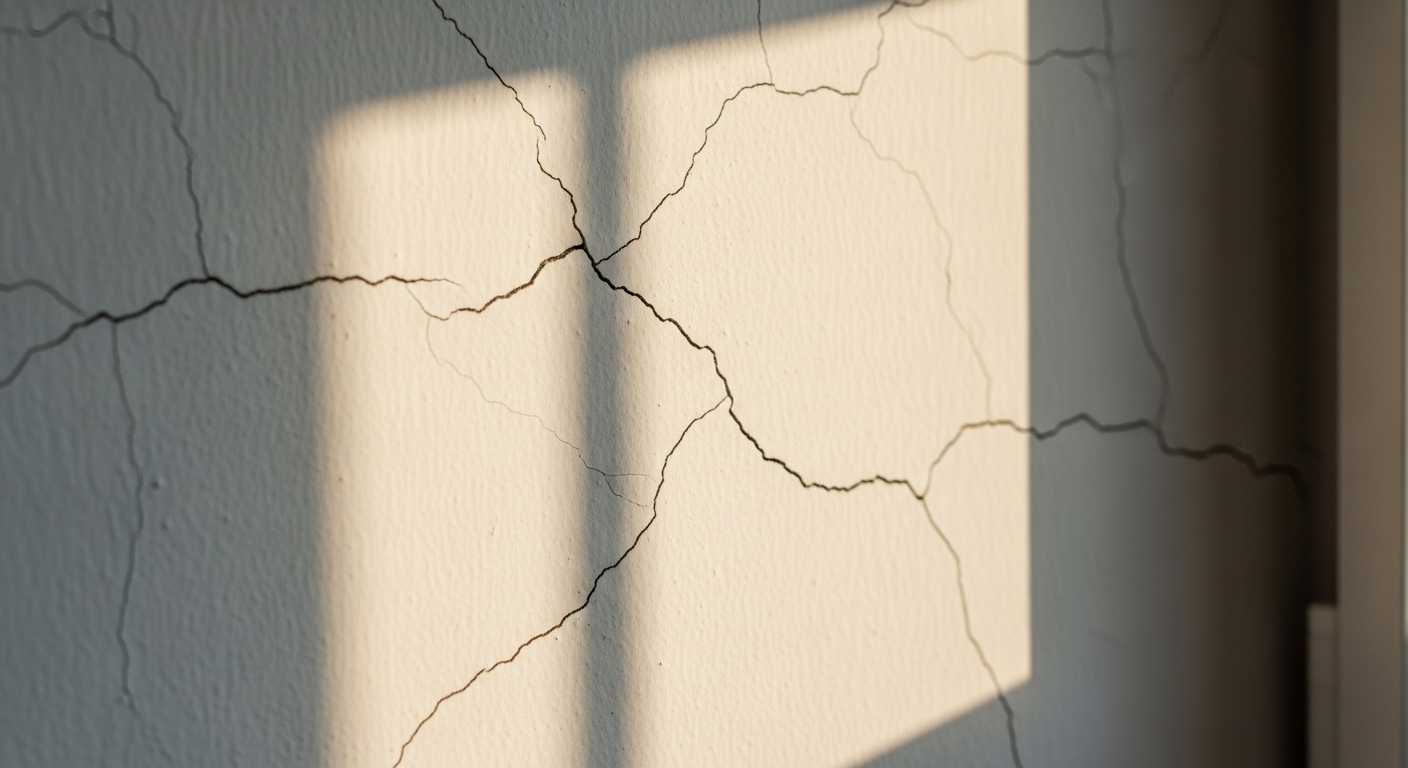
- Look for a wider pattern of movement. Check walls and ceilings in the same room for matching cracks. If wall plaster or ceiling joints show cracking in a similar direction, building settlement is likely and a structural engineer should assess the property before you relay any tiles.
- Check subfloor type. Lift a cracked tile carefully (score the grout first). Inspect whether the subfloor is concrete screed, chipboard, or timber boards. Timber subfloors require a decoupling membrane or a stiff sheet overlay rated for tiling before ceramic tiles can be successfully laid — refer to the guide on laying floor tiles without lippage for subfloor preparation standards.
How to Fix It
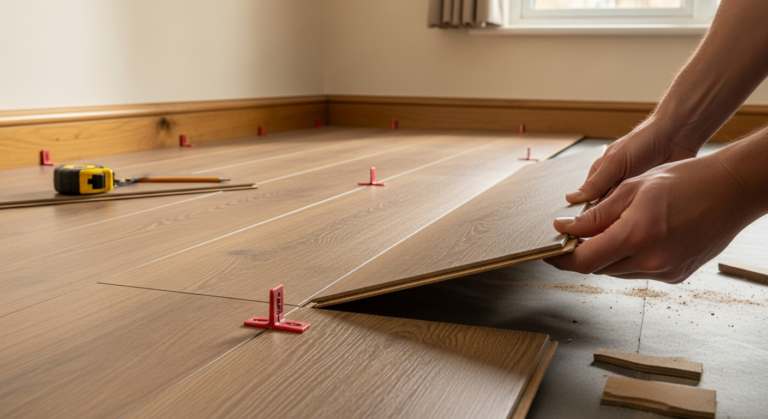
Subfloor movement or flex: The subfloor must be stiffened or a decoupling membrane installed before any tiles are relaid. For timber subfloors, fix movement by adding additional noggins, screwing down loose boards, and overlaying with a minimum 18 mm tongue-and-groove sheet rated for tiling. Once stable, relay tiles using a flexible tile adhesive (BS EN 12004 Class C2). Full details are in our guide on how to lay floor tiles.
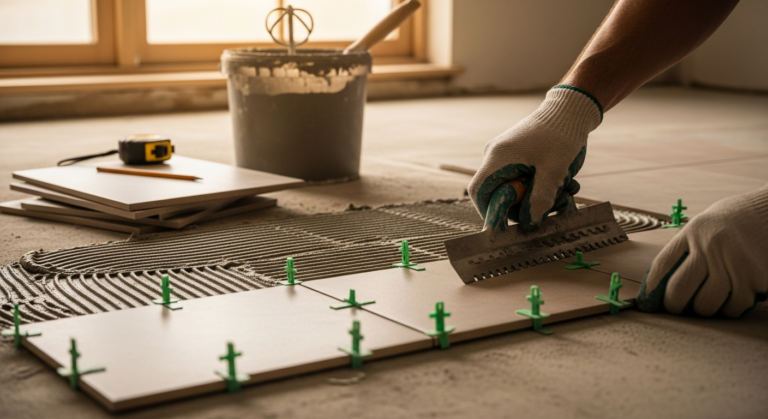
Inadequate adhesive coverage: Remove the affected tiles and all old adhesive. Relay using a notched trowel to apply adhesive to both the subfloor and the back of each tile (back-buttering), aiming for full coverage across the tile. Press tiles firmly and twist slightly to collapse ridges. A minimum 80% contact is required for floor tiles (95% in wet areas) per BS 5385.
Missing expansion joints: When relaying tiles, leave a minimum 3 mm gap at all perimeters and introduce movement joints every 4–5 m across large areas. Fill these with a flexible sealant rather than grout. If existing grout is intact but joints are missing, carefully saw out grout at perimeters with an oscillating tool and replace with flexible sealant.
Building settlement: Do not relay tiles until the cause of movement has been investigated and resolved. Consult a structural engineer. If settlement has stabilised and there is no active movement, use a decoupling membrane and flexible adhesive when relaying. You may also need to regrout floor tiles across the wider area once tiles are secure.
Impact damage (isolated crack): Score around the grout joint of the affected tile with a grout saw. Drill a series of small holes within the tile to weaken it, then carefully chisel it out without disturbing neighbours. Scrape the subfloor clean, relay a replacement tile with matching adhesive, and regrout once set. This is a straightforward repair requiring no specialist tools.
When to Call a Tradesman
Call a structural engineer if cracking tiles are accompanied by cracking in walls, ceilings, or door frames, or if cracks are widening over time. Active structural movement must be assessed and remediated before any floor covering is reinstated — retiling over an unresolved structural issue is a waste of money and potentially unsafe. A Gas Safe engineer must be involved if you need to modify pipework beneath the floor to stiffen the subfloor. If you suspect underfloor heating pipes are damaged (causing wet patches alongside cracking), do not attempt to lift tiles yourself — call a heating engineer first. For straightforward tile replacement without structural concerns, this is a manageable DIY job for a competent homeowner with the right preparation.
How to Prevent It Happening Again
- Assess the subfloor properly before tiling. Confirm the subfloor is sufficiently rigid — deflection must not exceed L/360 of the span. On timber floors, always use a suitable sheet overlay or decoupling membrane before laying ceramic or porcelain tiles.
- Use flexible adhesive and maintain expansion joints. Standard grey adhesive is not sufficient for floors subject to movement or underfloor heating. Always use a flexible C2 adhesive and leave proper perimeter and field expansion joints filled with appropriate sealant rather than grout.
- Never skip the hollow-tile check before grouting. Tap every tile after laying and before the adhesive sets. Relay any hollow-sounding tiles immediately — once the adhesive has cured, the void cannot be filled without lifting the tile.
- Choose the right tile for the location. Thicker porcelain tiles (10 mm+) are more resistant to cracking under load than thin ceramic tiles. In areas with underfloor heating or where the subfloor is borderline, a thicker tile gives a useful margin of safety.
Frequently Asked Questions
Can I just regrout cracked tiles without replacing them?
No — regrouting will not repair a structurally cracked tile. Grout only fills the joints between tiles; a cracked tile body needs to be replaced. If you regrout without replacing the cracked tile, the crack will reappear as soon as the underlying cause creates movement again.
Why do my new floor tiles keep cracking after I’ve already replaced them?
This almost always means the root cause has not been addressed. The most likely culprits are a flexible subfloor, missing expansion joints, or inadequate adhesive coverage. Replacing tiles without fixing the cause will result in repeated cracking.
Is a cracked tile a sign of serious structural problems?
Not necessarily — most cracked tiles are caused by subfloor flex or installation errors, not structural movement. However, if cracks follow a consistent line across multiple tiles and are mirrored by cracks in walls or door frames, have a structural engineer inspect the property.
How do I find a matching replacement tile when the original is discontinued?
Try specialist tile reclamation yards, online tile matching services, or salvage the least-visible tile from the room (for example, behind a door or under a fixed unit) to use as the visible replacement, fitting a slightly different tile in the hidden spot.
Can floor tiles crack due to underfloor heating?
Yes. Rapid temperature changes cause tiles to expand and contract. Without flexible adhesive and proper expansion joints at perimeters and field joints, compressive stress builds up and cracks tiles. Always use a flexible C2 adhesive and a decoupling mat over underfloor heating systems.
When relaying tiles on a timber subfloor, use a decoupling membrane rather than simply adding a sheet overlay — the membrane absorbs differential movement between the subfloor and tiles, dramatically reducing the risk of future cracking even if the subfloor deflects slightly. This is particularly worth doing in older properties where full subfloor stiffening is impractical.
Sources
- HSE — Ceramic and porcelain floor tile installation guidance — hse.gov.uk
- British Standards Institution — BS 5385-3: Wall and floor tiling, Part 3: Design and installation of internal and external ceramic and mosaic floor tiling in normal conditions — bsigroup.com
- Which? — Floor tiles: types, costs and installation advice — which.co.uk
This guide is for general information only. Always work safely and follow manufacturer instructions. DIYnut accepts no liability for injury or damage arising from DIY work.