Engineered vs Solid Hardwood Flooring
Engineered hardwood suits most UK homes — it handles moisture and underfloor heating better than solid wood. Solid hardwood costs more and needs stable conditions but can be sanded and refinished repeatedly, making it a longer-term investment in the right room.

What Is Engineered Hardwood?
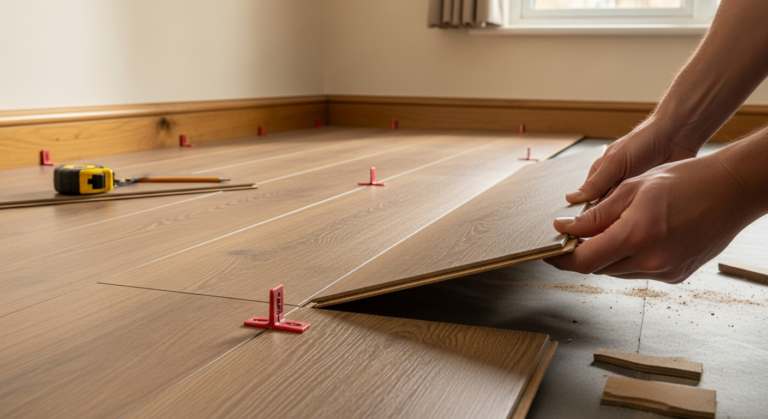
Engineered hardwood is a multi-layer board constructed with a real hardwood veneer on top — typically 2–6 mm thick — bonded over a core of cross-laminated plywood or HDF. This layered construction makes it dimensionally stable, meaning it expands and contracts far less than solid wood when humidity or temperature changes. It can be floated, glued, or secret-nailed, and is compatible with underfloor heating systems, making it one of the most versatile wood flooring options for UK homes. For full installation guidance, see our guide on how to lay hardwood flooring.
What Is Solid Hardwood?
Solid hardwood flooring is milled from a single piece of timber — most commonly oak, ash, or walnut — and is typically 18–22 mm thick. Because the board is entirely wood, it can be sanded and refinished multiple times over decades, meaning the surface can be fully renewed rather than replaced. However, solid hardwood is sensitive to moisture and humidity fluctuations, which can cause cupping, gapping, or warping. It is generally not recommended for use directly over underfloor heating, in bathrooms, or at or below ground level without careful preparation. Once laid and settled, it is an exceptionally durable and authentic floor — and when the time comes, you can restore it completely by following a sand and refinish hardwood floor process.
Side-by-Side Comparison
| Factor | Engineered Hardwood | Solid Hardwood |
|---|---|---|
| Cost per m² | £30–£80 (material only) | £50–£120+ (material only) |
| Durability | Good; 1–3 light sands depending on veneer thickness | Excellent; can be sanded 5–8 times over its life |
| Appearance | Identical real-wood top surface; wide range of species and finishes | Authentic, full-depth grain; ages naturally over decades |
| Install Difficulty | Moderate; click-float systems accessible for competent DIYers | Moderate–high; secret nailing requires experience and correct subfloor |
| Maintenance | Sweep and damp-mop; re-oil or re-lacquer every few years | Sweep and damp-mop; refinish when worn; avoid excess moisture |
| Lifespan | 25–40 years with correct maintenance | 50–100+ years; effectively indefinite if maintained |
Engineered Hardwood — Pros and Cons
- Compatible with underfloor heating — check manufacturer’s maximum temperature limits
- More dimensionally stable in humid or variable conditions
- Generally lower cost per m² than equivalent solid species
- Easier to install as a floating floor — suitable for confident DIYers
- Can be used on ground floors and in some below-ground applications
- Thinner veneer limits how many times it can be sanded — cheaper boards may only allow one light sand
- Cannot match the authentic depth of grain that runs through a solid board
- Lower-quality cores can delaminate if repeatedly exposed to standing water
- Resale perception may be lower than solid hardwood in premium properties
Solid Hardwood — Pros and Cons
- Can be sanded and refinished repeatedly — extends the floor’s life by decades
- Genuine, full-depth grain with authentic character that improves with age
- Strong resale appeal in period properties and higher-value homes
- Wide boards develop a unique patina that engineered veneers cannot replicate
- Susceptible to cupping and gapping in rooms with fluctuating humidity — central heating and draughty sash windows are common culprits in UK homes
- Not suitable for direct use over most underfloor heating systems
- Higher material and installation cost, particularly for wider or longer boards
- Requires acclimatisation for at least 5–7 days on site before laying
- Gaps between boards can develop in winter — see our guide on how to fill gaps in floorboards
Which Is Better For…?
- Victorian or Edwardian terrace with suspended timber floors: Solid hardwood is the traditional choice and will match period aesthetics, but engineered hardwood on a floating installation manages subfloor movement better and is less prone to squeaking. Either works — engineered is the safer DIY option. If you do experience noise issues, our guide to fix a squeaky floor covers both floor types.
- Open-plan kitchen-diner on a concrete slab: Engineered hardwood is the clear winner. Its stable core handles the moisture common at ground level, and it can be glued directly to concrete. Solid hardwood risks cupping in this environment.
- Living room with underfloor heating: Engineered hardwood. Most solid hardwood is not recommended over UFH — always check manufacturer guidance. Engineered boards with a 4 mm+ veneer and plywood core perform best.
- Bedroom wanting maximum lifespan and character: Solid hardwood. Bedrooms have stable humidity, lower foot traffic, and no moisture risk — ideal conditions. A well-maintained solid oak floor can last the lifetime of the house.
- Buy-to-let or rental property: Mid-grade engineered hardwood. It offers the look of real wood at a lower cost, is easier to repair if damaged, and holds up well to tenant use. Refer to our Flooring Guide for further comparisons across all floor types.
UK Cost Comparison
Engineered hardwood flooring typically costs between £30 and £80 per m² for materials, depending on the species, veneer thickness, and board width. Entry-level engineered oak boards start at around £30–£40 per m², while wider or thicker premium boards in walnut or ash can reach £70–£80 per m². Solid hardwood generally costs more — expect to pay £50–£80 per m² for standard-width solid oak, rising to £100–£120+ per m² for wide-plank or premium species. Professional installation adds approximately £20–£40 per m² for either type, though competent DIYers can reduce this significantly on floating engineered systems. Always factor in underlay, adhesive or fixings, door trimming, and finishing products when budgeting. If you need to adjust door clearance after laying, see our guide on how to plane a sticking door. For finishing decisions once your floor is laid, the comparison of oil vs lacquer wood floor finish will help you choose the right surface treatment.
Frequently Asked Questions
Can engineered hardwood be used in a kitchen?
Yes — engineered hardwood handles the moderate humidity of a kitchen better than solid wood, but avoid laying it directly in front of sinks or dishwashers where standing water is a risk. Choose a board with a plywood core rather than HDF for better moisture resistance.
How many times can engineered hardwood be sanded?
It depends on the veneer thickness. A 2 mm veneer typically allows one very light sand; a 4–6 mm veneer can be sanded two to three times. Always confirm the veneer depth with the supplier before purchasing if sanding is important to your long-term plans.
Does solid hardwood add value to a property?
Solid hardwood flooring in good condition is generally viewed positively by buyers and surveyors, particularly in period properties. Engineered hardwood is also well-regarded, though very cheap engineered boards may be viewed more neutrally. Neither adds guaranteed value — condition and species matter more than type.
Is solid hardwood suitable for underfloor heating?
Generally no — most solid hardwood manufacturers do not recommend their products over underfloor heating systems due to the risk of excessive expansion and contraction. Engineered hardwood with a plywood core is the standard choice for UFH; always check the manufacturer’s maximum surface temperature rating, which is usually 27°C.
How long does engineered hardwood need to acclimatise before fitting?
Most manufacturers recommend acclimatising engineered hardwood for at least 48–72 hours in the room where it will be installed. Solid hardwood requires longer — typically 5–7 days minimum. Acclimatisation allows the boards to adjust to the room’s temperature and humidity, reducing the risk of gapping or cupping after installation.
When choosing engineered hardwood for a room with underfloor heating, prioritise boards with a Baltic birch plywood core over HDF — plywood manages thermal cycling significantly better and is less prone to edge swelling over years of use. Ask your supplier to confirm the core material in writing, as it is not always clear from product listings.
Sources
- Which? — Wood flooring advice and buying guide — which.co.uk
- Checkatrade — Cost of fitting hardwood flooring in the UK — checkatrade.com
- Wood Floor Business — Engineered vs solid hardwood technical overview — woodfloorbusiness.com
This guide is for general information only. Always work safely and follow manufacturer instructions. DIYnut accepts no liability for injury or damage arising from DIY work.