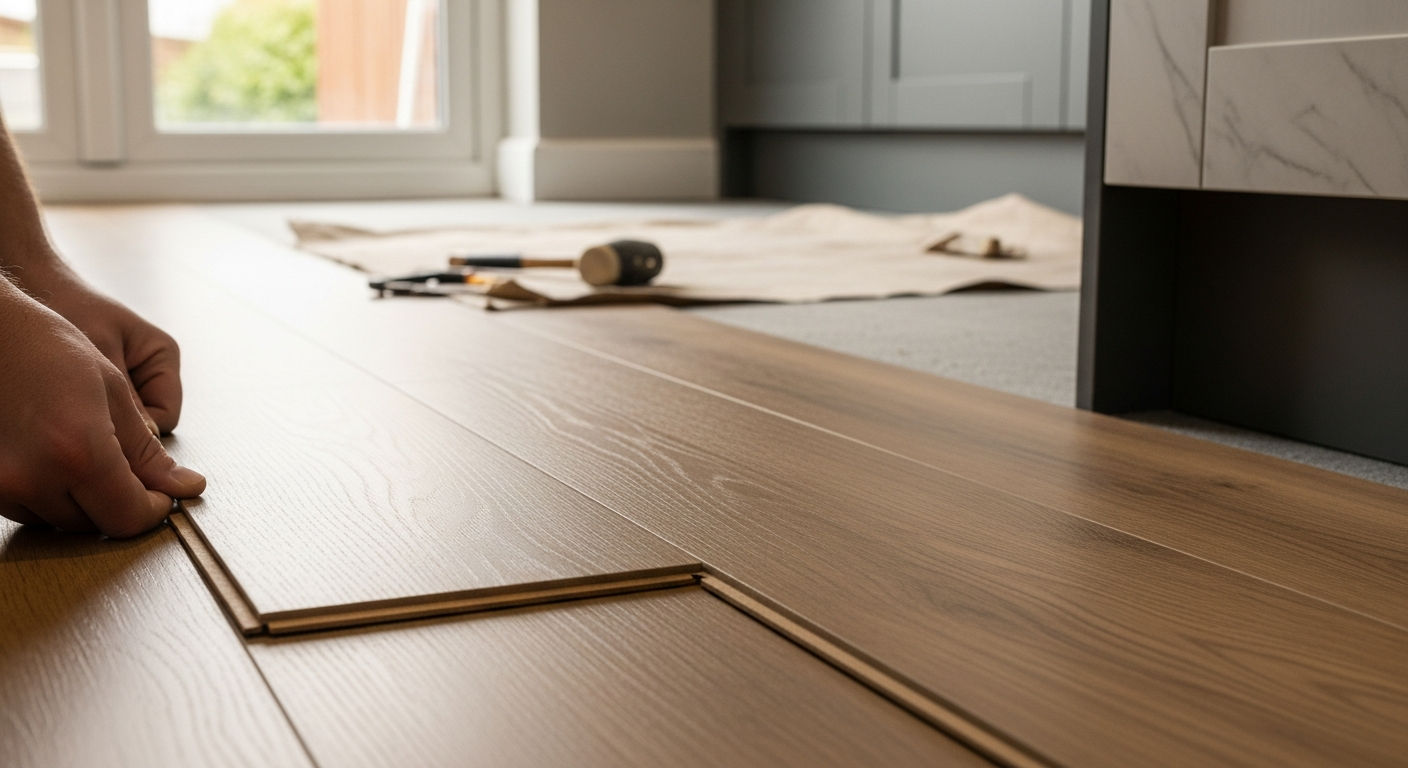
How to Fix Bubbling Vinyl Floor – DIY Guide
Fix bubbling vinyl floor by applying heat with a heat gun or hair dryer to soften the adhesive, pressing the bubble flat, then weighting it down until the bond resets. For loose-lay vinyl planks, re-seat the edges. Most repairs take under an hour.

Apply heat to soften the adhesive
Set a heat gun to its lowest setting, or use a hair dryer on full heat, and move it steadily over the bubble in slow circular passes — keep the nozzle at least 75 mm from the surface and never hold it still. Work for 20–30 seconds until the vinyl becomes warm and pliable to the touch. Overheating can scorch or warp the surface permanently, so err on the side of less heat and repeat if needed rather than blasting one spot.
Inject adhesive or release trapped air
If the adhesive has simply dried out, draw a small amount of vinyl floor adhesive into a fine-tipped syringe and inject it under the bubble through a tiny slit cut along the bubble’s edge with a utility knife — keep the cut in line with any pattern to make it less visible. If the bubble is caused by trapped air with no adhesive failure, skip the adhesive and move straight to pressing. For larger areas of delamination, you can carefully peel back the vinyl to the nearest seam, re-apply solvent-free contact adhesive to both the subfloor and the vinyl backing, and allow both surfaces to go tacky before pressing down. If you’re also dealing with lifting edges, our guide to fixing lifting floor edges covers the same re-bonding principles.
Press and roll the repair flat
While the vinyl is still warm and the adhesive is tacky, press firmly over the bubble with the heel of your hand, working from the centre outward to push out any air. Follow immediately with a wallpaper seam roller, applying firm downward pressure in overlapping passes. Wipe away any adhesive that squeezes out through the slit with a clean dry cloth before it sets — most vinyl adhesives are difficult to remove once cured.
Weight the repair and allow to cure
Lay a flat, heavy object — a stack of books, a paving slab, or a weighted board — directly over the repaired area. Leave it in place for a minimum of 24 hours, or as directed on your adhesive’s data sheet. Do not walk on the repair during this period. Once cured, run a thin bead of vinyl seam sealer along any slit you made to prevent moisture from lifting the edge again. You can read more about general flooring preparation in our complete flooring guide .
Check and finish the surface
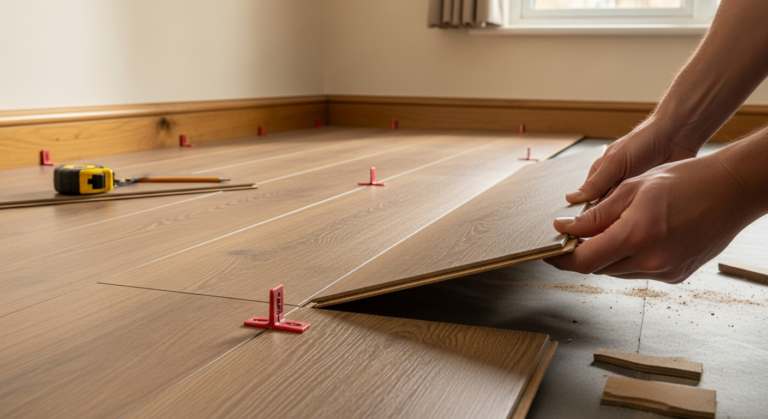
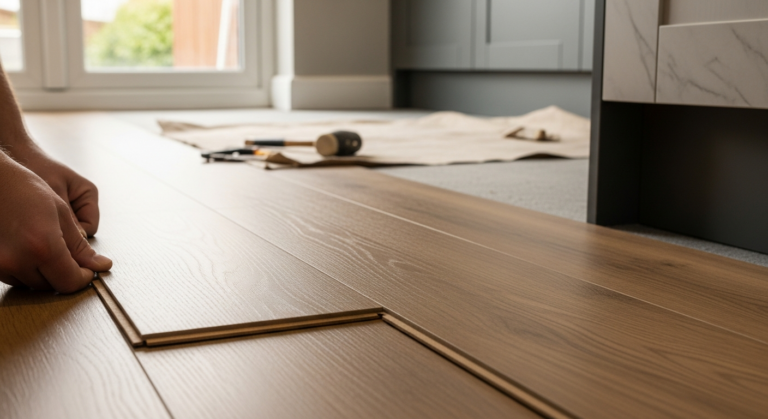
After 24 hours, remove the weight and press firmly across the whole repair area. If any edge has lifted, apply a small amount of adhesive with a fine brush, roll again, and re-weight for a further 12 hours. Seal any exposed cut edges with vinyl seam sealer and blend the finish. If the bubble was caused by a dip or high spot in the subfloor, address that now — a self-levelling compound applied to the subfloor will prevent the problem recurring. If the damage is too widespread to repair, it may be time to consider laying fresh vinyl; check our guide on how to lay vinyl plank flooring before you start.
Frequently Asked Questions
Why has my vinyl floor started bubbling?
The most common causes are adhesive failure from age or heat, trapped moisture beneath the vinyl, an uneven or damp subfloor, or insufficient expansion gaps causing the flooring to buckle. Identifying which applies to your floor determines the correct fix.
Can I fix a bubble in vinyl flooring without cutting it?
Yes — if the bubble is small and caused by trapped air rather than adhesive failure, heat alone (heat gun or hair dryer) combined with firm rolling pressure is often enough to flatten it and reset the existing adhesive without any cutting.
How do I stop vinyl floor bubbles from coming back?
Ensure the subfloor is level, dry, and free of high spots before any repair. Always use a weight for 24 hours after re-bonding, seal any cut edges with vinyl seam sealer, and leave adequate expansion gaps around the room perimeter — typically 5–10 mm.
Does bubbling vinyl floor mean the subfloor is damp?
Not always, but it is a common cause — particularly in kitchens and bathrooms. Check for damp by taping a square of polythene to the subfloor and leaving it for 24 hours; moisture forming on the underside confirms a damp issue that must be resolved before repairing the vinyl. You can also find related advice in our guide to repairing damaged floor surfaces.
When is it better to replace vinyl flooring rather than repair it?
If bubbles cover a large area, the vinyl is brittle or cracked, or repeated repairs keep failing, replacement is the more cost-effective option. Localised bubbles in otherwise sound flooring are nearly always worth repairing first.
Warm the vinyl until it is just pliable, not hot — the adhesive needs gentle reactivation, not cooking. Professionals keep the heat source moving at all times and test the surface temperature by touch every few seconds; if it feels hot to the back of the hand, it is already too warm.
Sources
- Chartered Institute of Building — Flooring defects guidance — ciob.org
- HSE — Damp and moisture in buildings — hse.gov.uk
- Which? — Vinyl flooring advice and repairs — which.co.uk
This guide is for general information only. Always work safely and follow manufacturer instructions. DIYnut accepts no liability for injury or damage arising from DIY work.