Garden & Outdoor: Complete UK DIY Guide 2026
Garden & Outdoor: Complete UK DIY Guide 2026
Your garden and outdoor spaces are an extension of your home, and most of the hard landscaping work is well within reach of a competent DIYer with the right guidance. This hub covers the three big outdoor projects UK homeowners tackle every year: Patios & Paving, Decking, and Fencing. Get it right first time and you’ll add real value to your property — get it wrong and you’re looking at expensive remedial work.
Browse Garden & Outdoor Guides
Lawn Care
Paths & Stepping Stones
Patios & Paving
Sheds & Outbuildings
Costs & Pricing
Common Problems
Seasonal Maintenance
Trade vs DIY
Frequently Asked Questions
Do I need planning permission for a patio or garden decking in the UK?
In most cases, no — patios laid at ground level don’t require planning permission under permitted development rules. Decking is generally permitted too, provided it’s no more than 300mm above ground level and doesn’t cover more than 50% of the garden area; exceed either of those thresholds and you’ll need to apply. If you’re in a conservation area or your property is listed, the rules are tighter, so check with your local planning authority before you start.
What’s the best sub-base depth for a DIY patio in the UK?
For a standard domestic patio with foot traffic only, you want a minimum of 100mm of compacted MOT Type 1 hardcore as your sub-base, topped with a 30–50mm bed of sharp sand or a semi-dry mortar mix depending on your slabs. If you’re laying on clay soil or in an area with heavy rainfall, go to 150mm of hardcore — clay moves with moisture and a thin sub-base will crack your slabs or cause them to sink. Don’t scrimp on the compaction either; hire a wacker plate if you haven’t got one.
How long does treated timber decking actually last in the UK climate?
Pressure-treated softwood decking, properly maintained, should give you 15–20 years in UK conditions — but that ‘properly maintained’ part is doing a lot of work in that sentence. You need to clean it annually, apply a good quality decking oil or stain every one to two years, and ensure water can drain freely underneath so the frame doesn’t sit in moisture. Composite decking costs more upfront but needs far less maintenance and will outlast timber in our wet climate.
Who is responsible for a boundary fence between neighbours in the UK?
There’s a common assumption that you own the left-hand fence looking from the road, but that’s a myth — responsibility is determined by your property’s title deeds, not any general rule. Check your deeds or Land Registry documents for a ‘T’ mark on the boundary line; the property the T is on owns and is responsible for that boundary. If the deeds are unclear, the honest answer is that neither neighbour is legally obliged to maintain a boundary fence, which is why it’s always worth having a civil conversation before assuming anything.
What causes paving slabs to become slippery and how do I fix it?
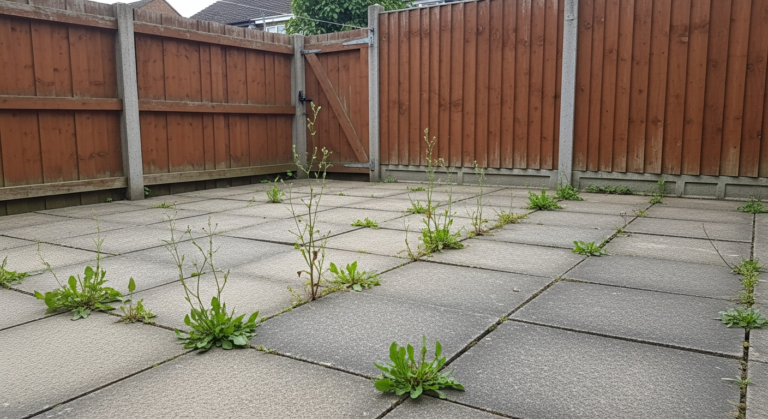
Slippery slabs are almost always down to algae, moss, or biofilm buildup — it thrives in the damp, shaded conditions common in UK gardens, especially on north-facing patios. A proper clean with a patio cleaner or diluted bleach solution followed by a pressure wash will shift it, but the effect won’t last long without treating the root cause. Apply a biocidal patio sealer after cleaning to slow regrowth, improve drainage if water is pooling, and cut back any overhanging plants that are keeping the surface permanently damp.
- RHS — Garden construction guidance — rhs.org.uk
- GOV.UK — Planning for garden structures — gov.uk
Get the Full Guide with DIYnut AI
Photograph your space, tell the app what you want, and get an AI-generated after image, full materials list, and step-by-step guide in seconds.