
Autumn Garden Preparation
Autumn garden preparation covers lawn aeration, fence and shed checks, patio cleaning, raised bed building, and protecting plants before frost. Tackle most tasks in October and November while the ground is workable and weather is mild enough to apply treatments.

Why This Season Matters
Autumn is the last reliable window to carry out outdoor maintenance before ground temperatures drop and timber treatments stop curing properly. Wood preservers, patio sealers, and fence treatments all need mild, dry conditions — typically above 5°C — to penetrate and bond correctly. Miss this window and you are leaving structures exposed to winter freeze-thaw cycles, wet rot, and frost heave.
The lawn, soil, and hard surfaces are also at a turning point in autumn. Grass is still growing slowly enough to recover from scarifying, the ground is soft enough to aerate without compaction damage, and fallen leaves left unmanaged will compact into a smothering mat that kills turf and harbours slugs. Acting in October rather than waiting until November gives you the best chance of stable weather and daylight to work in.
Your Complete Checklist
- Scarify and aerate the lawn to remove thatch and improve drainage — see Scarify and Aerate a Lawn
- Overseed bare or thin patches before soil temperature falls below 7°C — see Seed a Bare Lawn
- Apply an autumn lawn feed to build root strength over winter — see Feed and Weed a Lawn
- Pressure wash and clean the patio to prevent algae and slip hazards — see Clean and Pressure Wash a Patio
- Check for sunken or rocking patio slabs and re-bed before frost — see Fix Sunken Patio Slabs
- Inspect and treat fence panels and posts to protect through winter — see Treat and Preserve a Fence
- Replace any rotten or leaning fence posts while the ground is workable — see Replace a Fence Post
- Inspect the shed roof and re-felt any lifting or cracked sections — see Felt a Shed Roof
- Check and repair decking boards before they become slippery or structurally unsafe — see Repair Decking Boards
- Apply a decking treatment to seal timber against winter moisture — see Treat and Stain Decking
- Isolate and drain the garden tap to prevent frost damage to pipework — see Fix a Garden Tap
- Build or fill raised beds ready for spring planting — see Fill a Raised Bed Cheaply
Step-by-Step for Each Task
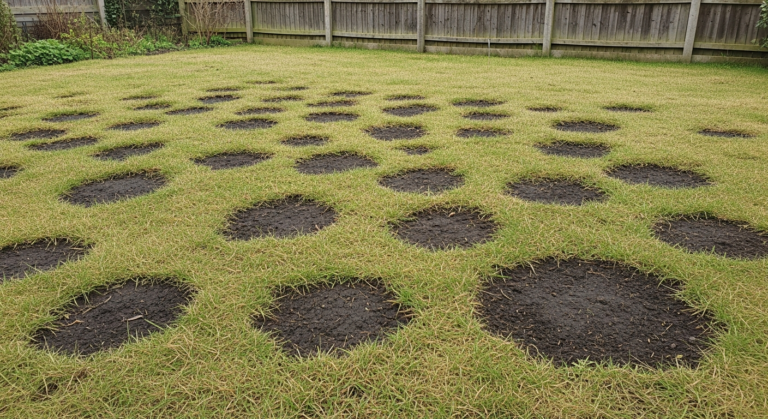
Scarifying and aerating the lawn: Wait for a dry spell when the grass is not waterlogged. Mow first at a slightly lower height than usual. Run a scarifier across the lawn in parallel passes to tear out thatch — collect and compost or bin the debris. Follow immediately with hollow-tine aeration using a fork or aerator, pushing tines at least 10 cm deep every 10–15 cm across the whole lawn. Brush sharp horticultural sand or a top-dressing mix into the holes to keep them open. Overseed immediately after if bare patches are visible, and water in if no rain is forecast within 24 hours.
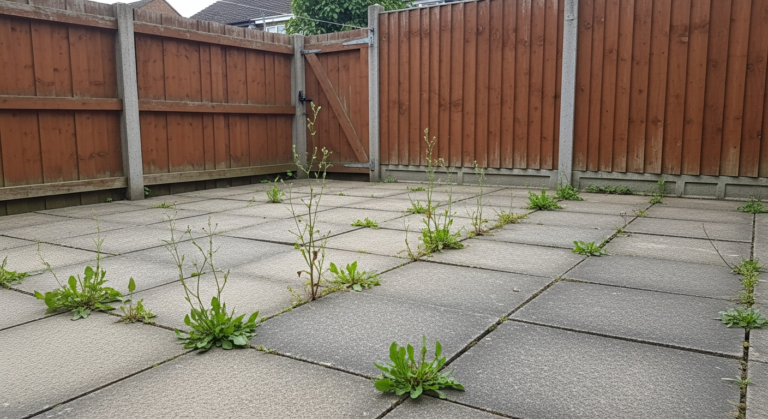
Cleaning and checking the patio: Clear all furniture and pots first. Apply a patio cleaner or diluted algaecide and leave it to dwell for the manufacturer’s stated time before pressure washing from one end to the other in consistent overlapping passes. Once dry, inspect every slab — press each one with your foot and mark any that rock or sound hollow. Re-bed loose slabs on fresh mortar before temperatures drop to zero, as frost will prevent mortar from curing and can crack newly laid beds.
Treating fences and decking: Both tasks require dry timber and air temperatures above 5°C. Brush or scrub off any algae or dirt, allow the timber to dry for at least 48 hours after rain, then apply a water-based preservative or oil-based stain with a wide brush or pad. Work the product into the grain along the timber rather than across it. On decking, apply a second coat in the direction of the boards within two hours of the first if the product allows it — this doubles penetration depth without the need to sand back.
Winterising the garden tap: Turn off the isolating valve on the indoor supply pipe that feeds the external tap — usually under the kitchen sink or in a utility cupboard. Open the garden tap fully to release any remaining water in the pipe. If there is no isolating valve, fit one before winter — a burst external pipe can cause significant internal water damage. Wrap exposed pipework with foam lagging secured with waterproof tape as a secondary precaution.
Tools and Materials You’ll Need
- Scarifier or spring-tine rake
- Hollow-tine aerator or garden fork
- Lawn overseeding mix and autumn lawn feed (low nitrogen, high potassium)
- Pressure washer with patio nozzle
- Patio or decking cleaner / algaecide
- Wide paintbrush or pad applicator for timber treatments
- Fence and shed timber preservative or stain
- Decking oil or stain
- Ready-mix mortar or sharp sand and cement for re-bedding slabs
- Bolster chisel and club hammer for lifting slabs
- Pointing trowel
- Pipe lagging foam and waterproof tape
- Pipe isolating valve (if not already fitted)
- Shed roofing felt and clout nails or felt adhesive
- Sharp horticultural sand or lawn top-dressing
- Wheelbarrow and stiff brush
Common Mistakes to Avoid
- Applying timber treatments to damp wood. Preservers and stains cannot penetrate wet timber — they sit on the surface, peel off within weeks, and leave the wood unprotected. Always wait at least 48 hours after rain and check the forecast before you start.
- Scarifying a waterlogged lawn. Working a saturated lawn tears out grass roots along with the thatch and compacts the surface further. Wait for a dry spell — the soil should be moist but not squelching underfoot.
- Leaving fallen leaves on the lawn. A thick layer of leaves blocks light and air, killing the grass beneath within a fortnight. Collect and compost them or use them as a mulch on beds, but do not leave them sitting on turf.
- Skipping the patio repoint before winter. Open mortar joints between slabs allow water to sit and freeze, which widens the gap further each season. A quick repoint in autumn is far less work than relaying slabs after frost heave in spring — see the guide on fixing sunken patio slabs for the full method.
- Forgetting to lag external pipework. Even a short cold snap can freeze an unlagged external pipe. The pipe itself may not burst immediately, but the joint fittings are particularly vulnerable — and an internal flood from a burst supply pipe is a costly repair. Fitting foam lagging takes under 30 minutes and costs very little.
Frequently Asked Questions
When should I start autumn garden preparation in the UK?
Start in early to mid October when temperatures are still reliably above 5°C during the day. This gives you the best conditions for timber treatments to cure, lawn seed to germinate, and mortar to set before the first hard frosts typically arrive in November or December.
Is it too late to scarify my lawn in November?
In most of the UK, mid-November is the cut-off — soil temperatures below 7°C mean grass seed will not germinate and the lawn will not recover before winter. If you miss October, it is better to wait until late February or March rather than stress already-dormant turf.
Do I need to treat my fence every autumn?
Most solvent-based timber preservatives last two to three years; water-based products typically need reapplying every one to two years. Check the product instructions, and do a scratch test on a hidden section — if bare wood shows quickly, it is time to retreat.
Should I pressure wash my decking in autumn?
Yes, but do it before applying any treatment, not after. Pressure washing opens the grain and removes algae, which helps the stain or oil penetrate more deeply. Allow the decking to dry fully — at least 48 hours in dry weather — before applying any product.
What should I do with my raised beds in autumn?
Clear spent crops, add a 5–10 cm layer of well-rotted compost or manure and leave it on the surface — worms will work it in over winter. Cover bare soil with a membrane or cardboard to suppress weeds and protect soil structure from heavy rain and frost.
When re-felting a shed roof in autumn, run the felt horizontally starting from the lowest edge and lap each course by at least 75 mm — most DIYers start at the top and end up with laps that funnel water underneath rather than over the join. Seal all laps with cold-applied felt adhesive as well as nails, particularly at the ridge and any overlapping seams at the ends.
Sources
- RHS — Autumn lawn care advice — rhs.org.uk
- HSE — Safe use of pressure washers outdoors — hse.gov.uk
- Which? — How to prepare your garden for winter — which.co.uk
This guide is for general information only. Always work safely and follow manufacturer instructions. DIYnut accepts no liability for injury or damage arising from DIY work.