Spring Garden Preparation
Spring garden preparation covers clearing winter debris, treating fences and decking, repairing patio slabs, feeding the lawn, and checking structures like sheds and raised beds. Start in late February to March once the ground thaws and overnight frosts ease.

Why This Season Matters
Spring is the critical window for garden maintenance because most plants, lawn grass, and timber structures all respond rapidly once soil temperatures rise above 7°C. Work done now — treating fences, repairing slabs, feeding soil — sets the condition of your garden for the next six months. Leaving it until April or May means competing with active plant growth and often missing the dry spells needed for treatments to cure properly.
In the UK, late February through to the end of March is typically the best time to act: frosts are usually light and infrequent, the ground is workable, and timber preservatives adhere far better to dry, cool surfaces than to sun-warmed wood in summer. Getting ahead of the season means less reactive repair work later.
Your Complete Checklist
- Clear winter debris, dead foliage, and fallen leaves from beds and borders — see the Garden Guide
- Inspect and treat timber fence panels and posts — Treat and Preserve a Fence
- Check and replace any damaged or leaning fence posts — Replace a Fence Post
- Clean and pressure wash the patio to remove moss and algae — Clean and Pressure Wash a Patio
- Lift and re-bed any sunken or rocking patio slabs — Fix Sunken Patio Slabs
- Inspect and repair decking boards, then apply a fresh coat of treatment — Repair Decking Boards
- Treat and stain decking to protect it for the season ahead — Treat and Stain Decking
- Check the shed roof for missing felt and repair any damage — Felt a Shed Roof
- Build or refill raised beds ready for planting — Fill a Raised Bed Cheaply
- Scarify, aerate, and overseed the lawn to repair winter damage — Scarify and Aerate a Lawn
- Feed and weed the lawn once growth begins in earnest — Feed and Weed a Lawn
- Check and reinstate the garden tap if isolated over winter — Fix a Garden Tap
Step-by-Step for Each Task
Treating fence panels and posts: Start by brushing off any loose dirt, algae, or flaking old preservative with a stiff brush. Allow the timber to dry for at least 24 hours. Apply a water-based fence preservative or oil-based stain using a wide brush or garden sprayer, working it into all joints, end grain, and the base of posts. Two coats give better protection — allow the first to dry fully before applying the second. Early spring is ideal because the timber is cool and porous.
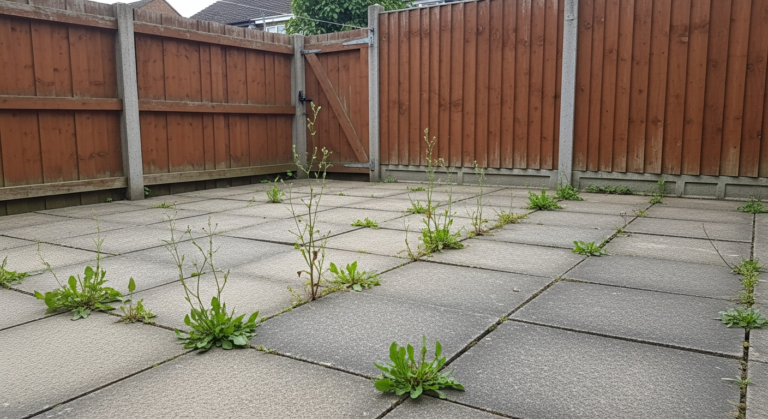
Cleaning and repairing the patio: Remove any furniture and sweep away loose debris. Apply a suitable patio cleaner to tackle moss and algae, leave to dwell for the time stated on the label, then pressure wash using a fan nozzle — not a pencil jet — to avoid blasting out pointing. Once dry, check for sunken or rocking slabs. Lift them, add or remove sharp sand to re-level, then re-bed on a fresh mortar mix. Re-point any cracked joints once the mortar has set.
Repairing and treating decking: Walk the deck slowly and probe any boards that feel soft or springy — these need replacing before the season starts. Once all boards are sound, sweep thoroughly and apply a dedicated decking oil or stain with a wide brush, working along the grain. Do this on a dry day above 5°C. For decking board repairs, replace like-for-like in terms of timber species and thickness to maintain a flush surface.
Overhauling raised beds: Check the timber sides for rot, especially at corner joints and where boards meet the soil. Replace any soft sections. Top up beds with a mixture of topsoil and well-rotted compost — a 50:50 blend works well for most vegetables. Aim for a slight mound in the centre to allow for settling. Once filled, cover with a breathable membrane to warm the soil for two to three weeks before planting, which can bring forward your first sowing date considerably.
Tools and Materials You’ll Need
- Stiff-bristled brush and hand brush for clearing debris
- Pressure washer with fan nozzle attachment
- Patio or paving cleaner (algae/moss treatment)
- Pointing trowel and mortar mix for re-bedding slabs
- Sharp sand for levelling under patio slabs
- Fence preservative or timber stain (water-based or oil-based)
- Wide paintbrush or garden sprayer for applying preservative
- Decking oil or stain and wide applicator brush
- Hammer and pry bar for removing damaged decking boards
- Replacement decking boards (matching thickness and species)
- Shed roofing felt and clout nails or felt adhesive
- Topsoil and well-rotted compost for raised beds
- Lawn scarifier or spring-tine rake
- Grass seed and pre-seed fertiliser
- PTFE tape and adjustable spanner for garden tap checks
- Safety gloves and eye protection
Common Mistakes to Avoid
- Treating timber in wet or frosty conditions: Fence preservatives and decking stains will not bond properly if the wood is damp or below 5°C. Always wait for a dry spell of at least 24–48 hours.
- Pressure washing before checking patio pointing: A high-pressure jet will blast out weakened or crumbling mortar. Check joints first and re-bed any sunken slabs before washing.
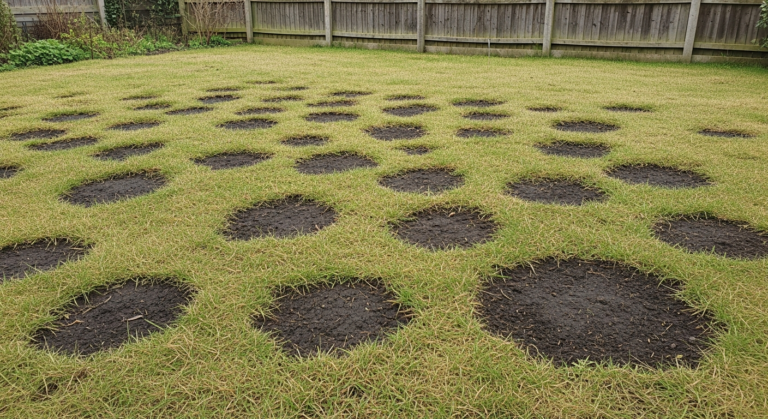
- Scarifying the lawn too early: If you rake or scarify while the grass is still dormant (soil below 7°C), you risk tearing out healthy root systems. Wait until grass is actively growing and you have mowed it at least once.
- Skipping the shed roof inspection: Lifting a couple of sheets of roofing felt to check the boards below takes minutes, but a small leak left over winter can rot the entire roof structure by summer. Deal with it as part of a broader shed repair check.
- Overfilling raised beds without checking drainage: Piling in fresh compost without ensuring the base drains freely creates waterlogged conditions that rot roots. If water pools in your beds, fork up the base layer and mix in horticultural grit before refilling.
Frequently Asked Questions
When should I start spring garden preparation in the UK?
Late February to mid-March is the right window for most structural tasks such as treating fences, repairing patios, and checking sheds. Hold off on lawn work until the grass is actively growing, typically once soil temperature consistently reaches 7°C.
Is it too early to treat fence panels in March?
March is actually one of the best times to treat fence panels in the UK, provided the timber is dry and overnight temperatures are consistently above 5°C. The wood is porous and cool, which helps preservatives penetrate deeply.
How do I know if my decking is safe to use after winter?
Walk slowly across the entire deck and press firmly at the edges of each board. Any that flex, feel spongy, or have visible splits need replacing before use. Also check the joist structure underneath for rot at fixing points.
Can I lay turf or seed a lawn in early spring?
Turf can be laid from late February onwards as long as the ground is not frozen or waterlogged. Grass seed needs soil temperatures above 8–10°C and reliable moisture, so late March to April is usually more reliable for seeding in most parts of the UK.
Do I need to re-point patio slabs every spring?
Not necessarily — only re-point joints that are cracked, loose, or missing. Inspect after pressure washing when you can clearly see the condition of the mortar. Sound, solid pointing does not need replacing.
Apply fence preservative to the bottom 300mm of posts with an extra coat and leave it to soak in before the main application — this is where rot almost always starts first and where a single coat is never enough. If you can stand the post base in a bucket of preservative for 30 minutes before erecting, the protection is significantly better than any number of brush coats after the fact.
Sources
- RHS — Spring garden jobs and seasonal advice — rhs.org.uk
- HSE — Safe use of pesticides and garden chemicals — hse.gov.uk
- Gov.uk — Guidance on waste and composting in the home garden — gov.uk
This guide is for general information only. Always work safely and follow manufacturer instructions. DIYnut accepts no liability for injury or damage arising from DIY work.