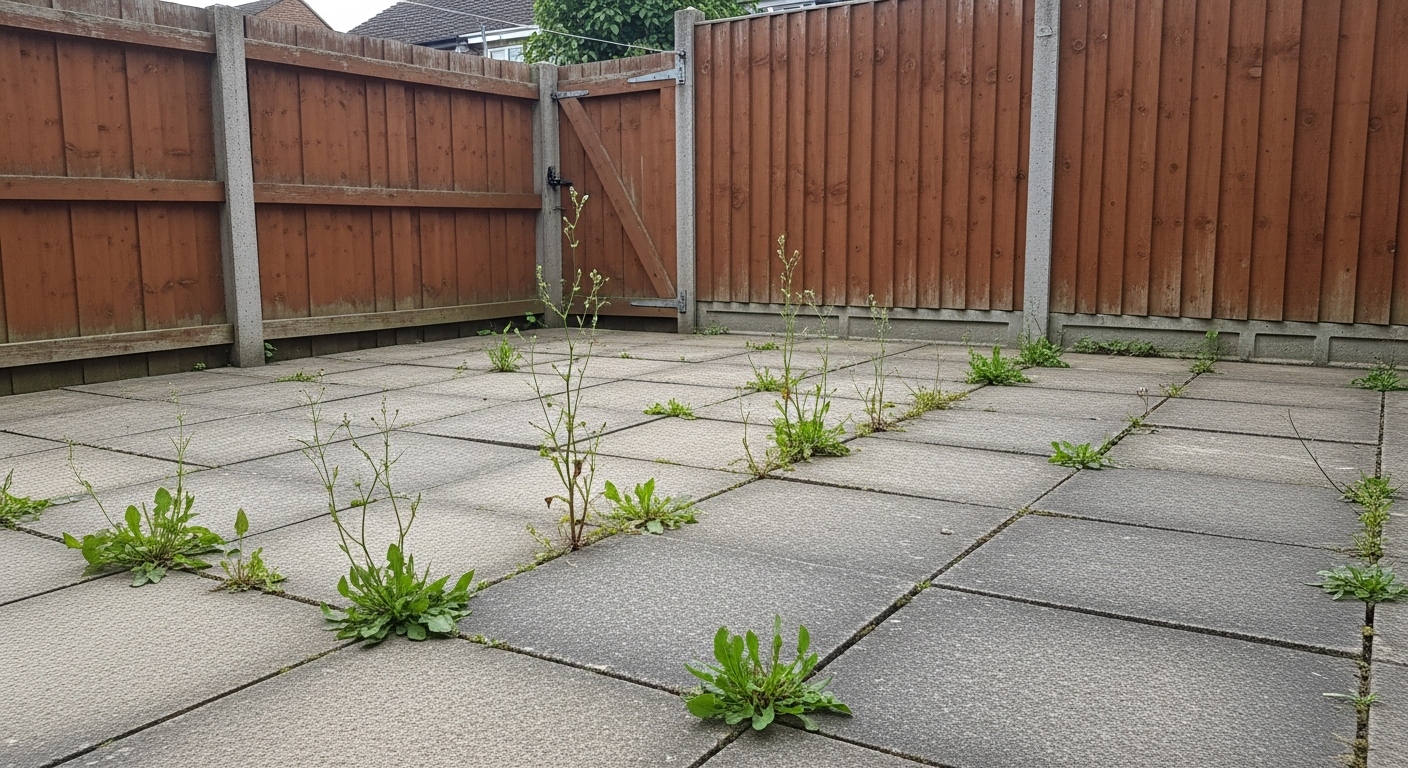
Summer Patio Maintenance
Summer patio maintenance covers cleaning slabs, repointing joints, fixing sunken flags, treating decking, and checking drainage. Tackle these tasks in early summer before heavy use begins to prevent slip hazards and stop small cracks from becoming costly repairs.

Why This Season Matters
Summer is when your patio takes the heaviest use — outdoor furniture, foot traffic, barbecues, and gatherings all put stress on slabs, joints, and drainage. Tackling maintenance at the start of the season means you catch frost damage from winter before it worsens, and you get full enjoyment from the space during the warmest months.
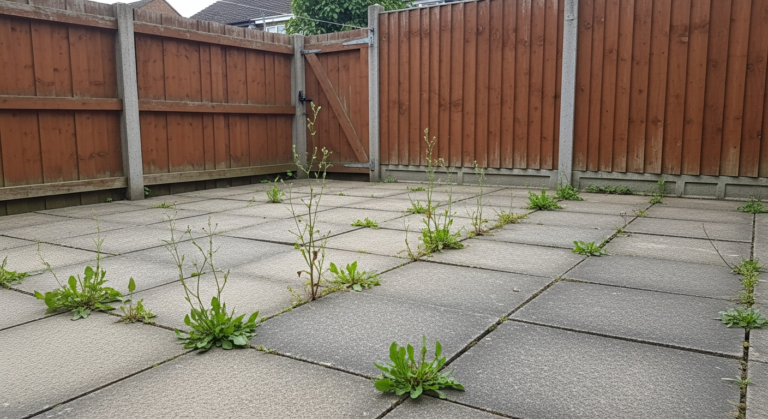
Algae and moss growth peaks in spring, so by early summer slabs can already be dangerously slippery. Mortar joints that have started to crumble will let water in, accelerating further breakdown underneath. A half-day of focused maintenance now prevents far more disruptive and expensive work later in the year.
Your Complete Checklist
- Clean and pressure wash all patio slabs — Clean and Pressure Wash a Patio
- Repoint crumbling or missing mortar joints — Repoint Patio Slabs
- Fix any sunken or rocking slabs — Fix Sunken Patio Slabs
- Inspect and repair decking boards — Repair Decking Boards
- Treat and stain decking to protect against UV and moisture — Treat and Stain Decking
- Check and repair garden walls bordering the patio — Repair a Garden Wall
- Inspect fencing panels and posts for damage — Fix a Garden Fence Panel
- Test and fix the garden tap or outdoor water supply — Fix a Garden Tap
- Clear drainage channels and gullies of debris
- Check stepping stones for stability — Lay Stepping Stones
- Treat and preserve any timber fencing adjacent to patio — Treat and Preserve a Fence
- Install or check a water butt for garden irrigation — Install a Water Butt
Step-by-Step for Each Task
Clean and pressure wash patio slabs: Sweep the surface clear of loose debris first. Apply a patio cleaner or diluted white vinegar to tackle algae and staining, leaving it to dwell for 10–15 minutes. Work across the slabs with a pressure washer set to no more than 100–120 bar — too high a pressure will blast out mortar joints. Keep the lance moving and never hold it static over a single spot. Rinse thoroughly and allow to dry fully before applying any sealant.
Repoint crumbling mortar joints: Rake out loose and crumbling mortar to a depth of at least 15–20mm using a plugging chisel or angle grinder with a pointing disc. Brush out dust and dampen the joints with water to improve adhesion. Press ready-mixed pointing mortar firmly into the joints with a pointing trowel, finishing just below the slab face so water drains away freely. Protect from rain for 24 hours while the mortar cures.
Fix sunken or rocking slabs: Lift the affected slab carefully using a bolster chisel to break the seal, then lever it free. Remove the old mortar bed underneath and check the sub-base — if it has sunk or washed away, top up with sharp sand or a dry mortar mix and compact firmly. Re-lay the slab on five dabs of mortar (one at each corner, one in the centre), tapping level with a rubber mallet and checking with a spirit level. Leave for 48 hours before walking on it.
Inspect and treat decking: Check every board for soft spots, splits, or raised fixings. Press firmly at board ends and near posts — these areas retain moisture and rot first. Replace any boards that feel spongy underfoot. Once repairs are done, clean the surface thoroughly and apply a UV-stable decking oil or stain with a brush or roller, working along the grain. Two coats give far better protection than one thick coat.
Tools and Materials You’ll Need
- Pressure washer (100–120 bar maximum)
- Stiff-bristled brush and soft hand brush
- Patio or algae cleaner
- Plugging chisel and club hammer
- Pointing trowel
- Ready-mixed exterior pointing mortar
- Bolster chisel and pry bar
- Spirit level and rubber mallet
- Sharp sand and dry mortar mix
- Decking oil or UV-stable decking stain
- Paint brush and roller tray
- Protective gloves and safety goggles
- Kneeling pad
- Garden hose with adjustable nozzle
Common Mistakes to Avoid
- Pressure washing at too high a setting: Excessive pressure strips out mortar joints and can pit softer stone surfaces. Stay under 120 bar and always keep the lance moving.
- Repointing over damp or dirty joints: New mortar won’t bond to dust or wet surfaces. Always rake joints clean and brush out thoroughly before mixing or applying any pointing compound.
- Treating decking without cleaning first: Applying oil or stain over a dirty or algae-covered deck traps contaminants underneath and the finish will flake within weeks. Clean and allow to dry completely first.
- Ignoring drainage when relaying slabs: Slabs must fall away from the house at a minimum gradient of 1:60. Relaying level or with a fall towards the building risks damp penetration at the base of walls.
- Skipping slab inspection after winter: Frost heave can move slabs that looked stable in autumn. A rocking slab is a trip hazard — check every flag before guests arrive rather than assuming everything is fine.
Frequently Asked Questions
When is the best time to clean and maintain a patio in the UK?
Early summer — typically May to June — is ideal. Frost risk has passed, so mortar and treatments can cure properly, and you get the full summer season to enjoy the results before the next round of autumn and winter weather arrives.
How do I stop patio slabs becoming slippery in summer?
Remove algae and moss with a suitable patio cleaner and pressure wash thoroughly. Once dry, apply an anti-slip patio sealant to reduce surface porosity and inhibit algae regrowth. Repeat annually for best results.
Can I repoint patio slabs myself?
Yes — repointing is a beginner-friendly task. Rake out loose mortar to 15–20mm depth, clean the joints, dampen them, and press in ready-mixed pointing mortar with a trowel. The key is thorough joint preparation; rushed prep is why DIY repointing often fails quickly.
How often should decking be treated in the UK?
Softwood decking should be cleaned and re-oiled or re-stained every one to two years, depending on exposure. Hardwood decking may only need treating every two to three years. Check the condition annually — if water no longer beads on the surface, it is time to re-treat.
Do I need planning permission to repair or clean an existing patio?
No. Routine maintenance such as cleaning, repointing, and replacing like-for-like slabs does not require planning permission in England, Scotland, or Wales. Planning permission is only required if you are building a new patio or substantially extending an existing hard-standing area above permitted development thresholds.
After repointing, brush dry kiln-dried sand across the joints once the mortar has fully cured — it fills micro-gaps and significantly slows weed and moss establishment without affecting drainage. It is the step most DIYers skip that professionals always include.
Sources
- HSE — Slips and trips: the importance of floor cleaning — hse.gov.uk
- Which? — How to clean a patio — which.co.uk
- RHS — Patio and hard surface maintenance — rhs.org.uk
This guide is for general information only. Always work safely and follow manufacturer instructions. DIYnut accepts no liability for injury or damage arising from DIY work.