How to Fix a Waterlogged Lawn – DIY Guide
Fix a waterlogged lawn by aerating compacted soil, incorporating sharp sand or grit to improve drainage, and addressing any low spots that collect water. For persistent waterlogging, install a soakaway or French drain. Most lawns recover within one growing season.


- Garden fork
- Hollow-tine aerator
- Wheelbarrow
- Stiff brush or besom broom
- Spade
- Rake
- String line and pegs
- Sharp sand or horticultural grit
- Topdressing compost
- Grass seed (suitable for UK climate)
- Perforated drainage pipe
- Gravel or crushed stone
- Geotextile membrane
- Topsoil (for levelling low spots)
Step-by-Step Guide
Assess the drainage problem
Walk the lawn after rain and identify where water sits longest. Dig a test hole 300 mm deep — if it fills with water and drains slowly over several hours, compaction or a clay-heavy subsoil is the cause. If one area consistently floods while the rest drains, a low spot or blocked run-off point is the culprit. Understanding the cause before you dig saves significant time and money.
Aerate the compacted soil
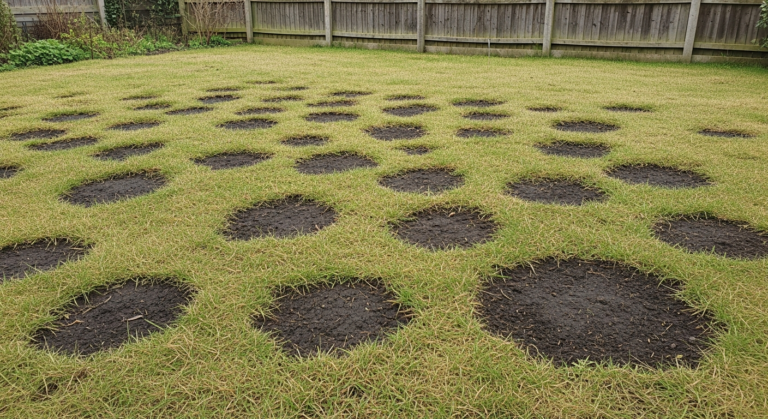
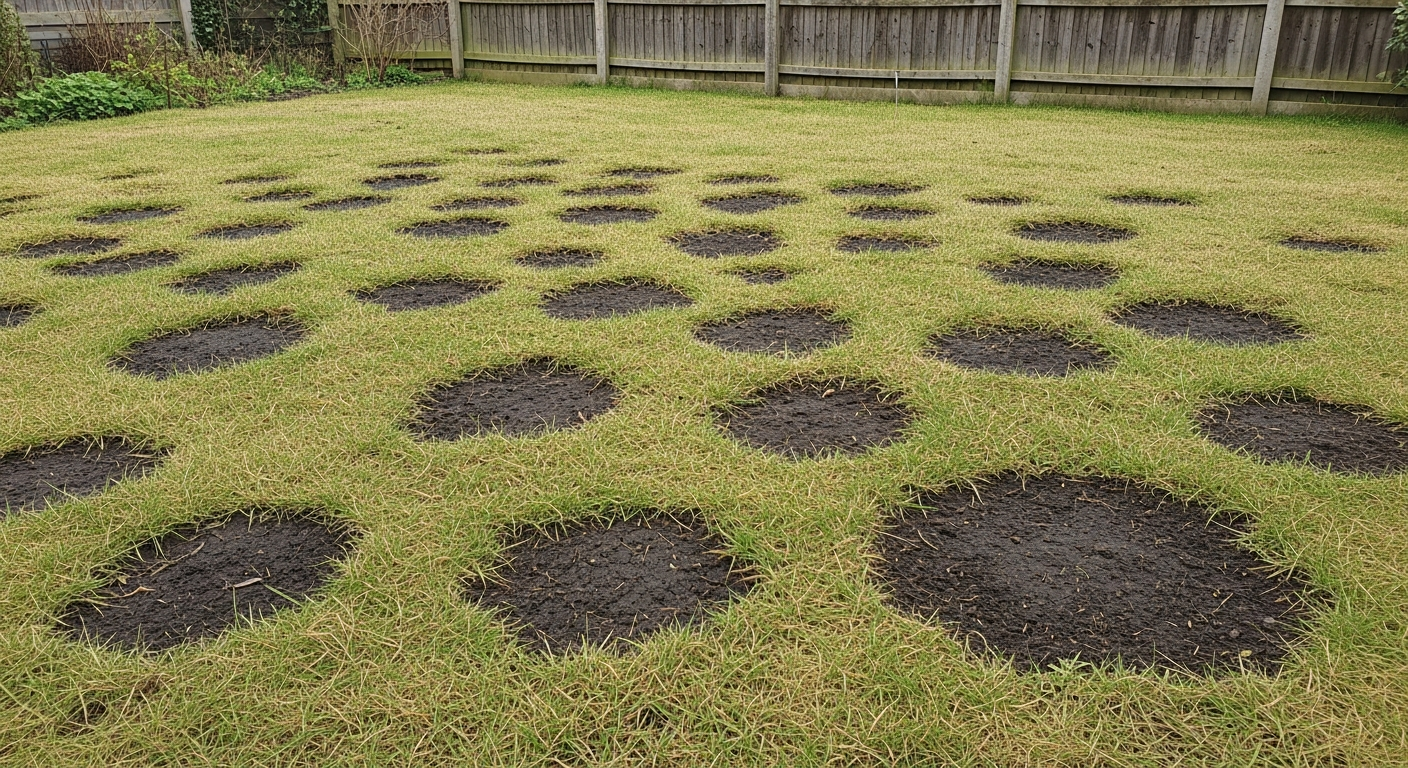
Push a hollow-tine aerator across the entire lawn, spacing passes roughly 100 mm apart. This pulls out plugs of soil and opens channels for water to move downward rather than pooling on the surface. A garden fork works for smaller areas — drive it in 150 mm deep and lean it back slightly to fracture the compaction layer without fully inverting the soil. Our scarify and aerate guide covers the process in full if your lawn also has a heavy thatch layer that is making drainage worse.
Work in a topdressing mix
Blend sharp sand with topdressing compost at roughly 3:1 by volume. Spread this mix across the aerated lawn at a depth of 10–15 mm, then work it into the aeration holes using a stiff brush or besom broom. Sharp sand opens up clay soil structure permanently, improving drainage over the long term. Do not use builder’s sand — it is too fine and will set like concrete in clay conditions.
Level any low spots
Use a string line to find hollows that are holding surface water. Fill them with a mixture of topsoil and sharp sand, tamping lightly and checking levels as you go. Restore grass cover over bare patches with appropriate grass seed once levelling is complete — our guide to seeding a bare lawn walks through seed choice and aftercare for UK conditions.
Install a French drain for persistent waterlogging
If surface aeration alone does not resolve the problem after one season, excavate a trench 450–600 mm deep running from the wet area toward a soakaway or boundary. Line it with geotextile membrane, add a 100 mm bed of gravel, lay perforated drainage pipe, backfill with gravel to within 150 mm of the surface, fold the membrane over, and top up with soil and turf. The pipe should fall at a gradient of at least 1:80 to maintain flow. Check with your local council before discharging drainage water to a watercourse — the Environment Agency provides guidance on permitted discharges.
Overseed and feed to restore the lawn
Once drainage work is complete and the ground has firmed up, overseed any thin or bare areas and apply a balanced lawn feed to support recovery. Water in dry spells but avoid walking on the lawn until new grass is well established. Our feed and weed guide covers the right products and timing to get your lawn back to full health through the growing season.
Frequently Asked Questions
Why does my lawn get waterlogged every winter?
UK winters deliver sustained rainfall onto lawns that are heavily used and often sitting on clay-heavy subsoil. Compaction from foot traffic reduces the soil’s ability to absorb and drain water, so it sits on the surface. Annual aeration in autumn significantly reduces the problem over time.
How long does it take for a waterlogged lawn to recover?
Most lawns show clear improvement within one growing season once aeration and topdressing are done correctly. Severe cases requiring a French drain may take two seasons to fully stabilise and recover grass coverage.
Can I lay turf or seed over a waterlogged lawn without fixing the drainage first?
Will a soakaway work for a badly waterlogged garden?
A soakaway works well where the soil at depth (typically 1.2–2 m) is free-draining — usually chalk or sandy subsoil. In heavy clay, the water has nowhere to go and a soakaway will simply fill and back up. A French drain to a ditch or storm drain is more reliable in clay gardens.
Do I need planning permission to install drainage in my garden?
Installing a soakaway or French drain within your own garden does not normally require planning permission. However, if you are discharging into a public drain, ditch, or watercourse you may need consent from your local authority or the Environment Agency — check before you dig.
After hollow-tine aeration, leave the soil plugs on the surface for a day to dry, then break them up with a stiff broom and work them back into the holes along with your topdressing mix — this adds organic matter and improves the soil profile without removing it. Doing this every autumn for three years transforms even heavy clay lawns permanently.
Sources
- RHS — Waterlogged soil: dealing with poor drainage — rhs.org.uk
- Gov.uk — Environment Agency: ordinary watercourse consent — gov.uk
- Which? — How to improve lawn drainage — which.co.uk
This guide is for general information only. Always work safely and follow manufacturer instructions. DIYnut accepts no liability for injury or damage arising from DIY work.