Summer Lawn Care
Summer lawn care means mowing at the right height, watering efficiently, and addressing drought stress, weeds, and bare patches before they worsen. Raise your mower blade, water deeply but infrequently, and resist over-feeding during dry spells to protect your lawn through summer.

Why This Season Matters
Summer is when your lawn faces its greatest stresses — heat, drought, heavy foot traffic, and rapid weed growth all compete to undo months of careful spring preparation. Getting your routine right between June and August determines whether your lawn stays lush and even or ends the season patchy, compacted, and weed-ridden.
The timing of each task is critical. Mowing too short during a heatwave scalps the grass and accelerates browning. Feeding at the wrong time can scorch roots. Watering little and often encourages shallow roots that struggle when the ground dries out. Understanding the summer growth cycle helps you act at the right moments rather than reacting to problems once they take hold. See our Lawn Care Calendar UK for a month-by-month breakdown.
Your Complete Checklist
- Raise your mower blade height to at least 3.5–4 cm during dry spells — Feed and Weed a Lawn
- Water deeply once or twice a week rather than lightly every day — Install a Water Butt
- Treat broadleaf weeds such as dandelions, daisies, and clover with a selective lawn weedkiller — Feed and Weed a Lawn
- Repair bare and patchy areas as soon as they appear to prevent weed colonisation — Fix a Patchy Lawn
- Edge the lawn along borders and paths to keep a clean, defined shape — Garden Guide
- Aerate compacted high-traffic areas with a garden fork or hollow-tine aerator — Scarify and Aerate a Lawn
- Apply a summer lawn feed only when rain is forecast or soil is moist — Feed and Weed a Lawn
- Check for and address waterlogging in lower lawn areas after summer storms — Fix a Waterlogged Lawn
- Remove grass clippings (box them off) in hot spells to prevent thatch build-up — Scarify and Aerate a Lawn
- Inspect and repair any damaged decking or patio around the lawn edge — Repair Decking Boards
- Overseed any thinning areas in late August when soil is still warm but rain returns — Seed a Bare Lawn
- Sharpen or service your mower blade mid-season for a cleaner cut — Garden Guide
Step-by-Step for Each Task
Mowing in summer: Set your mower blade no lower than 3.5 cm during dry or warm weather — 4–4.5 cm is safer during a heatwave. Taller grass shades the soil, retains moisture, and withstands drought far better than a close-cut lawn. Never remove more than one-third of the grass height in a single cut. Mow in the early morning or evening to avoid stress on freshly cut grass in peak heat. Keep the blade sharp — a torn cut browns quickly.
Watering correctly: Water once or twice a week, applying enough to penetrate 10–15 cm into the soil. A quick test: push a screwdriver or cane into the ground — if it meets resistance at 5 cm, the soil is too dry. Water in the morning to reduce evaporation and fungal disease risk. If you have a water butt set up, use stored rainwater where possible; this is softer on grass and reduces mains water use. Note that hosepipe bans can be imposed during drought periods under the Water Industry Act 1991 — check with your water supplier.
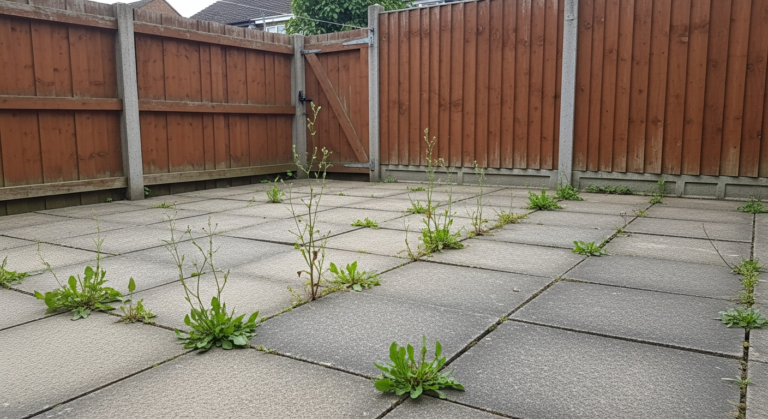
Treating weeds: Apply a selective broadleaf weedkiller on a calm, dry day when weeds are actively growing. Read the label carefully — most require the lawn to go unwatered for 24–48 hours after application. For isolated weeds, spot-treat rather than applying across the whole lawn. Do not mow for 3–4 days before or after treatment. For daisy or clover patches, a combined feed-and-weed product applied on moist soil is effective.
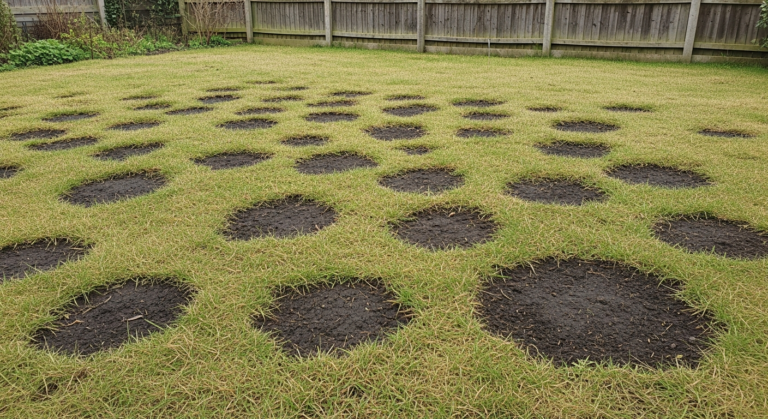
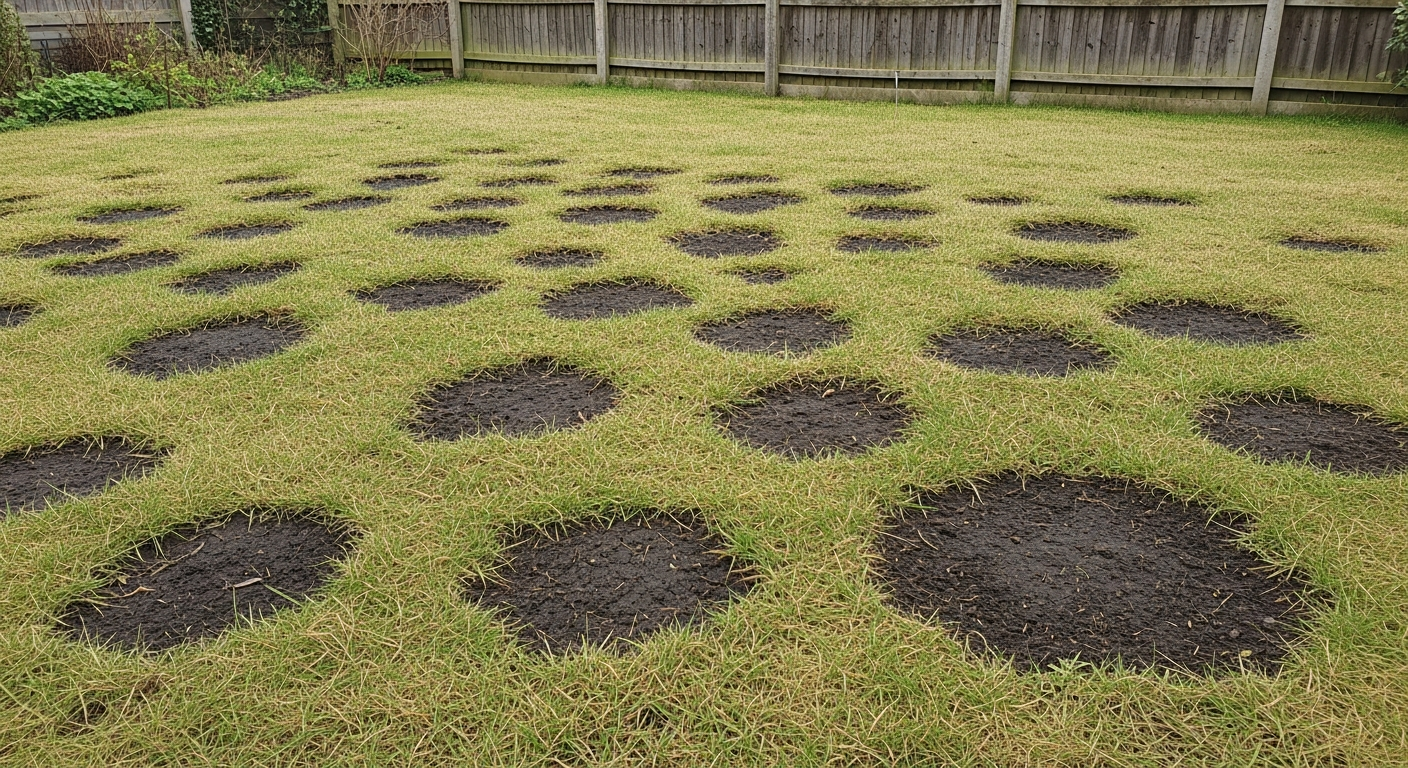
Repairing bare patches: Scratch the bare area with a rake to loosen the surface. Apply a thin layer of lawn top dressing or compost, then scatter seed at the recommended rate on the pack. Firm down gently and water in. Keep the area moist until germination — typically 7–14 days in warm summer conditions. Protect from birds with netting if needed. Late August into early September is the ideal window to overseed bare areas, as soil is warm and autumn rains typically follow.
Tools and Materials You’ll Need
- Rotary or cylinder lawn mower with adjustable blade height
- Lawn edging shears or a half-moon edger
- Garden hose with adjustable nozzle, or oscillating sprinkler
- Water butt and collecting kit (if not already installed)
- Garden fork or hollow-tine aerator
- Lawn rake / spring-tine rake
- Lawn top dressing or fine-grade compost
- Grass seed suitable for UK lawns (wear and shade tolerant as required)
- Selective broadleaf lawn weedkiller
- Summer lawn fertiliser (slow-release formulation)
- Watering can with a fine rose head
- Screwdriver or moisture probe (for soil depth moisture testing)
- Protective gloves
Common Mistakes to Avoid
- Scalping the lawn in hot weather: Cutting grass too short removes the leaf area the plant needs to photosynthesise and exposes soil to direct sun, dramatically increasing moisture loss and browning. Raise the blade before a heatwave, not after.
- Watering little and often: Shallow, frequent watering encourages grass roots to stay near the surface, making the lawn far less drought-resistant. Deep, infrequent watering — enough to soak 10–15 cm down — trains roots to grow deeper where soil stays cooler and wetter.
- Feeding on dry or scorched ground: Applying a granular fertiliser to drought-stressed or bone-dry soil risks burning the already-stressed grass. Only feed when the soil is moist or rain is reliably forecast within 24 hours.
- Leaving clippings on the lawn during dry spells: In hot weather, a thick layer of clippings creates thatch, traps moisture against the surface, and promotes fungal disease. Box off clippings from June to August and remove them from the lawn.
- Ignoring bare patches: Small bare areas left untreated quickly become weed patches. Address them promptly — a quick patch repair takes minutes, whereas re-seeding or re-turfing a weed-colonised patch takes weeks. See our guide on how to fix a patchy lawn for a step-by-step approach.
Frequently Asked Questions
Should I water my lawn every day in summer?
No. Daily light watering keeps grass roots shallow and increases drought vulnerability. Water deeply once or twice a week, applying enough to penetrate 10–15 cm into the soil, ideally in the early morning.
Is it safe to use a hosepipe on my lawn in summer?
Water companies can impose hosepipe bans during periods of drought under the Water Industry Act 1991. Always check current restrictions with your water supplier before using a hosepipe on the garden.
My lawn has turned brown — is it dead?
Almost certainly not. UK lawn grasses go dormant and turn straw-coloured during prolonged drought as a survival mechanism. Grass will recover and green up within a few weeks once rain or irrigation returns. Avoid feeding or scarifying dormant, brown grass.
What height should I set my mower in summer?
Raise the blade to at least 3.5–4 cm during normal summer conditions, and up to 4.5 cm during heatwaves or prolonged dry spells. Taller grass retains more moisture and recovers more quickly from heat stress.
When is the best time to overseed a bare lawn in summer?
Late August is ideal in the UK — soil is still warm enough for rapid germination, and cooler, wetter autumn weather typically follows. Overseeding in peak summer heat risks seed drying out before it establishes.
Professional groundspeople often apply a wetting agent to summer lawns rather than increasing watering frequency — it breaks down the waxy coating that forms on dry, hydrophobic soil and allows water to penetrate evenly rather than running off the surface. A single application in June or July can significantly reduce the water needed to keep a lawn in good condition through a dry summer.
Sources
- RHS — Lawn problems: brown patches and drought care — rhs.org.uk
- Gov.uk — Water Industry Act 1991: hosepipe bans — legislation.gov.uk
- RHS — Watering lawns: how and when — rhs.org.uk
This guide is for general information only. Always work safely and follow manufacturer instructions. DIYnut accepts no liability for injury or damage arising from DIY work.