
Winter Garden Protection
Winter garden protection means insulating vulnerable plants, draining water features, treating timber structures and checking fences and sheds before hard frosts arrive. Start in October or November to avoid frost damage, waterlogging and costly repairs come spring.

Why This Season Matters
Acting in October or November — before the first hard frost — gives you the best chance of protecting timber, pipes, plants and paved surfaces from frost heave, waterlogging and freeze-thaw cracking. Once temperatures drop below zero consistently, mortar becomes brittle, standing water expands in patio joints, and unprotected wood soaks up moisture that leads to rot and splitting through winter.
Leaving winter prep until December means you’re often working in wet, cold conditions and dealing with damage that’s already begun. A few hours spent now avoids expensive structural repairs and replanting costs in spring.
Your Complete Checklist
- Inspect and treat all timber fencing before frost sets in — see Treat and Preserve a Fence
- Check fence posts for movement or rot and repair any that are leaning — see Replace a Fence Post
- Inspect the shed roof for lifted or cracked felt and repair before winter rain — see Felt a Shed Roof
- Check and repair any damaged shed cladding, doors or windows — see Repair a Garden Shed
- Treat and seal decking boards to prevent frost cracking and moisture ingress — see Treat and Stain Decking
- Repair any split or rotten decking boards before they become a slip hazard — see Repair Decking Boards
- Check garden walls for loose mortar or cracks that will worsen in frost — see Repair a Garden Wall
- Lift and re-bed any sunken or cracked patio slabs before frost widens gaps — see Fix Sunken Patio Slabs
- Drain and lag or remove the garden tap before hard frosts cause the pipe to burst — see Fix a Garden Tap
- Mulch raised beds heavily to protect root systems and soil structure — see Fill a Raised Bed Cheaply
- Clear gravel paths of debris and check edging to prevent frost heave displacement — see Lay a Gravel Path
- Repair crumbling concrete steps before freeze-thaw cycles break them further — see Fix Crumbling Concrete Steps
Step-by-Step for Each Task
Treating and inspecting fencing: Start by clearing any vegetation from fence panels. Use a stiff brush to remove algae and loose material, then apply a timber preservative with a brush or roller working it into the grain. Pay extra attention to the base of posts and the top rail where water collects. Replace any split or crumbling fence caps before applying treatment.
Felting or patching the shed roof: On a dry day, walk around the shed and inspect felt for blisters, cracks or lifted edges. Small cracks can be sealed with roofing sealant. If more than a quarter of the felt is damaged, strip it back and re-felt the whole section — partial patches often fail within a season. Tack down lifted edges with clout nails and seal seams thoroughly. See the full Felt a Shed Roof guide for a complete walkthrough.
Draining and protecting the garden tap: Turn off the isolating valve on the supply pipe inside the house. Open the outdoor tap to drain any remaining water from the pipe. If there is no isolating valve, wrap the tap and exposed pipe with lagging foam and secure it with waterproof tape. Never leave standing water in an outdoor pipe — it will freeze and split the pipework. Visit Fix a Garden Tap if the tap needs attention before you shut it down.
Treating and inspecting decking: Sweep the deck and scrub off any algae with a stiff deck brush and a diluted cleaner. Once fully dry — allow at least 24 hours — apply a decking oil or preservative stain using a brush or pad applicator, working along the grain. Replace any boards that are soft when prodded with a screwdriver. Soft boards become dangerous underfoot once frost makes them slippery. Refer to the Treat and Stain Decking guide for product selection and application tips.
Tools and Materials You’ll Need
- Stiff-bristled outdoor brush or deck scrubbing brush
- Timber preservative or fence treatment (water-based or solvent-based)
- Decking oil or stain and a wide brush or pad applicator
- Roofing sealant and clout nails (for shed roof repairs)
- Replacement roofing felt and a felt adhesive
- Pipe lagging foam and waterproof tape (for outdoor tap)
- Pointing mortar or ready-mix repair mortar (for walls and patio joints)
- Pointing trowel and wire brush
- Garden kneeling pad
- Bucket and diluted outdoor surface cleaner
- Cordless drill and exterior-grade screws (for loose fence panels or decking boards)
- Thick horticultural fleece or mulching material (straw, bark chips)
- Waterproof gloves and safety glasses
Common Mistakes to Avoid
- Treating wet timber: Applying fence or deck treatment to damp wood seals moisture in rather than out, causing faster rot. Always wait for at least 48 hours of dry weather before treating any timber.
- Forgetting the garden tap: The outdoor tap is one of the most commonly burst pipes in winter. Failing to drain and lag it before the first frost can cause significant internal water damage if the pipe runs back through the wall.
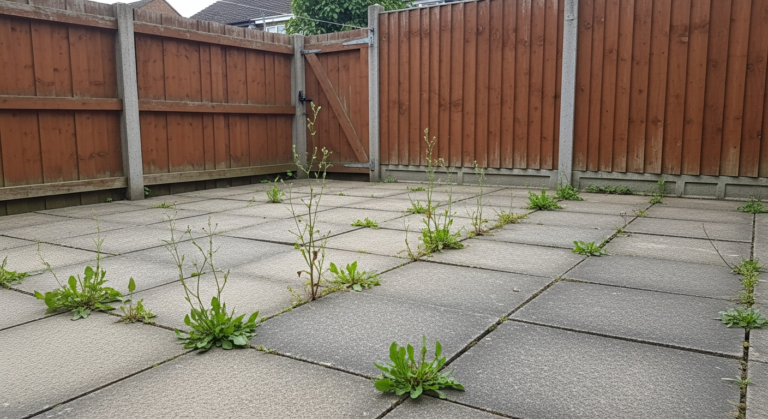
- Patching patio joints with standard filler: Using interior fillers or non-flexible compounds in patio joints fails as soon as the ground moves in a frost. Use a proper exterior pointing mortar or flexible jointing compound designed for outdoor use.
- Leaving pots and containers exposed: Terracotta and glazed pots crack when water in the compost freezes and expands. Move them into a shed or wrap them in bubble wrap or hessian before temperatures drop consistently below zero.
- Skipping the shed roof until spring: Small splits in roofing felt let in water all winter, soaking roof timbers and stored equipment. A quick autumn repair takes under an hour; leaving it costs far more in structural damage and lost tools.
Frequently Asked Questions
When should I start winter garden protection in the UK?
October is the ideal time to begin — before the first ground frosts arrive. In northern regions this may mean mid-October; in southern England you often have until early November, but don’t push it past that.
Do I need to treat my fence every winter?
Not necessarily every year, but you should inspect it every autumn and treat it whenever the wood looks dry, grey or is absorbing water rather than beading it. Most timber treatments last one to three years depending on exposure.
How do I protect tender plants in raised beds over winter?
Apply a thick layer of mulch — 5 to 10 cm of bark chips, straw or well-rotted compost — over the soil surface to insulate roots from hard frosts. For very tender plants, cover with horticultural fleece secured at the edges.
Is it safe to leave garden furniture out over winter in the UK?
Hardwood furniture can usually stay out if treated and covered, but softwood, metal and plastic furniture is better stored in a shed or garage. Leaving untreated softwood exposed through a wet UK winter will accelerate cracking, splitting and rot.
Should I cut back all plants before winter?
No — many perennials benefit from leaving their stems standing until late winter, as they provide frost protection to the crown and habitat for insects. Cut back in late February or early March before new growth starts.
Before applying any timber treatment, run your hand along fence rails and posts in October — if the wood feels damp or cold to the touch, wait for a dry spell rather than treating immediately. Trapping moisture under a preservative coat accelerates rot from the inside out, which you won’t notice until the post fails.
Sources
- RHS — Winter garden jobs and frost protection advice — rhs.org.uk
- HSE — Safe use of wood preservatives and treatments — hse.gov.uk
- gov.uk — Water supply regulations and outdoor pipe protection — gov.uk
This guide is for general information only. Always work safely and follow manufacturer instructions. DIYnut accepts no liability for injury or damage arising from DIY work.