How to Get Rid of Damp Smell – DIY Guide
How to Get Rid of Damp Smell
Find the source, treat the cause, and clear musty odours for good.
To get rid of damp smell, identify and fix the source of moisture first — condensation, rising damp, or a leak. Then clean mould, dry the area thoroughly, apply a damp-seal primer, and improve ventilation to prevent the smell returning.

Ventilate and Dry the Affected Area
Open windows and doors and run an electric fan or dehumidifier in the room for at least 24 hours before you start treating surfaces. Moisture trapped in plaster and timber is what feeds the smell — if you paint or seal over a wet wall, the odour will push straight back through. A dehumidifier set to run overnight is the most effective way to draw residual moisture out of walls and flooring. Check that window trickle vents are open and not blocked with paint or dust; in poorly ventilated rooms this simple step alone makes a measurable difference.
Clean Mould Off All Affected Surfaces
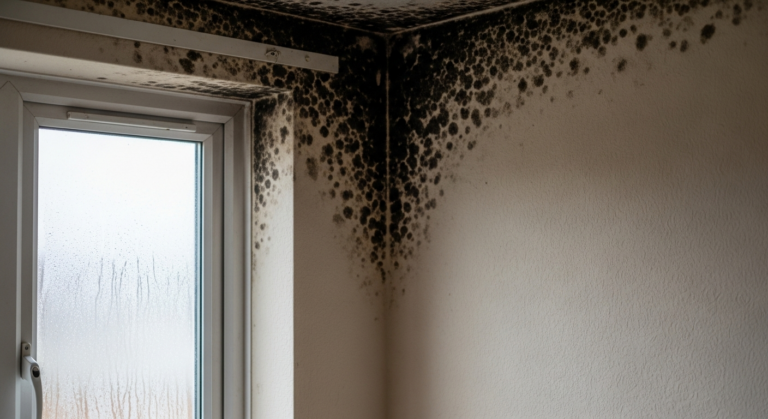
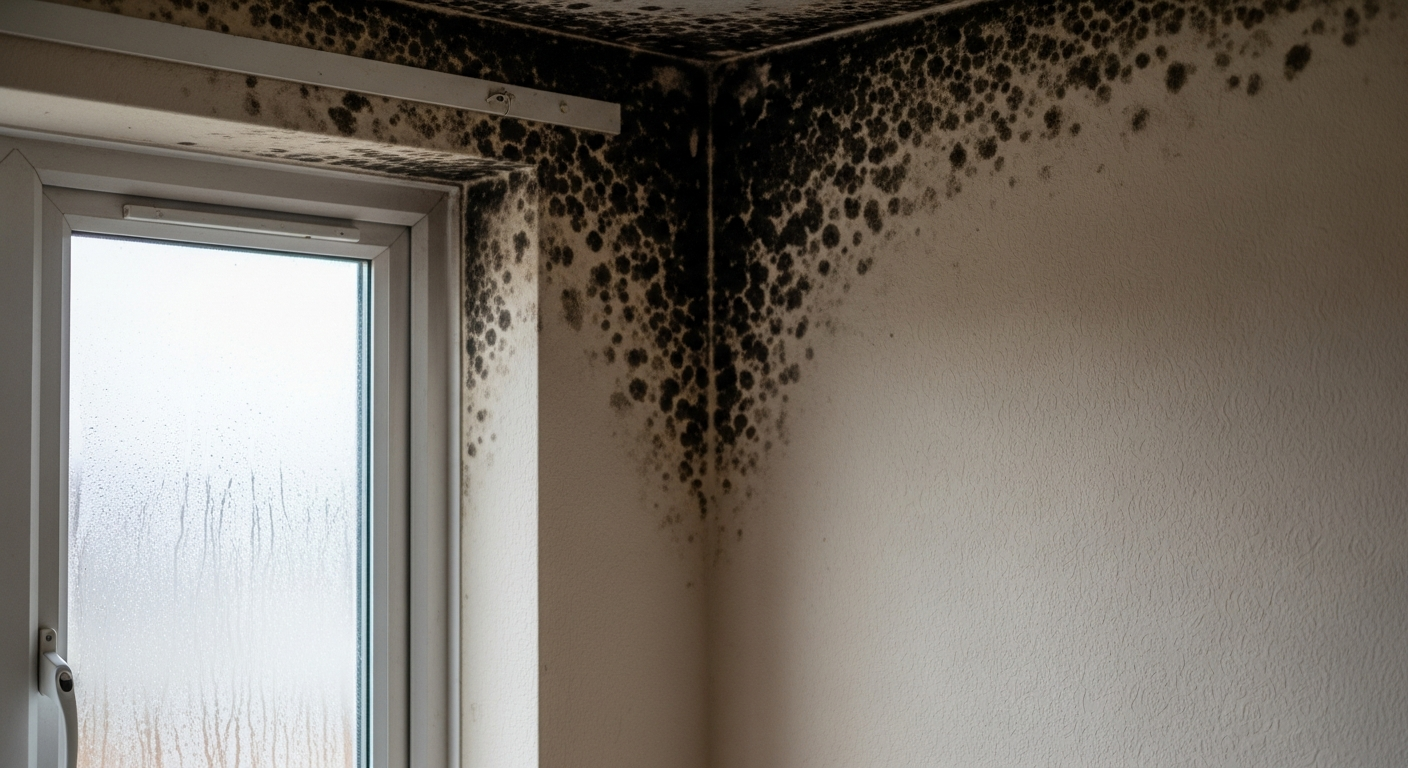
Protect floors with plastic sheeting, put on gloves, goggles, and an FFP2 face mask, then apply a mould and mildew remover spray directly to affected surfaces and leave it to dwell for the time stated on the label. Scrub with a stiff-bristle brush, working from the edges of the mould patch inward to avoid spreading spores. Wipe down with a damp microfibre cloth, then go over the area again with a diluted white vinegar solution (one part vinegar to one part water) — vinegar neutralises the musty odour compounds that bleach-based products leave behind. Dispose of cloths immediately in a sealed bag. For severe or recurring black mould, see our detailed guide on fixing black mould on walls.
Apply a Damp-Seal Primer
Once the wall is fully dry — press the back of your hand against it; it should feel room temperature, not cool — apply a water-based damp-seal primer with a 50 mm paintbrush. This locks in any residual staining and creates a barrier that stops moisture-laden odours migrating through the wall surface. Apply one coat and allow it to cure fully according to the manufacturer’s drying time, typically four to six hours, before adding any topcoat. If you are working on a basement wall with persistent penetrating damp, our guide on how to damp proof a basement covers a more robust tanking approach.
Repaint with Anti-Mould Paint
Finish with an anti-mould paint or add an anti-mould additive to your standard emulsion — this inhibits future mould growth and keeps surfaces fresher for longer. Apply two coats, allowing each to dry fully. In kitchens and bathrooms, use a paint specifically rated for high-humidity environments. Do not be tempted to skip this step and use standard matt emulsion; in a damp-prone room it will begin to blister and discolour within months, and the smell will return with the mould.
Improve Ventilation to Prevent Recurrence
The smell will return if the underlying moisture problem is not resolved. Fit or unblock trickle vents in windows, ensure extractor fans in kitchens and bathrooms vent to the outside rather than into a roof void, and consider leaving internal doors ajar to improve air circulation throughout the property. A bowl of bicarbonate of soda placed in enclosed spaces — wardrobes, under stairs, cellar alcoves — absorbs residual odours while long-term airflow improvements take effect. For homes with persistent cold wall condensation, improving wall insulation is the structural fix; our solid wall insulation guide explains your options.
Frequently Asked Questions
Why does my house still smell damp after cleaning?
If the musty smell persists after cleaning, the moisture source has not been resolved. Mould spores and odour compounds are still present in porous materials — plaster, timber, soft furnishings — and the smell will continue until those surfaces are dry, treated, and the cause of dampness is fixed. Check ventilation, look for hidden leaks, and use a dehumidifier to confirm whether moisture levels are still elevated.
Can damp smell cause health problems?
According to the NHS, living with mould and damp can cause or worsen respiratory conditions including asthma, allergies, and immune responses, particularly in children, the elderly, and those with existing health conditions. Removing the mould and eliminating the smell is not just cosmetic — it is a health matter. The HSE also advises that landlords have a legal duty to address damp that makes a property hazardous to health.
How do I get rid of damp smell in a bedroom wardrobe?
Pull the wardrobe away from the wall and check whether the wall behind is cold or showing mould — this is a classic condensation spot where warm, moist air meets a cold external wall. Clean any mould, allow the wall to dry, and leave the wardrobe away from the wall by at least 50 mm to allow air to circulate. Place a moisture absorber or bicarbonate of soda inside the wardrobe to manage residual odour while the wall dries fully. Our full guide to fixing condensation damp covers longer-term solutions.
What is the fastest way to dry out a damp room?
A dehumidifier is the most effective single tool — run it continuously with windows closed to draw moisture out of the air and walls. Supplement with an electric fan to keep air moving across surfaces. Opening windows only helps in dry weather; on humid days it introduces more moisture than it removes. Give the room at least 24–48 hours of continuous drying before testing the wall with your hand or a moisture meter.
Will rising damp smell different to condensation damp?
Rising damp typically produces an earthy, soil-like smell concentrated low on walls, often accompanied by a visible tide mark or white salt deposits (efflorescence) at skirting board level. Condensation damp tends to smell more distinctly musty or mouldy and appears higher on walls and in corners where air circulation is poor. Knowing the difference helps you treat the right problem — our Insulation & Damp Guide explains both in full.
After treating mould, wipe the cleaned surface with undiluted white vinegar and leave it to air-dry rather than rinsing — the acetic acid continues to break down odour compounds for several hours after application and leaves a residual mildly acidic surface that inhibits regrowth. Most DIYers rinse it off too soon and lose half the benefit.
Sources
- NHS — Damp and mould in the home — nhs.uk
- HSE — Damp, mould and landlord responsibilities — hse.gov.uk
- Which? — How to get rid of damp and mould — which.co.uk
This guide is for general information only. Always work safely and follow manufacturer instructions. DIYnut accepts no liability for injury or damage arising from DIY work.