Cost of Cavity Wall Insulation
Insulation & Damp › Insulation & Damp
Cost of Cavity Wall Insulation
Understand what you’ll pay before booking a cavity wall insulation installer.
Cavity wall insulation typically costs £800–£2,500 for a standard semi-detached house in the UK, installed by a professional. Larger detached homes cost more. Cavity wall insulation is not a DIY job — it requires specialist equipment and a certified installer.

What Affects the Cost
Property size and wall area: The total square meterage of your external cavity walls is the primary cost driver. A compact terraced house has far less exposed wall area than a large detached home, so expect quotes to vary significantly by property type. A surveyor will calculate your wall area before quoting.
Insulation material: Mineral wool (blown), polystyrene beads, and polyurethane foam are the three main materials used. Mineral wool and bead systems are generally priced similarly, while foam — used where cavities are irregular or partially blocked — tends to cost more. Each has different thermal performance and suitability criteria, so a pre-installation survey determines which is appropriate. For an overview of your insulation options, see the Insulation & Damp Guide.
Accessibility and scaffolding: Installers drill small holes into the external mortar joints to inject insulation. If your walls are difficult to access — for example on a tall property or one set close to a boundary — scaffolding or specialist access equipment may be needed, adding to the overall cost.
Pre-installation survey: A cavity wall survey is required before installation to check cavity width, wall condition, and exposure rating. Some installers include this in their quote; others charge separately. Reputable companies registered with the Cavity Insulation Guarantee Agency (CIGA) will always survey first.
Cavity condition and remedial work: If the cavity contains debris, mortar droppings, or existing failed insulation, clearance work will be needed before new insulation can be installed. Failed or contaminated cavity wall insulation that has caused damp issues may also need to be extracted — a separate, costly process. If you’re dealing with related moisture problems, you may also want to read our guide on how to get rid of a damp smell.
Government funding eligibility: Some households qualify for fully or partially funded cavity wall insulation through the Great British Insulation Scheme or the Energy Company Obligation (ECO4). Eligibility depends on income, property EPC rating, and energy supplier. Check your eligibility on gov.uk before paying full price.
UK Average Cost Breakdown
| Task | DIY Cost | Trade Cost | Notes |
|---|---|---|---|
| Terraced house (mid) | Not possible | £800–£1,200 | Least exposed wall area; end-terraces cost more |
| Semi-detached house | Not possible | £1,000–£1,800 | Most common property type; typical benchmark |
| Detached house | Not possible | £1,500–£2,500 | Larger wall area; cost rises with number of storeys |
| Pre-installation survey | N/A | £0–£150 | Often included in installer quote; confirm in advance |
| Failed insulation extraction | Not possible | £1,000–£4,000+ | Only required if existing insulation is failing or damp |
| Scaffolding (if required) | N/A | £300–£800 | Additional cost; not always needed |
DIY vs Tradesman — Is It Worth It?
Cavity wall insulation cannot be carried out as a DIY task. The process requires specialist blowing or injection equipment, a cavity endoscope to assess the cavity condition, and formal certification from an installer registered with the Cavity Insulation Guarantee Agency (CIGA) or equivalent body. Without certification, you will not receive the 25-year CIGA guarantee and mortgage lenders or future buyers may raise concerns when you sell. The Health and Safety Executive (HSE) also notes that drilling into external walls on multi-storey properties carries specific risks that require proper access arrangements.
Where homeowners can genuinely save money is in the preparatory and complementary work: draught-proofing gaps around doors and windows before installation, and improving insulation elsewhere in the property to maximise the overall benefit. If your property isn’t suited to cavity wall insulation — for instance, a solid-wall home — our Solid Wall Insulation Guide covers your alternatives. For a fuller picture of whole-home insulation, see the Cavity Wall Insulation Guide.
Regional Price Variations
Labour rates in London and the South East tend to run 20–30% above the UK average, meaning a semi-detached property that might cost £1,200 in the Midlands or North could reach £1,500–£1,800 in Greater London. Rural areas may also attract higher costs if installers need to travel. That said, cavity wall insulation pricing is more standardised than many trades because it is often delivered through national schemes with set rates. If you qualify for ECO4 or the Great British Insulation Scheme, regional price differences become largely irrelevant as the work is funded or heavily subsidised regardless of location.
How to Get the Best Price
- Check government scheme eligibility first. Use the gov.uk eligibility checker for ECO4 and the Great British Insulation Scheme before accepting any paid quote — eligible households may pay nothing at all.
- Get at least three quotes. Prices vary between installers. Use only CIGA-registered or equivalent certified companies and compare like-for-like — same material, same guarantee length.
- Combine with other insulation work. Some installers discount when carrying out cavity wall and loft insulation on the same visit. Ask whether a combined job reduces the overall price.
- Ask what the survey is included in. A reputable installer will include the pre-installation survey in their quote. If a company wants to charge separately upfront for a survey with no commitment to install, treat this with caution.
- Avoid off-the-door or unsolicited approaches. Cold-call installers have historically been linked to poor-quality work and failed installations. Which? recommends sourcing installers through official scheme referrals or vetted trade directories.
What a Good Quote Should Include
- A written breakdown of the insulation material to be used and the total wall area being treated
- Confirmation that the installer is registered with CIGA or holds equivalent certification, and that a 25-year guarantee will be issued on completion
- Confirmation that a pre-installation cavity survey has been carried out (or will be before work begins) and that the property has been assessed as suitable
- Details of how drill holes will be made good after installation (typically re-pointed to match existing mortar)
- A clear statement of what is and is not included — specifically whether scaffolding, remedial work to existing cavities, or cavity clearance are covered
Hidden Costs to Watch For
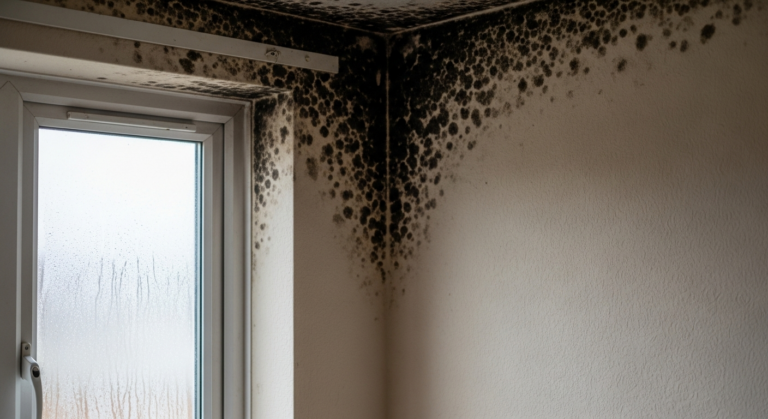
- Failed insulation extraction: If you have existing cavity wall insulation that has failed — often identified by damp patches on internal walls — it must be fully extracted before new insulation can go in. This is a specialist job that can cost £1,000–£4,000 or more depending on property size, and is entirely separate from the re-installation cost. If you’re already seeing signs of moisture problems, also read our guide on how to damp proof a basement to address the full picture.
- Render or cladding complications: Properties with external render, cladding, or pebbledash may need additional work to locate suitable drilling points, and making good may be more involved than standard mortar repointing. Confirm this is included or get a separate cost upfront.
- Unsuitable cavity discoveries: A surveyor may find the cavity is too narrow, blocked, or that the property is in a high-exposure wind zone. In these cases, installation may be declined entirely — yet you may still be liable for a survey fee if not agreed in advance.
- Post-installation damp issues: In a small number of cases, particularly in exposed locations or where cavity condition was not properly assessed, insulation can bridge the cavity and allow moisture to transfer to the internal wall. This is rare with properly certified installation, but ensure your guarantee explicitly covers remediation if it occurs.
Frequently Asked Questions
How much does cavity wall insulation cost for a semi-detached house in the UK?
For a standard semi-detached property, expect to pay £1,000–£1,800 for professionally installed cavity wall insulation. The exact cost depends on wall area, material used, and your location.
Can I get cavity wall insulation for free?
Yes, if your household meets the eligibility criteria for the Great British Insulation Scheme or ECO4, you may qualify for fully funded installation. Check your eligibility at gov.uk before paying for any quotes.
How long does cavity wall insulation installation take?
For most houses, installation takes between two and four hours. The installer drills small holes in the external mortar joints, injects the insulation material, then re-points the holes — all in a single visit.
How do I know if my house has a suitable cavity for insulation?
Properties built between roughly 1920 and 1995 are most likely to have unfilled cavities. A CIGA-registered installer will carry out a pre-installation survey using a borescope to confirm cavity width, condition, and suitability before any work begins.
Does cavity wall insulation come with a guarantee?
Yes. Installations carried out by a CIGA-registered company should come with a 25-year guarantee covering the performance of the insulation. Always ask for this in writing before confirming the job.
Ask your installer to use a borescope to photograph your cavity condition before and after — reputable companies do this as standard and it gives you evidence if a damp claim arises under guarantee. If the installer refuses to show you the pre-installation cavity footage, that is a red flag.
Sources
- Which? — Cavity wall insulation costs and advice — which.co.uk
- gov.uk — Great British Insulation Scheme eligibility — gov.uk
- CIGA — Cavity Insulation Guarantee Agency homeowner information — ciga.co.uk
This guide is for general information only. Always work safely and follow manufacturer instructions. DIYnut accepts no liability for injury or damage arising from DIY work.