Fibreglass vs Mineral Wool Insulation
Insulation & Damp › Insulation & Damp
Fibreglass vs Mineral Wool Insulation
Choose the right insulation material to cut heat loss and energy bills.
Fibreglass insulation is typically cheaper per m² and widely available, while mineral wool offers slightly better fire resistance and acoustic performance. Both are effective for loft and wall insulation in UK homes. Your choice depends on budget, application, and handling preference.

What Is Fibreglass Insulation?
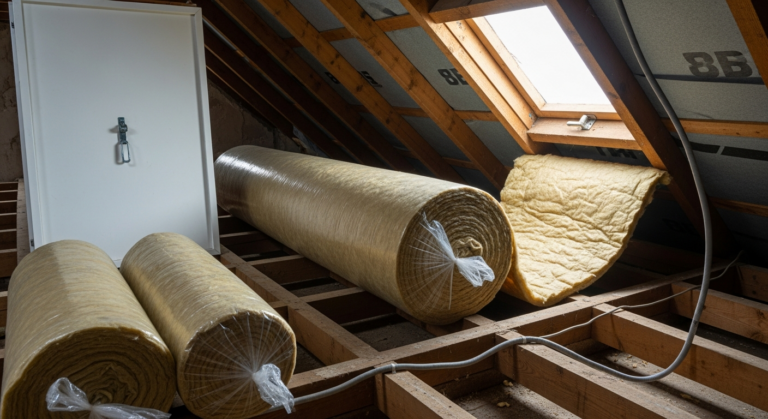
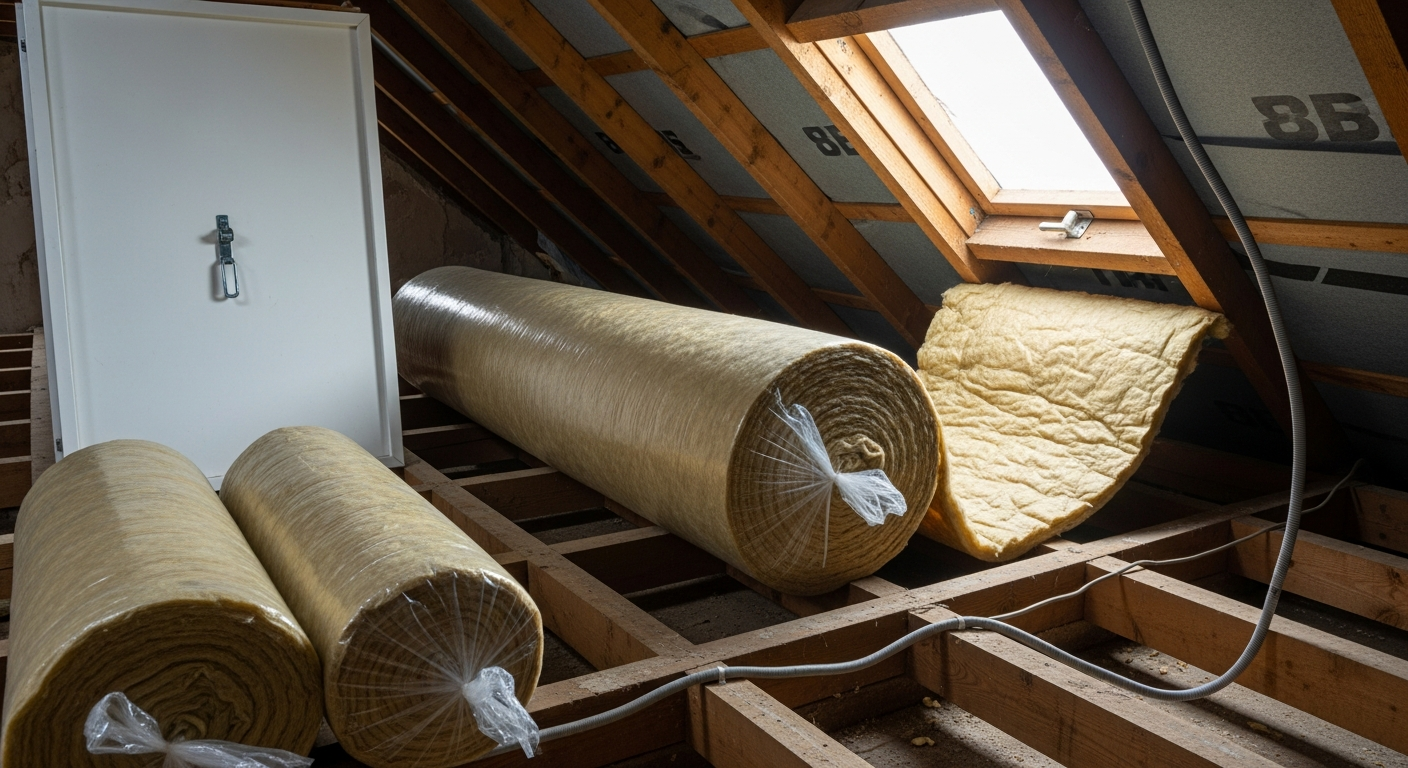
Fibreglass insulation (also called glass wool) is made from recycled glass spun into fine fibres and bound together into rolls or batts. It traps air within the fibrous matrix to slow heat transfer, making it one of the most widely used thermal insulation materials in UK homes. It is lightweight, relatively inexpensive, and straightforward to cut and fit between joists or rafters. For step-by-step fitting guidance, see our How to Insulate a Loft guide.
What Is Mineral Wool Insulation?
Mineral wool insulation — commonly called rock wool or stone wool — is manufactured by melting basalt rock or blast-furnace slag and spinning it into dense fibres. The resulting material is heavier and denser than fibreglass, giving it better acoustic dampening properties and a higher melting point, which improves fire resistance. It is used extensively in lofts, cavity walls, internal stud walls, and floors. For more on where mineral wool fits within your home’s thermal envelope, visit the Insulation & Damp Guide.
Side-by-Side Comparison
| Factor | Fibreglass | Mineral Wool |
|---|---|---|
| Cost per m² | £2–£5 | £3–£7 |
| Durability | Good — can compress over time | Very good — holds shape well |
| Appearance | Yellow/cream rolls or batts | Grey/brown rolls or slabs |
| Install Difficulty | Easy — lightweight, cuts cleanly | Easy to moderate — heavier, denser |
| Maintenance | None required if undisturbed | None required |
| Lifespan | 25–50 years | 50+ years |
Fibreglass — Pros and Cons
- Lower material cost per m² than mineral wool
- Lightweight — easier to carry and manoeuvre in tight loft spaces
- Widely available from most builders’ merchants and online suppliers
- Good thermal performance at standard UK recommended depths
- Suitable for lofts, floors, and stud partition walls
- Fine glass fibres cause skin irritation — full PPE including a dust mask, gloves, and goggles is essential during installation
- Can compress if walked on or loaded, reducing thermal performance
- Lower melting point than mineral wool, so less effective as a fire barrier
- Poor acoustic performance compared to denser mineral wool products
- Absorbs moisture if exposed — must be kept dry to maintain performance
Mineral Wool — Pros and Cons
- Excellent fire resistance — mineral wool is non-combustible and can withstand very high temperatures
- Better acoustic performance, making it a good choice for internal partition walls
- Denser structure holds shape under load without compressing
- Longer expected lifespan than fibreglass in most applications
- Suitable for cavity walls, lofts, floors, and fire-rated partitions — see our Cavity Wall Insulation Guide for more detail
- Higher cost per m² than fibreglass
- Heavier — can be more awkward to work with in confined loft spaces
- Still requires PPE during installation as fibres can irritate the skin and airways
- Denser products can be harder to cut neatly without the right knife
Which Is Better For…?
- Loft insulation in a standard semi-detached home: Fibreglass is the more common choice — it is cheaper, readily available, and performs well at the 270 mm depth recommended by the Energy Saving Trust. See our Loft Insulation Depth Guide for current recommendations.
- Internal stud partition walls where noise reduction matters: Mineral wool is the better option — its greater density absorbs sound more effectively than fibreglass.
- Fire-rated separating walls or floors in flats: Mineral wool only — its non-combustible classification makes it the appropriate choice where Building Regulations require fire performance.
- Insulating a cold suspended timber floor on a tight budget: Fibreglass batts cut to fit between floor joists offer good thermal performance at a lower cost. Full guidance is in our Insulate a Cold Floor guide.
- Solid wall internal insulation using a stud frame: Either material works, but mineral wool is preferred where the wall is adjacent to a kitchen or bathroom due to its higher moisture tolerance and fire resistance.
UK Cost Comparison
Fibreglass insulation rolls typically cost between £2 and £5 per m² for standard loft roll (100–200 mm thick), depending on thickness and quantity purchased. Mineral wool rolls and slabs generally range from £3 to £7 per m² for equivalent thickness. Specialist acoustic or fire-rated mineral wool boards can cost more. Both materials are available from builders’ merchants across the UK. Professional installation of loft insulation — where labour is included — typically adds £5 to £15 per m² on top of material costs, though many UK homeowners install both materials themselves as a DIY project. Draught-proofing alongside insulation improves overall results; see the Draught Proof a House Guide for complementary measures.
Frequently Asked Questions
Is fibreglass or mineral wool better for loft insulation?
Both perform well in loft applications. Fibreglass is cheaper and lighter, making it a popular DIY choice. Mineral wool is denser and longer-lasting, but costs more. Either material installed at the correct depth will deliver comparable thermal performance.
Do I need PPE to install fibreglass or mineral wool insulation?
Yes. Both materials release fine fibres that irritate skin, eyes, and the respiratory tract. Always wear a dust mask (at minimum FFP2), safety goggles, gloves, and a long-sleeved shirt. The HSE advises following COSHH guidance when handling man-made mineral fibres.
Which insulation material is more fire resistant?
Mineral wool has a significantly higher melting point than fibreglass and is classified as non-combustible under EN 13501-1. Where Building Regulations require fire resistance — such as in separating walls or floors between flats — mineral wool is the correct choice.
Can fibreglass or mineral wool get damp and lose performance?
Both materials can absorb moisture if water ingress is present, which reduces thermal performance. Addressing the source of any damp before installing insulation is essential. Mineral wool generally tolerates incidental moisture slightly better than fibreglass due to its denser structure.
Are there any grants available to help with insulation costs in the UK?
The UK government’s Great British Insulation Scheme and the ECO4 scheme can provide funding for eligible households to install loft and wall insulation at reduced or no cost. Check gov.uk for current eligibility criteria and registered installers.
When installing two layers of loft insulation — 100 mm between joists and 170 mm across them — lay the cross-layer at 90 degrees to the first to eliminate thermal bridging at the joist lines; this is where most of the heat loss occurs in a poorly installed loft. Fibreglass and mineral wool can be used in combination for the two layers without any compatibility issues.
Sources
- Energy Saving Trust — Loft insulation — energysavingtrust.org.uk
- HSE — Man-made mineral fibres (MMMF): controlling health risks — hse.gov.uk
- GOV.UK — Great British Insulation Scheme — gov.uk
This guide is for general information only. Always work safely and follow manufacturer instructions. DIYnut accepts no liability for injury or damage arising from DIY work.