Mould on Walls
Insulation & Damp › Insulation & Damp
Mould on Walls
Identify the cause of wall mould fast and fix it for good.
Mould on walls is most commonly caused by condensation — warm, moist air hitting a cold surface. Poor ventilation, rising damp, or penetrating damp can also be responsible. Identify the cause before treating, or the mould will return within weeks.

What’s Causing This?
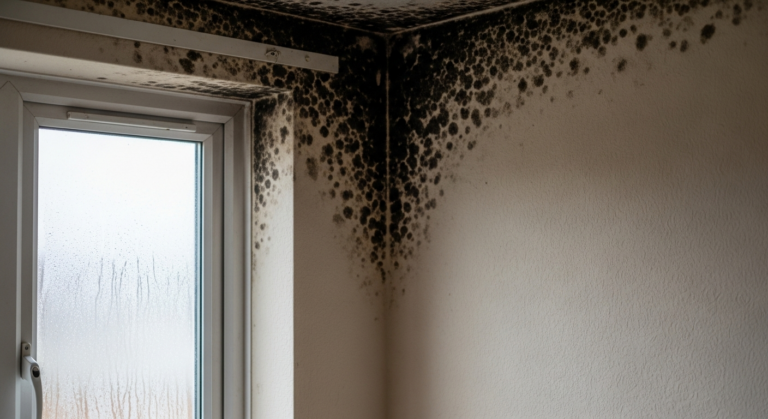
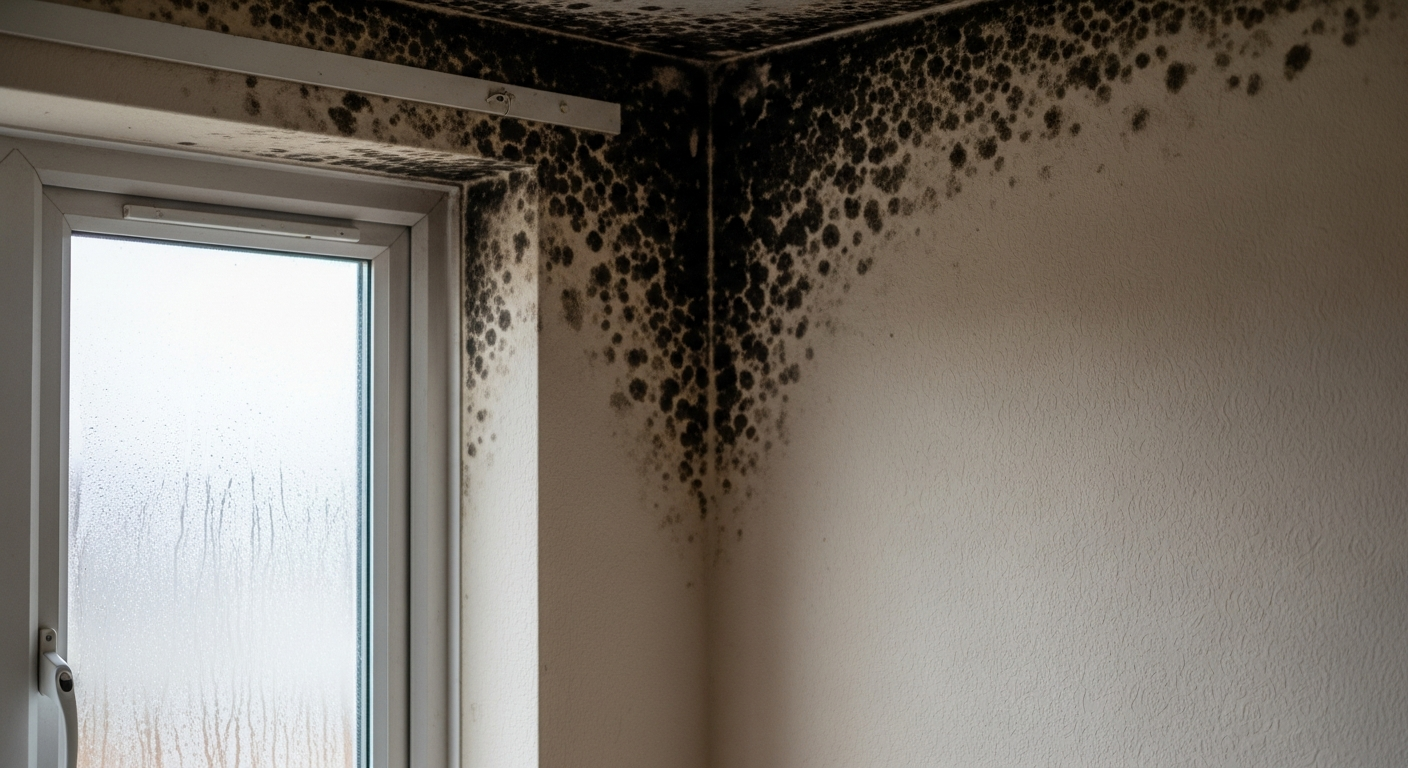
Condensation (most common): When warm, humid air from cooking, showering, or breathing meets a cold wall surface, moisture condenses and mould follows — typically in corners, behind furniture, or around windows. This is by far the most frequent cause in UK homes. See our guide on how to fix condensation damp to tackle it properly.
Poor or blocked ventilation: Bathrooms and kitchens without working extractor fans, or rooms where trickle vents have been taped shut, trap humid air against walls. The mould typically appears near the ceiling or in the wettest corner of the room. Improving airflow is often the first fix needed.
Rising damp: Groundwater wicking up through masonry causes a distinctive tide-mark of mould and damp plaster at low level — usually no higher than one metre above floor level. It often appears on ground-floor external walls. Read the full breakdown in our rising damp vs condensation guide to confirm which you have.
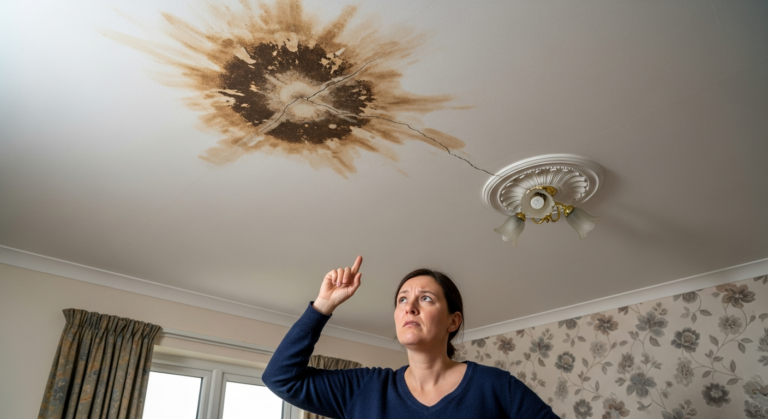
Penetrating damp: Water entering through defective render, failed pointing, cracked window sills, or blocked gutters can saturate an external wall and push moisture through to the interior surface. Mould patches tend to be isolated and linked to a specific external defect directly behind them. Our guide to rendering an outside wall covers one common repair route.
Cold bridges and poor insulation: Uninsulated solid walls, steel lintels, and concrete window reveals stay significantly colder than surrounding surfaces, causing localised condensation even in well-ventilated rooms. Improving wall insulation reduces the temperature difference — see the solid wall insulation guide for options.
How to Diagnose the Exact Cause
- Note the location. Mould only in corners, on ceilings, or behind furniture points strongly to condensation. Mould at low level with a tide-mark suggests rising damp. Isolated patches on an external wall linked to a specific spot outside suggest penetrating damp.
- Check for salts and staining. Rising damp often leaves white crystalline salt deposits (efflorescence) on the plaster surface. Condensation mould rarely does. Scrape a small patch — powdery salts underneath suggest rising damp.
- Run a polythene test. Tape a 300mm square of polythene firmly to the damp wall for 48 hours. If moisture forms on the back of the sheet (between sheet and wall), damp is coming through the wall (rising or penetrating). If moisture forms on the front, it is condensation from the room air.
- Inspect outside the property. Look for cracked render, missing pointing, broken gutters, bridged cavity trays, or failed window sills directly behind the affected internal wall. Any defect found externally confirms penetrating damp as the likely cause.
- Check ventilation and heating patterns. If the affected room is rarely heated, has no extractor fan, or regularly has steamy activities (cooking, drying laundry), condensation is almost certain. Installing a hygrometer (humidity meter) is a cheap way to confirm — persistent readings above 70% relative humidity indicate inadequate ventilation.
- Consider the wall type. Solid stone or brick walls with no cavity insulation are prone to cold bridging and penetrating damp. Cavity walls with failed or absent insulation lose heat unevenly. Check our Insulation & Damp Guide for a full overview of wall types and their vulnerabilities.
How to Fix It
Condensation mould: Improve ventilation first — fit or repair extractor fans in kitchens and bathrooms, open trickle vents, and avoid drying laundry indoors without extraction. Clean existing mould with a dilute fungicidal solution, allow the wall to dry thoroughly, then repaint with anti-mould paint. For a full method, see the guide on how to fix black mould on walls.
Poor ventilation: Install a humidistat-controlled extractor fan in affected rooms. Ensure air bricks are clear of debris and that window trickle vents are open. This alone resolves the majority of condensation mould cases in UK homes.
Rising damp: Confirm with a qualified surveyor before spending money on treatments. If confirmed, a chemical or physical damp proof course may be needed. This is rarely a straightforward DIY job — see how to fix rising damp for options and when to call a professional.
Penetrating damp: Fix the external defect first — repoint brickwork, clear gutters, repair cracked render, or reseal around windows. Once the source is resolved and the wall has dried out (which can take months in solid walls), strip back affected plaster, treat with fungicide, and replaster. Our guide to fixing damp on interior walls covers the replastering process.
Cold bridges and poor insulation: Adding internal wall insulation on solid external walls dramatically raises surface temperature and eliminates cold spots. This is a more involved project — the solid wall insulation guide explains both internal and external approaches.
When to Call a Tradesman
Call a qualified damp surveyor if the polythene test indicates moisture is coming through the wall and you cannot identify a clear external defect. Rising damp diagnosis in particular is frequently misidentified — an independent RICS-regulated surveyor (not one tied to a damp-proofing company selling treatments) will give an unbiased assessment. Call a tradesman if mould covers an area larger than one square metre, as the HSE advises that widespread mould can indicate a significant moisture problem beyond basic DIY remediation. If you rent your property, your landlord has a legal duty under the Homes (Fitness for Human Habitation) Act 2018 to address serious damp and mould — tenants should report issues in writing and do not need to fix structural damp themselves. Call a builder if the source is structural — failed cavity trays, bridged damp proof courses, or significant external render failures require specialist repair before any internal treatment will hold.
How to Prevent It Happening Again
- Ventilate consistently: Run extractor fans during and for at least 20 minutes after cooking or showering. Open windows briefly each morning to flush humid overnight air from bedrooms.
- Heat rooms evenly: Keeping all rooms at a low background temperature (around 18°C) prevents the cold wall surfaces that condensation needs. Unheated spare rooms are common mould hotspots.
- Deal with window seals and draughts: Failed window seals and draughty frames allow cold air to chill wall surfaces unevenly — replace a window seal promptly and keep frames in good repair.
- Maintain the external envelope: Inspect gutters, render, pointing, and window sills annually. Catching a cracked sill or blocked gutter early prevents penetrating damp from taking hold inside the wall.
Frequently Asked Questions
Is black mould on walls dangerous to health?
Mould of any colour can trigger respiratory problems, allergic reactions, and worsen asthma — particularly in children, the elderly, and those with existing conditions. The NHS advises addressing the underlying damp cause, not just cleaning the mould surface.
Can I just paint over mould on walls?
No. Painting over mould without treating the cause and killing the existing spores will not stop it returning — the mould will push through standard emulsion within weeks. Use a fungicidal wash first, allow the wall to dry fully, then apply anti-mould paint.
How do I tell if mould is caused by rising damp or condensation?
Rising damp appears at low level (rarely above one metre), often leaves white salt deposits on the plaster, and is typically on ground-floor external walls. Condensation mould usually appears in corners, near ceilings, or behind furniture, and is linked to rooms with high humidity and poor ventilation.
Does cavity wall insulation cause mould?
Poorly installed or degraded cavity wall insulation can create cold spots or allow moisture to bridge the cavity, which may contribute to condensation mould on internal walls. If mould appeared after cavity insulation was installed, have the installation inspected by a qualified assessor.
How long does a wall take to dry out after fixing a damp problem?
Solid brick or stone walls can hold moisture for many months — in some cases up to a year — before they fully dry out after the source is resolved. Do not redecorate until the wall has dried completely, or mould and blown plaster are likely to return.
When treating mould in a corner where two external walls meet, the real problem is almost always a thermal cold bridge, not inadequate cleaning. Adding a slim layer of insulated plasterboard to both wall faces — not just one — is the only way to raise the corner surface temperature enough to stop condensation reforming there.
Sources
- NHS — Damp and mould in the home: health effects — nhs.uk
- HSE — Moulds: health effects and guidance for employers and building managers — hse.gov.uk
- Which? — Damp and mould: causes, health risks and how to tackle it — which.co.uk
This guide is for general information only. Always work safely and follow manufacturer instructions. DIYnut accepts no liability for injury or damage arising from DIY work.