
Winter Home Insulation Checklist
Insulation & Damp › Insulation & Damp
Winter Home Insulation Checklist
Keep heat in and energy bills down with this room-by-room winter checklist.
Winter insulation checks cover loft, walls, floors, doors, and windows. Tackle draught-proofing, check loft insulation depth, seal window frames, and address any damp before temperatures drop. Most tasks suit beginners and can be completed in a weekend.

Why This Season Matters
Autumn and early winter — ideally October to November — is the best window to insulate and draught-proof your home before sustained cold sets in. Gaps, thin loft insulation, and poorly sealed doors and windows that go unnoticed in summer become significant sources of heat loss once temperatures fall, driving up energy bills and putting pressure on your heating system.
Acting before December also means you can work in milder conditions, sealants and adhesives cure more reliably, and you avoid the urgency of fixing problems mid-freeze. Addressing insulation and damp together at this stage also prevents condensation and mould from taking hold during the months when ventilation is naturally reduced. See our full Insulation & Damp Guide for a complete overview of every area of the home.
Your Complete Checklist
- Check and top up loft insulation to the recommended depth — see the Loft Insulation Depth Guide
- Insulate the loft hatch if it has no insulation pad — see Insulate a Loft Hatch
- Draught-proof all external doors — see Draught Proof a Door
- Seal the letterbox against draughts — see Draught Proof a Letterbox
- Draught-proof sash windows if applicable — see Draught Proof Sash Windows
- Seal leaking window frames with fresh silicone — see Seal a Leaking Window
- Check ground floors for cold spots and consider insulation — see Insulate a Cold Floor
- Inspect walls and skirting for signs of rising damp — see Rising Damp vs Condensation
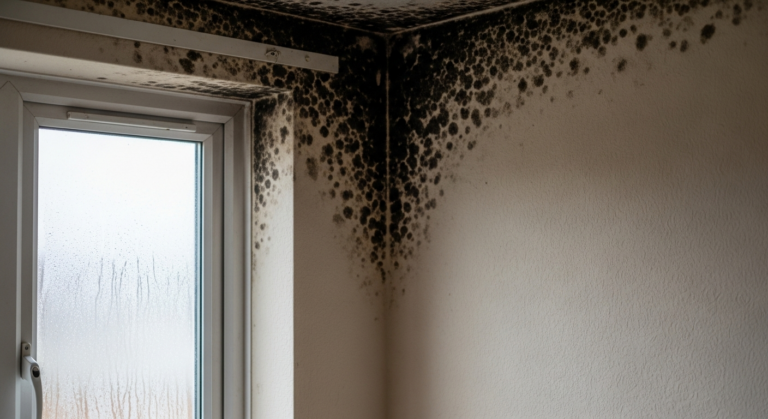
- Check for and address any black mould — see Fix Black Mould on Walls
- Complete a whole-house draught audit — see Draught Proof a House Guide
- Investigate condensation in double-glazed units — see Fix Condensation in Double Glazing
- Fill any cracks in external-facing interior walls — see Fill Wall Cracks
Step-by-Step for Each Key Task
1. Checking and topping up loft insulation
Access the loft with a torch and a tape measure. Current guidance recommends 270mm of mineral wool insulation — two layers laid at right angles, with the first between joists and the second across them. If existing insulation is below this depth, damaged, or compressed, add a top-up layer. Ensure the eaves are not blocked so ventilation is maintained. Do not insulate under the cold water tank; insulate around the sides instead so the tank retains some warmth from below.
2. Draught-proofing external doors
Run your hand around the door frame on a windy day to locate draughts. For the sides and top, fit a compression seal (brush or foam) into the rebate so it presses firmly against the door when closed. For the bottom, fit a threshold strip or door draught excluder. Replace worn seals rather than adding new ones on top. Test the result before the seal adhesive fully cures.
3. Sealing leaking window frames
Remove old or cracked silicone sealant with a sealant remover tool or Stanley knife. Clean the channel thoroughly and allow it to dry. Apply a continuous bead of exterior-grade silicone sealant along the joint between the window frame and the surrounding masonry or render. Smooth with a wetted finger and leave to cure for at least 24 hours before exposure to rain. Do not apply sealant in temperatures below 5°C.
4. Identifying rising damp versus condensation
Rising damp typically appears as a tide mark at low level — up to about one metre from the floor — and may cause salts to crystallise on the wall surface. Condensation tends to appear at cold spots such as window reveals, external corners, and behind furniture. Use a damp meter to check moisture levels. If you are unsure, our guide to Rising Damp vs Condensation explains the key differences before you commit to a fix.
Tools and Materials You’ll Need
- Tape measure
- Torch
- Damp meter (moisture meter)
- Compression draught-excluding strip (brush or foam type)
- Threshold draught excluder or door bottom seal
- Exterior-grade silicone sealant and gun
- Sealant remover tool or Stanley knife
- Mineral wool loft insulation rolls (if topping up)
- PPE: dust mask (P2 rated for loft work), safety glasses, disposable gloves
- Insulation pad or rigid foam board for loft hatch
- Utility knife and straight edge
- Mould-resistant sealant or surface treatment (for condensation-prone areas)
- Filler and filling knife (for wall cracks)
- Hand brush and vacuum (for clearing debris before sealing)
Common Mistakes to Avoid
- Blocking eaves ventilation when adding loft insulation. Stuffing insulation into the eaves restricts airflow, which causes condensation to build up in the roof void. Always use eaves ventilation baffles to maintain a clear air path.
- Applying sealant in cold or damp conditions. Most silicone and acrylic sealants require temperatures above 5°C to cure properly. Applying in near-freezing conditions leads to poor adhesion and premature cracking.
- Draught-proofing a home without considering ventilation. Sealing every gap without providing controlled ventilation (trickle vents, extractor fans) can cause condensation and damp. The aim is to reduce uncontrolled draughts, not to make the house airtight without fresh air provision.
- Ignoring the loft hatch. An uninsulated loft hatch is effectively a large hole in your ceiling insulation. It is one of the quickest and lowest-cost fixes, yet frequently overlooked.
- Treating mould without fixing the underlying cause. Painting over black mould without addressing the source — whether condensation, a leaking pipe, or bridged damp-proof course — means it will return within weeks. Always diagnose before treating.
Frequently Asked Questions
How thick should loft insulation be in a UK home?
Current guidance from the Energy Saving Trust and government advice recommends 270mm of mineral wool as the standard depth for cold loft insulation in UK homes. Below this level, top-up insulation is worthwhile.
Can I draught-proof my home myself or do I need a professional?
Most draught-proofing tasks — fitting door seals, letter box draught excluders, and window sealant — are straightforward DIY jobs requiring only basic tools. Cavity wall insulation always requires a registered installer due to the specialist equipment involved.
Will sealing draughts cause condensation problems?
It can do if you seal the home tightly without maintaining adequate ventilation. Ensure trickle vents on windows remain open, extractor fans in bathrooms and kitchens work properly, and you air rooms briefly each day.
What is the difference between rising damp and condensation damp?
Rising damp comes from ground moisture travelling up through walls and appears as a low-level tide mark with salt staining. Condensation forms when warm, moist air meets cold surfaces, typically at window reveals and external corners. Treatment differs significantly for each.
Does loft insulation qualify for any UK government support?
Eligible households may be able to access insulation through the Great British Insulation Scheme or the Energy Company Obligation (ECO4) scheme. Check your eligibility at gov.uk, as qualifying criteria relate to income, benefit status, and property EPC rating.
When fitting door compression seals, set the door to the exact gap you want before peeling the adhesive backing — most foam seals compress by 30–50% when the door closes, so fitting them too thick causes the door to stick within a few weeks as the foam takes a set. Cut mitred corners rather than butting lengths together to prevent draughts at the joins.
Sources
- Energy Saving Trust — Loft insulation explained — energysavingtrust.org.uk
- GOV.UK — Great British Insulation Scheme — gov.uk
- HSE — Working in lofts and roof spaces: health and safety guidance — hse.gov.uk
This guide is for general information only. Always work safely and follow manufacturer instructions. DIYnut accepts no liability for injury or damage arising from DIY work.